Who this guide is for

Students with specialist course software

Check your department’s operating-system, processor and software requirements before choosing a device. Engineering guidance from the University of Bath, the University of Nottingham and the University of Strathclyde illustrates why requirements can differ by course; it is not a rule for every degree.

Students studying between locations

If you carry your computer between campus, home and other commitments, weigh the whole setup, including its charger, and consider whether its keyboard and screen suit your work. Imperial College London notes that students use laptops for study in places such as lectures, group-work settings and home.

Students trying to limit upfront spending

Check whether a device you already own can meet your course requirements before replacing it, and account for necessary accessories when considering another setup. Jisc’s 2024/25 survey of 15,398 students at 24 UK universities and six higher-education colleges found that 37% had lacked access to a suitable device at some point during their studies; this is historical context, not a measure of current device demand.

What to check before choosing

Conventional laptop

Consider it when: you regularly write assignments, join online sessions and move between study locations.

Trade-off: balance screen and keyboard space against the weight of the computer and charger.

Tablet with a keyboard

Consider it when: touch or pen-based reading and note-taking matter, and you have confirmed that required apps and services work on its operating system.

Trade-off: check the keyboard and any other accessories you need, as well as the limits of tablet apps for your coursework.

Course-compatible computer

Consider it when: your department specifies Windows, a processor architecture or support for specialist applications and hardware.

Trade-off: check the exact model and processor against departmental guidance; a remote desktop may not cover every task.

Concern What to check when buying Who this matters to
Course and system compatibility Check your department’s operating-system, processor, application and hardware-interface requirements against the exact device. Ask whether a remote desktop covers your tasks. If required software or assessments determine what I can use, I need to confirm compatibility before choosing a device. Around 28% of consumers put course compatibility first.
Portability and charging Consider the computer and charger together, then compare screen size and charging arrangements with your usual study sessions. When I carry my setup between campus, home and work, I need it to be practical to transport and use throughout my routine. Around 22% of consumers prioritise portability and charging.
Access within budget Check whether an existing device meets course guidance. For a new setup, account for its configuration, condition and required accessories. If I need a suitable study setup without stretching my budget, I want to know what I can use before committing to a purchase. Around 22% of consumers prioritise affordable access.
Assignment input and apps Check the keyboard and pointing method, plus the document, meeting and assessment apps you expect to use. For sustained writing and group work, I need an input setup and apps that fit the way I complete assignments. Around 17% of consumers prioritise their assignment workflow.
Keeping files recoverable Choose an institution-permitted backup method, keep a separate copy and test that you can restore files. If losing study files could disrupt my work, I need a backup I can access and restore when required. Around 11% of consumers put file continuity first.

Buying pitfalls to avoid

  • Choosing by a general student-laptop ranking before checking course rules

    A product labelled for students may still be unsuitable for a particular course. The University of Bath and the University of Strathclyde describe Windows requirements or recommendations for specific engineering departments.

    Read your own department’s current guidance before comparing models. If it offers remote access to software, ask whether that option covers your actual applications and any hardware-based work.

    If required applications cannot run locally, you may need access to another device or rely on a remote-computing route that does not cover every task.

  • Comparing a device without checking what comes with it

    A tablet may need a separate keyboard, and accessories can vary by configuration. HP lists the charger as not included with its specified OmniBook 5 14-hh0500sa configuration.

    Check the exact package contents and what you need for your intended study setup before comparing alternatives.

    A separately required keyboard, charger or other accessory can add another item to your setup.

  • Assuming similar product names mean the same model

    Model names and configurations can differ even when products sound alike. Expert Reviews’ student-laptop list labelled its first-place entry “M2 MacBook Neo”, while Apple UK’s MacBook Neo specifications identify an A18 Pro chip.

    Check the complete model name and core specifications before treating a review or listing as evidence about the device you are considering.

  • Treating a copied file as a tested backup

    A copy that cannot be restored may not help when you need it, and a drive kept with your laptop could be lost at the same time.

    Keep a separate copy using a method permitted by your institution, and periodically test that you can restore a file.

Relevant brands to consider

Apple

MacBook models offer a macOS laptop route, while iPad Air represents a tablet option with a keyboard accessory.

  • Apple UK lists the MacBook Neo with an A18 Pro chip, 8GB of memory and 256GB or 512GB storage. Its UK MacBook Air M5 specifications describe configurations with 16GB, 24GB or 32GB of unified memory.
  • These specifications do not establish compatibility with a particular course. The University of Bath and the University of Strathclyde specify or recommend Windows for particular engineering departments.

Lenovo

Lenovo’s UK Chromebook Plus Gen 10 line is a ChromeOS laptop option for coursework compatible with that operating system.

  • Lenovo lists a 14-inch ChromeOS configuration with a keyboard, webcam and 128GB UFS storage.
  • Those specifications do not establish compatibility with Windows-only course software. The University of Warwick advises students to consider department-specific guidance.

HP

HP’s UK laptop range includes Windows models and convertible configurations for different study setups.

  • For the specified OmniBook 5 14-hh0500sa, HP lists Windows 11 Home, 16GB RAM and a 512GB SSD.
  • HP states that the charger is not included with that configuration. Check the full contents and any processor requirements from your department.

HONOR

MagicBook models are Windows laptops to compare when a conventional keyboard and larger display fit your study routine.

  • Expert Reviews placed the Honor MagicBook 16 (2026) second in its UK student-laptop list published on 18 August 2026, describing it as its Windows pick.
  • That editorial assessment does not confirm the specifications of another MagicBook model or establish that a particular configuration meets your course requirements.

Joybuy laptop options

These Joybuy choices are laptops for portable study; check each model against your course requirements and the way you work across locations.

ASUS Vivobook 14 X1407QA-LY003W Copilot+ PC in Quiet Blue

ASUS Vivobook 14 X1407QA-LY003W Copilot+ PC, Snapdragon X, 16GB RAM, 512GB SSD

Consider it if you want a 14-inch laptop for study across locations and have checked that its processor supports your course applications and interfaces.

  • Snapdragon X
  • 16GB RAM
  • 512GB SSD
  • 14-inch display

For specialist engineering software or hardware interfaces, check compatibility carefully: the University of Nottingham notes that some Snapdragon-based Windows laptops may not support every required application or interface.

Joybuy
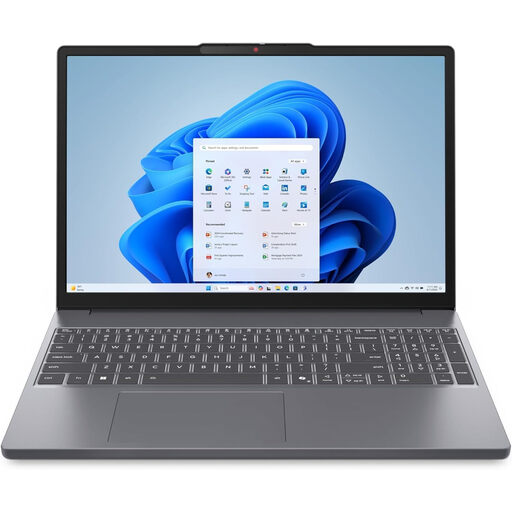
Lenovo IdeaPad Slim 3 15.3-inch WUXGA Laptop, model 83K7009MUK

Lenovo IdeaPad Slim 3 15.3" WUXGA, AMD Ryzen 5 7535HS, 24GB DDR5 RAM, 512GB PCIe SSD, Windows 11 Home, 83K7009MUK

Consider this configuration if you want a Windows laptop for assignment work and have confirmed that its processor meets any course-specific requirements.

  • AMD Ryzen 5 7535HS
  • 24GB DDR5 RAM
  • 512GB PCIe SSD
  • 15.3-inch WUXGA display
  • Windows 11 Home
Joybuy
ASUS Vivobook 15 X1504VA, 15.6-inch, Intel Core 5 120U, 24GB RAM, 1TB SSD

ASUS Vivobook 15 X1504VA, 15.6-inch, Intel Core 5 120U, 24GB RAM, 1TB SSD

Consider it if you prefer a larger screen and want storage for course files, while checking that the complete setup is practical to carry between study locations.

  • Intel Core 5 120U
  • 24GB RAM
  • 1TB SSD
  • 15.6-inch display
Joybuy
Apple MacBook Air 13.6-inch, M5, 24GB, 1TB SSD, Starlight

Apple MacBook Air 13.6-inch, M5, 24GB, 1TB SSD, Starlight

Consider this macOS laptop if its apps and services meet your course requirements and you want a 13.6-inch device for study across locations.

  • M5
  • 24GB
  • 1TB SSD
  • 13.6-inch display

The University of Bath and the University of Strathclyde specify or recommend Windows for particular engineering departments; check your own department’s advice before relying on a Mac as your only computer.

Joybuy

HP OmniBook X Flip 16-inch touchscreen, Intel Core Ultra 5 226V, 16GB RAM, 512GB SSD

HP OmniBook X Flip 16-as0004na, 16-inch touchscreen, Intel Core Ultra 5 226V, 16GB RAM, 512GB SSD, Windows 11 Home

Consider this convertible Windows laptop if switching between laptop and tablet-style modes suits your study setup.

  • Intel Core Ultra 5 226V
  • 16GB RAM
  • 512GB SSD
  • 16-inch touchscreen
  • Windows 11 Home
Joybuy

Frequently asked questions

Can I use a Mac, Chromebook or ARM-based Windows laptop for an engineering degree?

It depends on your department’s requirements and the applications you need. The University of Nottingham’s Electrical and Electronic Engineering guidance discusses Windows 11 on Intel or AMD hardware for its local software and hardware-interface workflow, while the University of Bath also favours Windows for several applications. These are department-specific examples, not a rule for every degree.

Does a keyboard make a tablet a suitable replacement for a study laptop?

Not by itself; confirm that your apps, assessment workflow and university services work on the tablet’s operating system. The University of Warwick says a Mac or keyboard-equipped iPad may be acceptable under its central guidance, but departments can give different instructions. Check the keyboard and other accessories you need before relying on a tablet as your only device.

How can I keep assignment files recoverable when I study in different places?

Keep a separate backup using a method permitted by your institution, and test that you can restore a file. The Information Commissioner’s Office gives backup advice for organisations; its practical emphasis on separate copies and restore checks can be applied alongside your university’s rules for coursework and sensitive material.

What should I check when buying a laptop online in the UK?

For an applicable distance purchase, GOV.UK says consumers can generally tell the seller they wish to cancel within 14 days of receiving the goods, then have another 14 days to return them after giving notice. Exceptions may apply. Faulty or misdescribed goods can involve separate statutory remedies, so check the rules for your transaction; a retailer’s change-of-mind policy does not replace statutory rights.

Will my university provide specialist software?

Provision varies by institution and course, so check with your department before choosing a device. The University of Nottingham says its Electrical and Electronic Engineering students receive access to Microsoft 365 and relevant specialist software under its arrangements; that example does not establish what another course provides or whether remote access covers every task.