What should you check before buying?
Start with the course requirements, then decide whether portability, tablet-based notes or continuity of access changes the device and accessories you need.
Laptop as your main device
Choose it when: Your course requires installed desktop applications, substantial document work or assessments that specify a computer.
Keep in mind: A laptop is less convenient for handwritten notes, and its operating system still has to match your course software.
Tablet with keyboard and stylus
Choose it when: Reading and handwritten notes are priorities, or your course confirms that the tablet can handle all required work.
Keep in mind: A keyboard helps with typing but does not make desktop-only software or an incompatible assessment run on a tablet.
| Concern | What to check | Who this matters to |
|---|
| Course compatibility |
Ask your department for its software, operating-system and assessment requirements; check them against the exact device. |
If my coursework needs an installed application or a particular exam platform, I need that to work before considering convenience features. About 36% of consumers put course compatibility first. |
| Study across locations |
Check carrying weight and charging arrangements, plus Wi-Fi, camera, microphone and any required ports or adapters. |
Moving between lectures, home study and online meetings makes a device's carrying and call setup my main concern. For about 29% of consumers, dependable participation across locations comes first. |
| Notes and reading |
Check stylus and keyboard compatibility, then confirm that required apps and assessments work on the tablet platform. |
When annotating readings and taking handwritten notes shape my day, I want those tasks to feel practical without overlooking course requirements. About 14% of consumers prioritise this way of studying. |
| Keeping work accessible |
Check backup options and warranty and repair terms; ask your university about any device support you may need. |
If I rely on one computer for assessed work, a breakdown or inaccessible files could interrupt my studies. Keeping work and a usable device available is the primary concern for about 21% of consumers. |
Laptops for the primary-device route
These Joybuy laptops are options to compare if you need a main computer for blended study. Match the exact configuration to your course software and assessment requirements before deciding.
 No image available
ASUS Vivobook 14 X1407QA-LY003W, Quiet Blue
Consider this laptop if its configuration meets your course requirements. It has a Snapdragon X processor, 16GB RAM and a 512GB SSD; check that required applications and assessments work on this Snapdragon X device before buying.
 No image available
ASUS Vivobook 15 X1504VA, Cool Silver
Compare this conventional laptop if you need space for locally stored coursework and your course accepts its configuration. Its listed specifications include a 15.6-inch display, Intel Core 5 120U processor, 24GB RAM and 1TB SSD; confirm required application and assessment compatibility.
 No image available
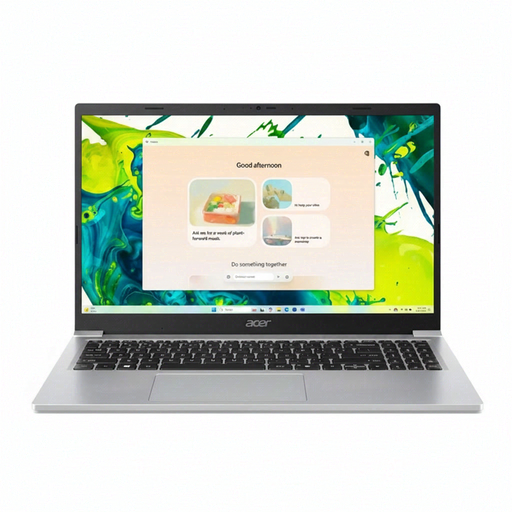
Acer Aspire Lite AL15-36P-C29Z, Silver
Consider its 15.6-inch Full HD screen for everyday study after checking your course requirements. The listed configuration has an Intel N150 processor, 8GB RAM and a 128GB SSD. Confirm whether the supplied Windows 11 Home configuration is in S Mode, and whether its storage and app-installation options meet your needs.
 No image available
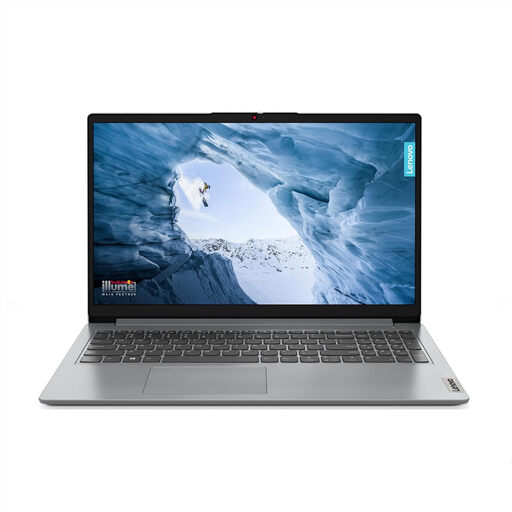
Lenovo IdeaPad 1, Ryzen 3 7320U, Cloud Grey
Compare this 15-inch Full HD laptop for campus and home work if its software setup suits your course. It has 8GB RAM, a 128GB SSD and Windows 11 Home in S Mode; check required app support, local storage needs and whether a microphone is included if you need one for online sessions.
 No image available
Lenovo Legion Pro 7 16IAX10H, 83F5000UUK
Consider this configuration only if your course calls for specifications that justify it and its applications are compatible. The listed model has a 16-inch display, Intel Core Ultra 9 processor, 64GB RAM, 2TB SSD and NVIDIA GeForce RTX 5090. Check its carrying weight and study-use battery runtime if you will take it to campus regularly.
Questions students ask
Is a tablet with a keyboard enough for university?
Only if your course confirms that its applications, coursework and assessments work on the exact tablet platform. A keyboard can help with writing, but Loughborough University and University College London caution against assuming a tablet can replace a computer for all study tasks.
What laptop specification should I start with?
Start with your department's requirements rather than a universal minimum. For general guidance, the University of Hertfordshire recommends at least 8GB RAM and 256GB SSD for most students; a course with specialist software may set different requirements.
Will I need a webcam, microphone or headset?
Check what your online seminars and meetings require. The University of Hertfordshire includes a webcam and microphone in its general laptop recommendations, while the University of Nottingham recommends headphones with a microphone for online learning and meetings.
Should I buy disability-related equipment before a Disabled Students' Allowance assessment?
Not if you expect that equipment to be reimbursed through Disabled Students' Allowance. GOV.UK says equipment bought before the needs assessment will not be reimbursed, so complete that assessment before purchasing equipment through this route.


