Dual-screen layout editors
If you keep programme pages, PDFs and reference material open together, you need an extended desktop with independently arranged screens, not two displays showing the same image.


Choose the display setup before paying for more processing power: confirm that the exact laptop and, if needed, its dock can extend your workspace across the intended screens at their required resolution and refresh rate. For Adobe InDesign work, its recommended 16 GB of RAM and an SSD provide a starting point; colour-focused or heavier creative hardware matters more if you also review artwork or run demanding applications. Apple publishes support for up to two high-resolution external displays with the M5 Pro MacBook Pro, while a Windows laptop’s ports and dock need checking for the particular configuration.
If you keep programme pages, PDFs and reference material open together, you need an extended desktop with independently arranged screens, not two displays showing the same image.
If you review photographs, artwork or sponsor marks, assess the laptop panel and external monitors separately. A claim about the built-in display does not establish the colour performance of the whole setup.
If you move between home, rehearsal spaces and venues, the laptop must be usable away from the desk and reconnect reliably to the monitors and peripherals you use there.
Decide whether “two screens” means the laptop screen plus one monitor or two external monitors. Then check the exact display connections before choosing memory, storage and any colour-focused hardware for the work you actually do.
| Concern | What to check | Who this matters to |
|---|---|---|
| Extended workspace | Confirm the exact laptop’s supported display count and video-capable ports. Match the connection or dock to both monitors’ resolution and refresh rate. | I need programme pages and reference material on separate, independently arranged screens; around 36% of consumers put certainty about the extended display setup first. |
| Layout multitasking | For InDesign, compare the fitted RAM with Adobe’s recommended 16 GB and look for SSD storage; check the capacity against your project files. | With a layout, PDFs and linked files open together, I want a machine suited to that workload. Roughly 29% of consumers prioritise responsive layout work. |
| Artwork review | Check the purchased configuration’s panel specification and assess external monitors separately. Agree a proofing process with the printer if print colour is critical. | When I review photographs or sponsor artwork on location, the screen’s colour characteristics matter to me; around 21% of consumers make artwork review their primary concern. |
| Moving between venues | Check carrying weight, available ports and whether a compatible dock supplies enough power for the exact laptop. | I need to work away from the desk and reconnect without rebuilding my screen arrangement each time. About 14% of consumers put that mobility and reconnection need first. |
A USB-C connector alone does not establish that a laptop can send a picture through it. A USB-C-to-DisplayPort connection requires a port that supports DisplayPort technology, so check the specification rather than the connector alone.
Check the exact laptop’s port specification, then match its documented video output to the cable, dock and monitors you intend to use.
An incompatible connection could leave you needing a different cable, adapter or dock.
A splitter that duplicates one image does not give you independently arranged spaces for the programme and its reference files.
Specify an extended-display setup. Once connected, use the Windows display settings, where applicable, to identify and arrange each screen separately.
Apple says external-display capacity depends on the Mac model, chip and display resolution. Its published support for up to two high-resolution external displays applies to the M5 Pro configuration, not automatically to every MacBook Pro.
Check the chip in the configuration you are ordering and Apple’s display guidance against your intended monitors.
A product page may remain visible when its listed configuration cannot be ordered. That distinction matters if you need the laptop for a scheduled production.
Check availability, the final configuration and delivery timing before relying on an order for a production deadline.
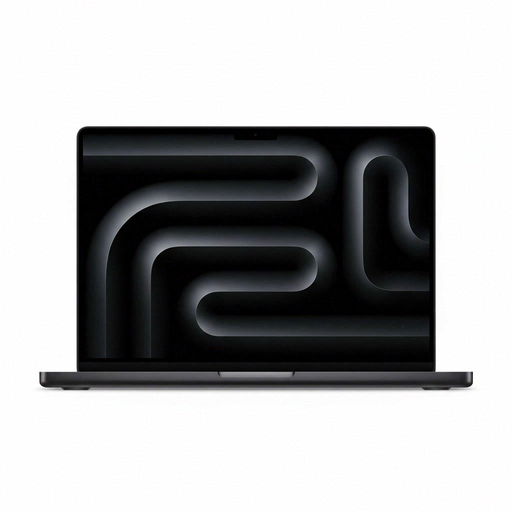
The MacBook Pro M5 Pro is a macOS option when published external-display support is central to the choice.
ProArt P16 configurations are relevant when theatre programme layout also involves on-laptop artwork review or more demanding creative applications.
The ThinkPad T14 is a compact Windows line to consider for a desk-and-dock workflow.
These laptops offer different starting points for theatre programme editing, from a 16 GB layout-work configuration to machines with more memory or graphics hardware. For each one, confirm your required screen arrangement and software compatibility before treating its listed specifications as a complete desk setup.
 No image available
Consider this for a macOS layout workflow where you also intend to connect external displays.
The listed variant has a 15-core CPU, 16-core GPU, 24 GB memory and 2 TB storage. Apple publishes support for up to two high-resolution external displays with M5 Pro; check the exact model’s supported modes against your monitors and confirm whether a suitable power adapter is included.
 No image available
Consider this Windows configuration if programme editing also involves artwork review or demanding creative applications, rather than text-first layout alone.
The listed touchscreen variant has a Ryzen AI 9 HX 370, GeForce RTX 5080 16 GB, 64 GB RAM and a 2 TB SSD. Confirm the exact panel’s colour characteristics and the supported modes for your two-screen connection.
 No image available
This compact Windows option is worth checking for layout work that moves between venues and a desk.
The listed Quiet Blue variant has a Snapdragon X processor, 16 GB RAM and a 512 GB SSD. Before relying on it for production, confirm that your InDesign version works as required on this processor and that the intended monitors can run in the required extended-display mode.
 No image available
Consider this configuration if your programme work extends beyond layout into graphics work and you are comfortable carrying a 15.6-inch laptop.
The listed variant has a Ryzen 7 170, GeForce RTX 5050, 16 GB RAM, a 1 TB SSD and a 144 Hz FHD display. Check whether its USB-C port carries video and whether the complete setup supports your intended extended screens.
 No image available
This larger-screen laptop may suit layout work away from external monitors, provided its software and desk connections meet your needs.
The listed Maya Color variant has a Snapdragon X Elite processor, PixelSense touchscreen, 16 GB RAM and a 256 GB SSD. Check local project-storage needs, your InDesign version’s operation on this processor and the connections needed for the intended screens.
For Adobe InDesign 21.3 and later on Windows, Adobe recommends 16 GB RAM and an SSD, so those are sensible starting checks for layout work. If you also keep substantial artwork and other creative applications open, compare the fitted memory and storage with that wider workload.
No: the connector alone does not guarantee video output or support for two external displays. Check the laptop’s documented video mode and display count, then match the dock or direct connections, cables and monitors to your required resolution and refresh rate.
After connecting compatible displays, open Settings, then System and Display to identify and arrange them as an extended workspace. Microsoft Support also describes a setting to remember window locations based on monitor connection; test your arrangement before using it at a venue.
For products placed on the Great Britain market, GOV.UK says CE marking continues to be recognised alongside or instead of UKCA marking where the relevant product-regulation requirements are met. Check the marking and documentation applicable to the particular product rather than assuming one mark alone settles every requirement.