Accuracy-focused draft reviewers
If you compare source and target text alongside comments and reference material for long periods, readable display space, keyboard comfort and memory for your approved applications matter.


Start with the software your workplace approves, then choose a laptop whose screen and keyboard make sustained draft review comfortable. A compact 13–14-inch model can suit work across shared desks, but Windows Pro, macOS or ChromeOS is appropriate only if the required translation, document-review and security tools work on it. Screen positioning and automatic locking matter alongside portability when drafts may be confidential.
If you compare source and target text alongside comments and reference material for long periods, readable display space, keyboard comfort and memory for your approved applications matter.
If you carry a laptop between desks or rooms, consider how easily you can charge it and reconnect the displays and peripherals you use at work.
If drafts contain personal or client information, your laptop must fit your organisation’s rules for device management, encryption, screen positioning and locking.
Confirm the approved work applications and operating system before comparing screen comfort, desk connections and portability.
| Concern | What to check | Who this matters to |
|---|---|---|
| Text-review comfort | Compare the sold configuration’s screen size, resolution, finish, keyboard layout and memory. Check whether text remains comfortable to read at your preferred scaling. | When I compare a draft with comments and reference material, I want to read and revise without constantly rearranging windows. Roughly 45% of consumers put review comfort and working with several approved applications first. |
| Moving between desks | Check the model’s weight, charging arrangement and ports against the displays and peripherals at your desks. | If I move between work areas, I need a laptop I can carry and reconnect without disrupting the review. Around 33% of consumers place mobile hot-desking first. |
| Confidentiality and compatibility | Confirm approved translation tools, VPN and device management; check the organisation’s requirements for screen locking and encryption. | Where a draft may be sensitive, I need to work within workplace security rules without exposing it to people nearby. About 22% of consumers make confidential handling and workplace compatibility their primary concern. |
A laptop may be capable of document work yet unsuitable for a required translation application, font, VPN or device-management system.
Ask your employer or client for the required software and security setup, then check the exact laptop configuration against it.
A filter does not protect a draft left visible on an unlocked laptop. The Information Commissioner’s Office advises positioning screens displaying personal information to reduce unauthorised access and considering other physical-security measures.
Use a filter where the workplace calls for one, position the screen thoughtfully and lock the laptop whenever you leave the desk.
Configurations within a family can differ. Dell UK states that a charger is not included with its cited XPS 13 listing, while Which? lists a DX13260 configuration with 8GB RAM; neither detail establishes what another configuration contains.
Check the exact model or part number for memory, screen, ports, operating-system edition and included charging equipment.
Microsoft describes BitLocker as drive encryption for Windows. If your workplace requires encryption, access to the protected files also depends on following its recovery procedures.
Confirm who manages recovery keys under the organisation’s policy before changing encryption settings.
The 13-inch MacBook Air M5 line is a compact macOS option when the workplace approves the operating system and its required applications.
The cited ThinkPad X1 Carbon Gen 13 configuration is relevant when a Windows business setup and an anti-glare screen fit workplace needs.
The HP EliteBook Ultra G1i is a Windows business option for consumers considering a high-resolution 14-inch touchscreen and more memory.
The XPS 13 DX13260 is a compact Windows line to assess when carrying size matters and the selected configuration meets office requirements.
These Windows, macOS and ChromeOS laptops offer different starting points for draft review. Match the operating system to your approved tools before weighing their listed memory, storage and screen formats.
 Image unavailable
Consider this 14-inch model for draft review if its Windows setup supports your workplace applications.
The listed variant has a Snapdragon X processor, 16GB RAM and a 512GB SSD.
Confirm compatibility with the translation, VPN and device-management tools you must use.
 Image unavailable
Consider this Windows laptop if your approved review workflow calls for its listed memory and a touchscreen.
The product name specifies a 13-inch FHD+ 60 Hz touch display, 32GB LPDDR5 RAM and a 1TB SSD.
Confirm the exact display size, mobile-use requirements and workplace software compatibility before choosing it.
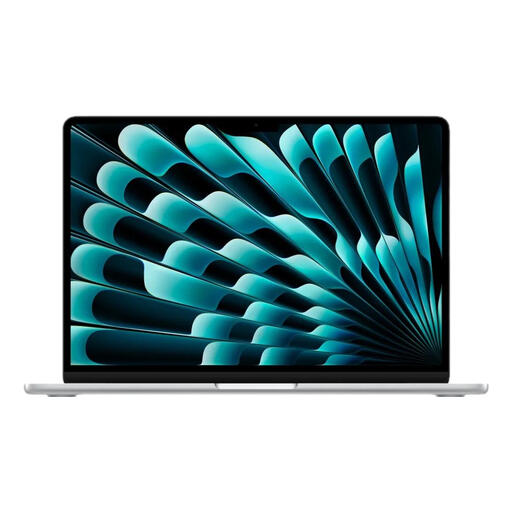 Image unavailable
This compact macOS option is worth considering only if your organisation approves macOS and the required review tools run on it.
The product name specifies an M5 chip with a 10-core CPU and 10-core GPU, 16GB memory and a 1TB SSD. Apple UK lists two Thunderbolt 4 ports for the cited 13-inch M5 line.
Check the sold configuration and whether your desk connections require an adapter or dock.
 Image unavailable
Consider this 2-in-1 for draft review if its display format suits your desk and Windows 11 Home meets workplace requirements.
The named variant has 16GB RAM and a 1TB SSD.
Check screen comfort in your office lighting and confirm compatibility with the required work applications.
 Image unavailable
Consider this Chromebook only if the entire approved draft-review workflow runs on ChromeOS or suitable web applications.
The product name specifies a 14-inch WUXGA 1920 × 1200 display, an Intel Core 5 120U processor, 8GB RAM and a 512GB SSD.
Confirm application compatibility and whether the listed memory suits the files and tools you use together.
Use a privacy screen when your organisation’s assessment or desk layout calls for one, but do not rely on it alone. The Information Commissioner’s Office advises positioning devices displaying personal information to reduce unauthorised access; automatic locking and careful screen positioning remain important.
No. A fingerprint reader can help with sign-in, but it does not replace locking the screen or following workplace access and storage rules. For Windows devices, Microsoft describes BitLocker as drive encryption; follow your organisation’s policy for using it and managing recovery keys.
Check your organisation’s supported operating-system version before buying rather than treating Windows 10 as a long-term default. Microsoft states that Windows 10 support ended on 14 October 2025; the required applications and device-management setup must also work on the laptop you choose.