What matters when buying
For unit-test coursework, settle the required software environment before comparing memory, storage and desk fit. Windows, macOS and Linux are conditional routes, not interchangeable choices for every module.
Windows laptop
Consider it when: Your module specifies Windows tools or a Windows-based Docker workflow; Docker documents use of WSL 2 for this workflow.
Check first: Confirm the course’s processor-architecture requirements and that the exact Windows configuration can run the required WSL or virtualisation setup.
MacBook Air with Apple silicon
Consider it when: Your course confirms that its software and assessment tools work on macOS and Apple silicon.
Check first: An x86-only course dependency may change the decision, and Apple’s USB-C-based port selection may call for adapters.
Linux laptop
Consider it when: Your department permits a Linux development environment and the required tools run on your chosen distribution.
Check first: Confirm institutional support and assessment requirements, rather than assuming that support for VS Code also covers every course application.
| Concern | What to check | Who this matters to |
|---|
| Course-tool compatibility |
Confirm the required operating system, processor architecture and test tools with your department. If the course uses Docker or virtualisation, check those requirements for the exact laptop. |
If a module supplies a fixed development environment, I need to run its tests and submit work without changing machines. Roughly 33% of consumers put course-tool compatibility first. |
| Local test capacity |
Compare RAM and SSD capacity against the applications you will run together. University of York’s general student baseline is 8GB RAM and a 256GB or larger SSD; consider 16GB and 512GB for a heavier local workflow. |
With an editor, browser, terminal and local services open, I want enough room to work without repeatedly closing tools. Around 25% of consumers make local test capacity their primary concern. |
| Value for the coursework |
Check the complete configuration against the module’s software demands rather than choosing by processor name alone. Which? notes that specialist course software can change the level of laptop required. |
If my coursework centres on ordinary coding tasks, I want to avoid paying for specialist capability I will not use without compromising the required setup. Roughly 25% of consumers prioritise that balance. |
| Desk and carrying fit |
Measure your desk and check screen size, weight and the connectors needed for your monitor or accessories. University of York identifies external-display connectivity as a useful student-laptop consideration. |
My laptop has to leave space on a small desk, and I may carry it to campus, so its footprint matters as much as the screen. For around 17% of consumers, room and carrying fit comes first. |
Brands to consider
Use these brands as starting points for comparing specific configurations, not as substitutes for checking your course software.
Apple
The MacBook Air is a compact macOS option when a course confirms Apple-silicon compatibility.
- Apple lists a 13.6-inch display, 16GB unified memory and a 512GB SSD for its cited 13-inch MacBook Air configuration.
- Apple lists two Thunderbolt 4/USB-C ports for that configuration; check adapters and course-specific software before choosing an exact model.
Lenovo
Lenovo offers Windows configurations worth comparing when the course requires a Windows-based setup.
- Which? lists IdeaPad configurations with 16GB RAM and 512GB SSD storage.
- Screen size, weight and ports vary by model; check the exact configuration rather than treating an IdeaPad listing as a brand-wide specification.
Dell
Dell has compact and larger Windows laptops to compare against the available desk space and required workload.
- Which? lists both a 13.4-inch XPS 13 configuration and a 14-inch Dell configuration.
- The cited XPS 13 listing has 8GB RAM; check the precise model’s memory, ports and course compatibility if you expect heavier multitasking.
Acer
Acer models provide different screen-size and carrying-weight choices for room-based work.
- The Which? listings cited for an Aspire 17 and a Swift Go 14 show large-screen and more compact options.
- Those listings give weights of 2.118kg and 1.113kg respectively; compare the exact model you intend to buy rather than applying either weight across Acer laptops.
Joybuy laptop choices
These laptops offer different screen sizes, memory and storage configurations for student-room coding. Compare each one with your course’s software requirements; a Windows or macOS label alone cannot confirm that its test environment will run.
 No image available
Lenovo LOQ Essential 15ARP11, Ryzen 7 170, 16GB, 1TB, RTX 5050
Consider this configuration if you work mainly at a desk and your course tools suit the exact laptop.
The title lists a 15.6-inch 144Hz FHD display, 16GB RAM, a 1TB SSD and GeForce RTX 5050 graphics. Check the desk footprint and carrying weight before choosing a larger laptop; the graphics specification alone does not establish a benefit for unit tests.
Joybuy
 No image available
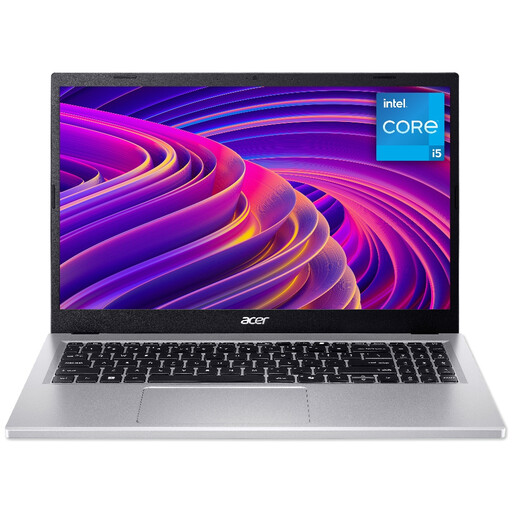
Acer Aspire Go AG15-71P, Core i5-13420H, 8GB, 512GB, Silver
This is a configuration to compare if your unit-test workload does not call for several demanding local tools at once.
The title lists a 15.6-inch Full HD display, 8GB RAM and a 512GB SSD. Eight gigabytes matches University of York’s general student baseline, not a guarantee for container-heavy coursework; confirm the course requirements and any memory-upgrade terms before buying.
Joybuy
 No image available
ASUS Vivobook 14 X1407QA-LY003W, Snapdragon X, 16GB, 512GB, Quiet Blue
Consider the 14-inch format for a smaller desk, but confirm that your course’s applications and architecture-specific dependencies work with its Snapdragon processor.
The title lists 16GB RAM and a 512GB SSD. Do not assume that a Windows-compatible editor establishes compatibility for the complete coursework stack; also check whether the supplied memory configuration meets your longer-term needs.
Joybuy
 No image available
Apple 13-inch MacBook Air (2026), M5, 24GB, 1TB, Midnight
This compact macOS option is worth considering only if your course confirms support for Apple silicon and its required tools.
The title specifies an M5 chip with a 10-core CPU and 10-core GPU, 24GB memory and a 1TB SSD. Check the exact laptop’s ports against your monitor and accessories, and its weight if you will carry it regularly.
Joybuy
 No image available
MSI Modern C2RMG-282UK, Core 5, 16GB DDR IV, 512GB, 9S7-15H431-282
This 15-inch configuration is an option to compare for desk-based coding with an editor, browser and test runner open together.
The title lists a Full HD display, 16GB RAM and a 512GB SSD. Confirm the exact operating system, processor architecture and course-tool compatibility before choosing it.
Joybuy
Common questions
Is 8GB RAM enough for writing unit tests?
It can be a starting point for a lighter course workload: University of York recommends 8GB RAM as a general taught-student baseline. If you routinely run an editor, browser, test runner and containers or local services together, compare 16GB configurations against your course requirements instead of treating that baseline as a guarantee.
Can I use a Chromebook for unit-test coursework?
Choose one only if the exact ChromeOS and Linux setup supports everything your module requires. Check the editor, language runtime, package manager, test framework, repository workflow and assessment tools with your department, including any container requirements.
Do I need Windows for Docker-based coursework?
Not necessarily; the course’s prescribed environment decides which platform is suitable. If it specifies Windows and Docker Desktop, Docker documents a WSL 2 workflow, so confirm the required Windows configuration, processor architecture and WSL support before buying.
Which connections matter at a student-room desk?
Start with the monitor and accessories you intend to use, then match their connectors to the exact laptop. University of York identifies external-monitor connectivity and at least two USB ports as useful student-laptop considerations; a USB-C-based setup may need a compatible adapter for other connectors.


