What matters when choosing?
Start with course software and assessment requirements, then decide whether your main device must travel with you and what support makes it usable.
Laptop
Choose when: You need a keyboard for substantial writing or your course requires computer applications or assessments that it confirms will run on the laptop.
Bear in mind: A laptop is not automatically compatible with specialist software; confirm its operating system and configuration with your course.
Tablet with a keyboard
Choose when: Your work centres on reading, notes and web-based tasks, and your course confirms that its required apps and assessments work on the tablet.
Bear in mind: Adding a keyboard does not make an incompatible desktop application or assessment work on a tablet.
| Concern |
What to check |
Who this matters to |
| Course compatibility |
Ask for the required applications, operating system and assessment format; compare the device with your course’s specifications. |
If my assignments depend on an installed application or a particular assessment platform, I need a device that can use it. About 31% of consumers put course compatibility first. |
| Working across locations |
Check carrying weight and keyboard comfort, then assess whether battery runtime suits your timetable. |
Moving between college and home makes a device I can carry and write on important. For about 25% of consumers, portable everyday study is the primary need. |
| Affordable, reliable access |
Check college loans and computer-room access, along with connectivity and repair arrangements. |
When access to a working study setup is uncertain, I need to know what support is available before choosing a device. Reliable access comes first for about 25% of consumers. |
| Accessibility and continuity |
Confirm that required assistive peripherals work with the device and that you have a suitable coursework backup method. |
If a particular input method or support arrangement makes study workable for me, it needs to shape my choice. About 19% of consumers prioritise accessibility and study continuity. |
Brands for reference
There are no brand profiles to display.
Joybuy study-device selections
These portable computers offer different configurations for coursework. Check your course requirements before choosing: the Chromebook is a consideration for confirmed ChromeOS workflows, while the Windows models also require checks for their specific software and assessment needs.
 Image unavailable
HP OmniBook X Flip 16-as0004na, 16-inch touchscreen
Consider this convertible laptop if you want a keyboard for coursework alongside a touchscreen. Its listing describes a 360-degree hinge, Intel Core Ultra 5 226V, 16GB RAM, 512GB SSD and Windows 11 Home.
Confirm that your course software and assessments work with this configuration; check active-use battery runtime if you often study away from a socket.
View on Joybuy
 Image unavailable
ASUS Vivobook 15 X1504VA, 15.6-inch, 24GB RAM, 1TB SSD
This laptop is worth considering for document work and online sessions if your course accepts its Windows 11 Home setup. The listing specifies an Intel Core 5 120U, a Full HD IPS display, an integrated webcam and microphone, and a weight of 1.70 kg.
Confirm course compatibility and active-use battery runtime: the stated battery figure refers to standby time.
View on Joybuy
 Image unavailable
ASUS Vivobook 14 X1407QA-LY003W, Snapdragon X
Consider this 14-inch laptop for study across locations if its software setup fits your course. The listing specifies a Snapdragon X processor, 16GB RAM, 512GB SSD, Windows 11 Home and a weight of 1.49 kg.
Because Snapdragon X uses ARM architecture, confirm that every required application and assessment tool supports Windows on ARM. Check active-use battery runtime if you need extended unplugged use.
View on Joybuy
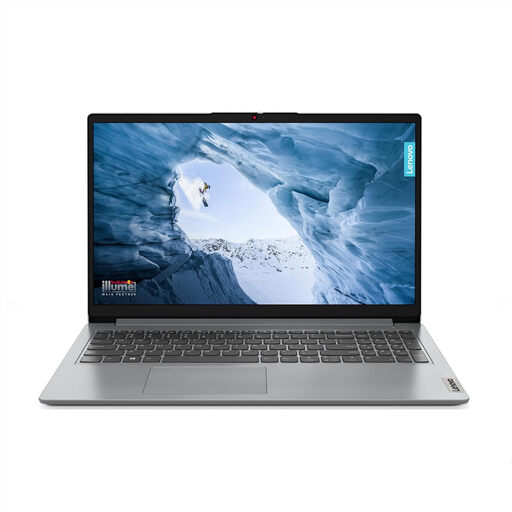 Image unavailable
Lenovo IdeaPad 1, 15-inch, Ryzen 3 7320U, 128GB SSD
This laptop is a consideration for keyboard-based coursework if its configuration meets your course requirements. The listing states 8GB RAM, a Full HD display, a weight of 1.58 kg and Windows 11 Home in S Mode.
Check whether required software works in S Mode and whether 128GB of local storage will accommodate your course files and applications.
View on Joybuy
 Image unavailable
Acer Chromebook Plus 514 CB514-5H, 14-inch
Consider this Chromebook for web-centred coursework only if your course confirms that its software and assessments work on ChromeOS. The listing specifies an Intel Core 5 120U, 8GB RAM, 512GB SSD and a weight of 1.49 kg.
The listing states that it is not compatible with traditional Windows or macOS desktop-native software. Confirm browser and assessment requirements before relying on it as your main device.
View on Joybuy
Common questions
Can a tablet be my only device for college?
A tablet can be your main device if your course confirms that its applications, writing tasks and assessments work on it. Otherwise, choose a compatible laptop or arrange access to a computer: UCL advises regular access to a laptop or desktop, and UWE Bristol cautions that specialist applications may not install on tablets.
What should I ask my course before buying?
Ask for required software, supported operating systems and browsers, assessment requirements and the course’s minimum device specifications. Also ask whether licences, remote access, computer rooms or loan devices are available. University of Warwick and University of York guidance both note that specialist course requirements can take priority over general recommendations.
Does every course require a high-specification laptop?
No single specification follows from the fact that you are studying: match the device to the applications and tasks your course requires. UWE Bristol distinguishes everyday online learning from more demanding specialist work, while the University of York advises checking with a department about specialist requirements.
How can I keep coursework accessible if my device fails?
Use institution-provided backed-up storage where available and make sure you can still access your account. UCL recommends its student OneDrive for backed-up personal storage; ask your college which storage and account-recovery arrangements apply to you.
What if a study device bought in the UK is faulty?
A fault is different from discovering that a working device does not meet a course requirement. GOV.UK states that a retailer must offer a refund for goods that are faulty or not as described; the Consumer Rights Act 2015 explanatory notes also describe a right to seek repair or replacement of faulty goods. Contact the seller with the fault details rather than relying solely on its change-of-mind returns policy.


