Remote workers using a laptop camera
If the laptop lid puts the camera at an awkward angle, a separate webcam gives you another camera-position option. Check its mount and preview the frame at the desk where you take calls.


Add a USB webcam when the laptop camera’s position, framing or image in your usual lighting is the main problem. For a quiet, one-person call, an integrated microphone may be sufficient once you have tested it in the meeting app; if background noise or private listening is the concern, consider a headset or separate microphone as well. Check software and operating-system requirements before relying on adjustable framing or automatic lighting features.
If the laptop lid puts the camera at an awkward angle, a separate webcam gives you another camera-position option. Check its mount and preview the frame at the desk where you take calls.
Check the selected camera and microphone, lens cover and app permissions before an important call. If the room is noisy, test a headset rather than assuming a different camera will solve an audio problem.
An integrated webcam microphone keeps the setup simple for one-person calls. If other people are nearby or you want private listening, consider headphones or a headset alongside the camera.
Start with what goes wrong in your current calls, then check the camera and audio features separately.
| Priority | What to check | Your needs |
|---|---|---|
| Camera position and framing | Check where the webcam can be mounted and preview the resulting angle. If you need auto-framing or a narrower view, check the exact model’s controls and software requirements. | The laptop lens sits too low for my desk setup, or I want to control how much of the room appears behind me. |
| Room lighting | Preview video in the room and lighting you normally use. Check whether any advertised light adjustment works with your laptop setup; resolution alone does not establish the result in that room. | My calls take place with limited or changing light, so I need to see how the camera handles my usual position. |
| Microphone and listening | Test the selected microphone and speakers in your calling app. If you need private listening or nearby noise affects the test, compare a headset or separate microphone. | I call from a shared or noisy space and need to decide whether one webcam can handle audio as well as video. |
| Privacy and visible area | If you want a physical lens block, check for a stated shutter or cover rather than a general privacy claim. Preview the camera before joining to see what is in frame. | I want to cover the lens between calls or keep more of my room out of view. |
| Laptop and app setup | Check the connector, operating-system support and requirements for companion software. In the meeting app, select the intended devices and allow camera and microphone access where required. | My calls must work on a particular laptop or meeting platform, including before an interview. |
A resolution label does not tell you whether the camera position, visible area, lighting or audio suits your calls.
Identify the problem with your present setup, then check the feature that addresses it and preview the image in your usual room.
An integrated microphone may be convenient, but it does not settle how your voice sounds amid nearby conversation or other room noise.
Test it in your calling app. If the result or your need for private listening calls for a different audio setup, compare a headset or separate microphone.
Framing controls may depend on companion software, while browser permissions can prevent a camera or microphone from working in a call. Logitech Brio 500 auto-framing requires Logi Tune and is unavailable on ChromeOS.
Check your operating system, USB connection, software-installation permissions and meeting-app settings before relying on a particular function.
GOV.UK guidance says electrical products displaying the crossed-out wheelie-bin symbol should not go in household rubbish.
Take an unwanted webcam to an appropriate electrical-waste collection point, or ask the retailer about a take-back route.
The Brio 500 is a webcam reference for laptop calls where framing, lighting and a physical lens cover matter.
The PowerConf C200 offers a way to choose how much of the room appears in a one-person call.
Jabra provides a separate camera-and-headset example for calls where both framing and listening arrangements need attention.
These webcam options address laptop-call video and include integrated microphone routes. Test the chosen microphone in your calling app; a headset remains a separate choice if call audio or private listening is the main concern.
 No image available
Consider this for a separate camera position and integrated audio on laptop calls. The product information describes autofocus, a 67° field of view, dual microphones and a physical privacy slider. Its 2K name and Full HD 1080p description differ, so confirm the video resolution before choosing it for image detail.
 No image available
Consider this when you want built-in call audio and control over the visible area. The title specifies fixed focus, a 98° adjustable field of view, dual speakers and USB setup. Check how the field-of-view control works with your laptop; if a physical lens block matters, confirm the privacy mechanism.
 No image available
This is a separate camera option for everyday laptop calls. Its product information describes 720p video, an integrated microphone, a flexible mount and USB-A connectivity. Check whether 720p meets your image-detail needs and whether your laptop has a suitable USB-A connection.
 No image available
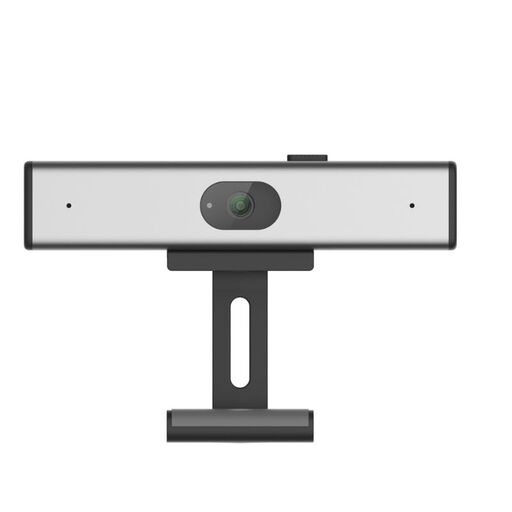
Its clip-on design offers a separate camera position for laptop calls, and the product title specifies a noise-reduction microphone. Before choosing it for your setup, confirm the USB connection, operating-system support and compatibility with your meeting app.
It may be enough for one person in a quiet room if an in-app test sounds suitable for the call. Zoom Support describes a microphone test; use it with your intended speakers or headphones, and consider a headset or separate microphone if the result reveals noise, echo or inadequate voice level.
Select and preview the intended camera, then test the microphone and speakers before the interview. Microsoft Support describes device selection and a test call in Teams; Zoom Support describes its audio test. For Teams in a browser, camera and microphone permissions may also need to be allowed, while workplace settings may be managed by an IT administrator.
Choose a stated physical shutter or cover if you want to block the lens between calls. Check the exact model’s mechanism rather than relying on a general privacy description, and preview the selected camera before joining to check what is visible.
Use an appropriate electrical-waste collection route rather than household rubbish. GOV.UK guidance says electrical products displaying the crossed-out wheelie-bin symbol should be taken to an appropriate collection point for recycling.