Fixed-home desk workers
If you use a laptop at the same desk for substantial work periods, you may need space for a separate display or a raised laptop alongside a keyboard and mouse.


For a mostly fixed home desk, consider an external monitor with a separate keyboard and mouse; if you move between locations, a packable riser and input devices may be easier to carry. Add a dock when you need several desk connections, but check your exact laptop’s video output, charging requirements and display limits before choosing one.
If you use a laptop at the same desk for substantial work periods, you may need space for a separate display or a raised laptop alongside a keyboard and mouse.
If you regularly work in both locations, consider what you can carry and connect at each desk without relying on a permanent setup.
If your work involves external displays, several connected devices or frequent calls, focus on the connections and call equipment your laptop setup actually needs.
Start with where you work and what the laptop alone cannot accommodate. Then check connections and compatibility before adding a monitor, dock or call equipment.
| Concern | What to check | Who this matters to |
|---|---|---|
| A practical fixed desk | Check desk space for a monitor or raised laptop and separate input devices. Confirm the monitor connection if you choose an external display. | If I work at one desk most days, I need to position the screen without making typing awkward. Around 27% of consumers put this fixed-desk need first. |
| Dock and display compatibility | Check the exact laptop’s video-capable ports, the required display arrangement and charging input against the dock’s stated support. | Several devices and screens are useful to me only if they work together with my laptop; compatibility is the primary concern for around 33% of consumers. |
| Portability between desks | Check a riser’s folded size and laptop-size support, the keyboard and mouse connections, and the ports needed at each location. | When I move between home and office, I want a setup I can pack and reconnect without rebuilding a permanent desk. Around 20% of consumers prioritise portability. |
| Equipment for calls | Check whether a webcam or headset addresses a limitation of your existing equipment, then confirm its connection and mounting or control options. | If calls are the main difficulty, I would address camera or audio equipment before adding screen space; that is the first concern for around 20% of consumers. |
As Kensington’s docking guidance explains, USB-C describes the connector, not guaranteed video, data-speed or charging capabilities. A dock may therefore fall short of the display or charging arrangement you intend.
Check the laptop model’s port specifications, operating system and charging requirement against the dock’s documented support.
Microsoft Support notes that a splitter duplicates one display signal rather than creating two independent signals.
For separate external desktops, check the laptop’s display limits and choose a connection method documented to support the arrangement you need.
Moving the screen also moves its attached keyboard and trackpad, which may make the intended desk arrangement impractical.
Plan space for a separate keyboard and mouse, and check their connection method and keyboard layout.
A riser-only purchase may leave you needing those input devices as well.
For workers covered by display-screen-equipment guidance in Great Britain, the Health and Safety Executive says assessment considers the whole workstation and working conditions. Its guidance also addresses breaks or changes of activity.
If you are an employee using a home workstation regularly, raise workstation needs through your employer’s assessment process where applicable; accessories do not replace that process or a suitable work routine.
Logitech’s work-accessory range includes keyboards, mice, webcams and headsets for desk setups.
Kensington focuses on docks, hubs and laptop connectivity accessories.
Dell’s accessory range spans portable hubs, desk docks and other workstation peripherals.
These options address external-display, docking and call-equipment needs. Choose by the desk arrangement you want, then confirm connections with your own laptop.
 No image available
Consider this when you want an external display you can take between desks.
The product name specifies a 14-inch touchscreen, 60Hz refresh rate, 100% sRGB, VESA compatibility and a stand adjustable through 180°. Check your laptop’s video connection and whether its operating system supports the touch functions you need.
 No image available
Consider this separate display for a desk where the monitor can stay in place.
The product name lists a 31.5-inch IPS LED screen, 2K Ultra HD, Adaptive-Sync and built-in speakers. Check that your laptop or dock offers a compatible display connection and supports the mode you intend to use.
 No image available
Consider this for a desk where you want to connect displays and other devices through a dock.
The product name specifies dual HDMI 4K and 100W Power Delivery pass-through. Check your laptop’s USB-C video capability, supported display arrangement and charging requirement; pass-through charging also depends on a suitable power source.
 No image available
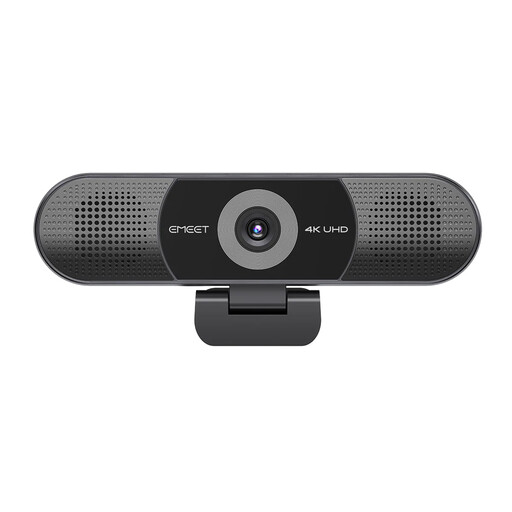
Consider this if camera and audio equipment, rather than desk connectivity, is your priority for calls.
The product name lists four microphones, two integrated speakers, fixed focus and an adjustable 98° field of view. Confirm USB and meeting-software compatibility, and consider whether fixed focus suits your camera position.
 No image available
Consider this for calls when you prefer a wired headset with controls on the cable.
The product name identifies a noise-cancelling microphone. This headset uses USB-A, so check that your laptop has an available compatible port.
Decide whether you need more display area or a different position for the laptop screen. A monitor with a separate keyboard and mouse suits a desk where those items can remain set up; a riser with separate input devices takes a different approach when you will keep using the laptop display. Check the display connection before buying a monitor.
No: the USB-C plug alone does not establish support for two independent displays. Check the exact laptop’s display capabilities and the dock’s operating-system and display-mode requirements; Microsoft Support also notes that a basic splitter duplicates a signal rather than creating separate desktops.
Compare the laptop’s charging requirement with the dock’s stated power output to the host laptop. Confirm that the laptop accepts charging through the port you intend to use and, for pass-through charging, check the dock’s power-source requirements.
Check the external-display specification for your exact Mac model and chip before choosing a dock. Apple Support says the number of external displays a Mac can connect depends on its technical specifications; the dock’s connection and software requirements matter too.
Do not assume that a particular accessory must be bought personally. In Great Britain, Health and Safety Executive guidance focuses on employers assessing the whole workstation for workers to whom display-screen-equipment rules apply, including qualifying home workers. If you are an employee, discuss an identified workstation need through your employer’s assessment process.