What should you check before choosing?
Start with your required animation software and rendering backend, then match the exact laptop configuration to your projects. A creator-laptop or workstation family name alone cannot tell you which GPU, memory or display a particular build has.
Windows laptop with NVIDIA RTX graphics
Consider it when: Your essential tools require Windows or a compatible NVIDIA CUDA or OptiX rendering route.
Bear in mind: Blender notes that GPU memory can limit complex scenes, so the graphics-card name alone is not enough to assess a configuration.
Apple Silicon MacBook Pro
Consider it when: Your animation applications and plug-ins support macOS and your rendering workflow can use an available Mac backend.
Bear in mind: A MacBook Pro is not a substitute for compatible NVIDIA hardware if a required tool depends on CUDA or OptiX.
| Concern |
What to check |
Who this matters to |
| 3D rendering |
Check the exact GPU, its memory and driver support for your Blender rendering backend. The Blender Foundation recommends 32GB RAM and 8GB GPU memory for Windows. |
If complex 3D scenes and GPU rendering drive my work, I need to know whether the selected configuration can use my renderer without running into its GPU-memory limits. Around 36% of consumers would put rendering capability first. |
| Drawing and display |
Check the exact panel specifications and, if you draw on-screen, pen compatibility rather than touchscreen support alone. |
When I draw or review animation on the laptop itself, the screen and input method shape my daily workflow. For around 29% of consumers, that workflow would be the primary concern. |
| Software ecosystem |
Confirm operating-system support for essential apps and plug-ins, plus the backend required by your renderer. |
If I move between locations, I need a laptop that runs my existing production tools wherever I work; a powerful specification cannot make an incompatible plug-in run. Around 21% of consumers would make software compatibility their first priority. |
| Memory and storage |
Check installed RAM, SSD capacity and whether the selected model permits the upgrades you expect. |
For learning or lighter 2D projects, I want enough room for my applications and project files without choosing a configuration solely for demanding 3D rendering. That would be the leading concern for around 14% of consumers. |
Joybuy product choices
These laptops cover Windows configurations with NVIDIA RTX graphics and an Apple Silicon MacBook Pro for a macOS workflow. Match any choice to your animation applications, rendering backend and the exact configuration listed.
 No image available
ASUS ProArt P16 H7606WW-SE006W, RTX 5080 16GB, 64GB RAM, 2TB SSD
Consider this Windows configuration if your 3D work calls for the listed memory and graphics hardware, provided your required renderer supports the selected setup.
The product name specifies a 16-inch 4K OLED touchscreen, AMD Ryzen AI 9 HX 370, NVIDIA GeForce RTX 5080 with 16GB graphics memory, 64GB RAM, 2TB SSD and Windows 11 Home.
If you intend to draw with a pen, confirm stylus compatibility for this exact model.
View on Joybuy
 No image available
Lenovo Legion Pro 7 16IAX10H 83F5000UUK, RTX 5090, 64GB RAM, 2TB SSD
This is a Windows RTX configuration to assess for Blender 3D work if its exact graphics setup supports your rendering tools.
The product name specifies a 16-inch display, Intel Core Ultra 9, NVIDIA GeForce RTX 5090, 64GB RAM, 2TB SSD and Windows 11 Home.
Check the GPU memory and driver requirements for your renderer before relying on the graphics-card name alone.
View on Joybuy
 No image available
MSI Stealth 18 AI Studio A1VGG-001UK, RTX 4070, 32GB RAM, 2TB SSD
The 18-inch format is worth considering if a large built-in screen matters to your animation workflow; assess how often you will carry it.
The product name specifies an Intel Core Ultra 9, NVIDIA GeForce RTX 4070, 32GB RAM and 2TB SSD.
Confirm the graphics memory and supported rendering backend for the exact configuration you intend to use.
View on Joybuy
 No image available
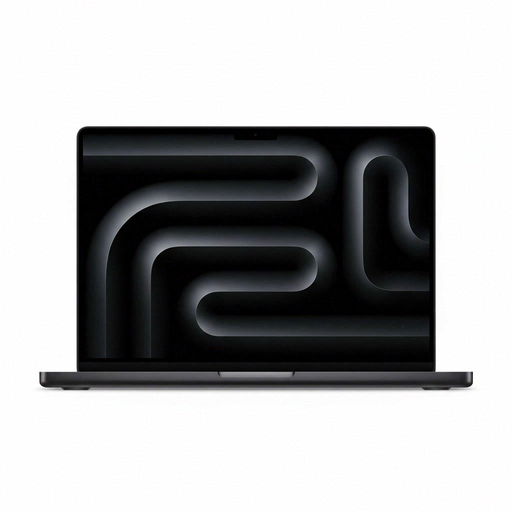
Apple MacBook Pro 14.2-inch M5 Pro, 24GB/2TB, Space Black
Consider this Apple Silicon model if your animation applications, plug-ins and renderer support your intended macOS workflow.
The product name specifies an M5 Pro with a 15-core CPU and 16-core GPU, 24GB memory and 2TB storage.
It is not a CUDA or OptiX route. Check the required macOS version and the compatible power adapter for your setup.
View on Joybuy
 No image available
Lenovo LOQ Essential 15ARP11, RTX 5050, 16GB RAM, 1TB SSD
This Windows RTX model may suit lighter animation projects, but its listed 16GB RAM is below the Blender Foundation’s 32GB Windows recommendation.
The product name specifies an AMD Ryzen 7 170, GeForce RTX 5050, 1TB SSD and a 15.6-inch 144Hz Full HD display.
Check its GPU memory, rendering-backend compatibility and whether the installed memory meets the needs of your projects.
View on Joybuy
Frequently asked questions
What specifications should I start with for Blender animation on Windows?
The Blender Foundation’s Windows recommendations list an 8-core CPU, 32GB RAM, an 8GB-VRAM GPU and Windows 11. They are a starting point, not a promise of equal performance across projects; check the demands of your scenes and renderer as well.
Is an NVIDIA RTX laptop automatically right for Blender?
No. An NVIDIA RTX laptop is relevant if your workflow calls for a supported CUDA or OptiX route, but the Blender Foundation notes that GPU memory can limit complex scenes. Confirm the exact GPU, memory and driver against the backend you plan to use.
Can I create Blender animations on a MacBook Pro?
Yes, if the MacBook Pro and your other production tools meet your macOS requirements. The Blender Foundation states that Blender 5.0 and later require Apple Silicon running macOS 13 or later and documents Metal as a GPU-rendering backend; tools that specifically require CUDA or OptiX need a different compatible hardware route.
Can I cancel an animation laptop ordered online in the UK?
For a qualifying online, mail or telephone purchase, GOV.UK says customers normally have 14 days from receiving the item to tell the seller they want to cancel, followed by another 14 days to return it. Change-of-mind cancellation is separate from remedies when goods are faulty, misdescribed or do not do what they are supposed to do.


