What matters when choosing
Start with the operating system and development tools you cannot change, then weigh everyday noise against the workspace and connections you need. A quiet design does not resolve an incompatible toolchain.
Fanless macOS: MacBook Air M5
Consider it when: quiet everyday editing comes first and your required tools work on macOS and Apple silicon. RTINGS.com found its reviewed 13-inch M5 model silent in everyday use.
Account for: Apple lists two Thunderbolt 4 ports on the 13-inch M5 MacBook Air, so a desk with several wired devices may need a compatible dock.
Intel Windows: ThinkPad or Zenbook
Consider it when: Windows tools or peripherals make a conventional Intel configuration the more straightforward architecture choice.
Account for: the cited Lenovo and ASUS specifications do not establish how much fan noise either exact configuration makes during your coding workload.
Snapdragon Windows: Surface Laptop
Consider it when: every essential application and peripheral has been checked for native Arm64 support or acceptable Windows 11 emulation.
Account for: Microsoft says kernel drivers must be native Arm64 and identifies limitations relevant to some virtualisation workflows.
| Concern |
What to check |
Who this matters to |
| Everyday noise |
Look for an independent noise assessment of the model under work resembling your own; distinguish everyday editing from sustained compilation. |
If I share a quiet study, I want to know whether the laptop is audible while I edit code and consult documentation. Quiet operation would come first for roughly 36% of consumers. |
| Toolchain compatibility |
Check your required runtime, extensions, debugger, drivers and virtualisation tools against the exact operating system and processor architecture. |
If one essential driver or virtual machine cannot run, a quieter laptop will not serve my work. Around 36% of consumers would put toolchain compatibility first. |
| Portable workspace |
Confirm the selected configuration’s screen, UK keyboard layout, memory, storage, ports and external-display support. |
When I move between desks, I need enough usable screen space and connections for my editor and reference material. For about 28% of consumers, that workspace would be the primary concern. |
Relevant brands to consider
These product lines illustrate different operating-system and configuration choices; the fit depends on the exact model and your development workflow.
Apple
The 13-inch M5 MacBook Air is the fanless macOS option for compatible development workflows. MacBook Pro offers additional chip configurations to assess if your work extends beyond everyday editing.
- RTINGS.com found the reviewed 13-inch M5 MacBook Air silent in everyday use. Apple lists two Thunderbolt 4 ports and MagSafe for the model.
- Confirm macOS and Apple-silicon support for required tools; the noise finding does not establish behaviour during sustained heavy compilation.
Lenovo
The researched ThinkPad X1 Carbon Gen 13 Aura Edition configuration offers a conventional Intel Windows choice with a documented English (UK) keyboard.
- Lenovo specifies Windows 11 Pro, 16GB memory, a 512GB SSD and a 14-inch anti-glare 1920 × 1200 display for configuration 21NSCTO1WWGB2.
- Check independent noise findings for the configuration and workload you intend to use rather than assuming it will be silent.
Microsoft
Surface Laptop provides a Snapdragon-based Windows option for developers whose essential software and devices have been checked for Windows on Arm.
- Microsoft lists a 13.8-inch Surface Laptop configuration and documents x86 and x64 application emulation in Windows 11 on Arm.
- Microsoft says kernel drivers require native Arm64 support; check any driver-dependent or virtualisation workflow separately.
ASUS
Zenbook S 14 UX5406 offers compact Intel Windows configurations with a choice of memory, storage and 14-inch display variants.
- ASUS lists UX5406 variants with 16GB or 32GB memory and 512GB or 1TB SSD storage.
- Check the exact display and memory variant in the listing, and seek model-specific noise evidence if quiet operation is decisive.
MacBook Air configurations on Joybuy
These 13-inch M5 MacBook Air configurations suit the fanless macOS route if your development tools are compatible. Their memory, storage and colour distinguish the two choices; neither listing changes the need to check your own workflow.
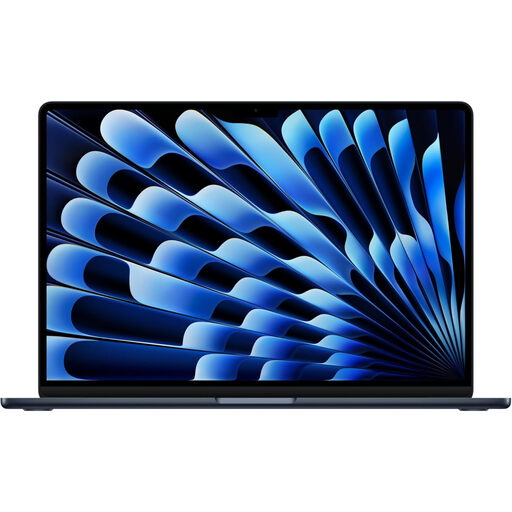 Image unavailable
Apple 13-inch MacBook Air M5, 10-core CPU and GPU, 24GB, 1TB SSD, Midnight
For everyday code editing on a compatible macOS workflow, RTINGS.com reports that its reviewed 13-inch M5 MacBook Air is fanless and silent in everyday use, not that every sustained workload is silent.
- M5 chip with 10-core CPU and 10-core GPU; 24GB memory and 1TB SSD.
- Apple lists two Thunderbolt 4 ports for the 13-inch M5 model; check whether your desk setup needs a dock.
Joybuy
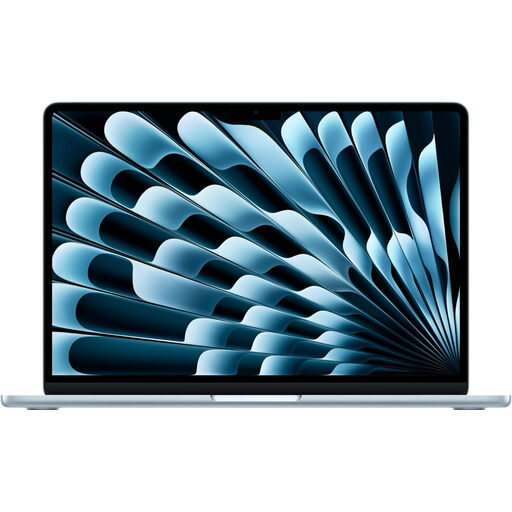 Image unavailable
Apple 13-inch MacBook Air M5, 10-core CPU and GPU, 16GB, 1TB SSD, Sky Blue
For a macOS development stack that fits this configuration, the reviewed 13-inch M5 model’s fanless, silent everyday operation reported by RTINGS.com is relevant; check heavier-workload noise separately if it matters to you.
- M5 chip with 10-core CPU and 10-core GPU; 16GB memory and 1TB SSD.
- Apple lists two Thunderbolt 4 ports for the 13-inch M5 model; confirm that they cover your peripherals.
Joybuy
Common questions
Is a fanless laptop automatically the right choice for a quiet study?
No: fanless operation helps with the noise concern, but the laptop must also run your development tools. RTINGS.com found the reviewed 13-inch M5 MacBook Air silent in everyday use; check macOS and Apple-silicon compatibility, and do not assume the finding describes sustained heavy compilation.
Can I use a Snapdragon Surface Laptop for programming?
Yes, if the tools and devices your work requires run acceptably on Windows 11 on Arm. Microsoft documents x86 and x64 application emulation, but says kernel drivers must be native Arm64 and notes virtualisation-related limitations. Check the exact runtime, extensions, debugger and peripherals you need.
What screen and keyboard details should I check for code editing?
Check the exact configuration’s display size and finish and its keyboard layout, alongside memory and connections. Lenovo specifies a 14-inch anti-glare 1920 × 1200 screen and English (UK) backlit keyboard for ThinkPad configuration 21NSCTO1WWGB2; ASUS lists differing display and memory options within the Zenbook S 14 UX5406 range.
How soon must I act if I want to cancel an online laptop order?
For an online change-of-mind cancellation, GOV.UK says you must tell the seller within 14 days of receiving the item. Check the seller’s instructions for making a cancellation; this is separate from remedies for faulty or misdescribed goods.
Does a laptop for Great Britain need UKCA rather than CE marking?
Not necessarily. GOV.UK guidance says Great Britain continues to recognise CE marking alongside or in place of UKCA marking where applicable. That guidance covers England, Scotland and Wales; check the applicable requirements separately for delivery to Northern Ireland.


