What matters when choosing?
For home-office work or university coursework, establish your required applications first. Then compare the configuration and the practicalities of using the laptop at a desk or on the move.
| Concern |
What to check |
Who this matters to |
| Software compatibility |
Ask your course or employer for the named applications, supported operating systems and any processor requirements. Check peripherals that need their own software. |
If my essential course or work application will not run, the rest of the specification cannot make up for it. Around 36% of consumers put compatibility first. |
| Memory and file storage |
Compare RAM and SSD capacity with your applications and local files. Microsoft’s Windows 11 installation minima of 4GB RAM and 64GB storage are not a work or study specification. |
Keeping documents, browser tabs and meetings open together makes usable memory and space for files my main concern. For around 29% of consumers, capacity takes priority. |
| Portability and desk setup |
Check the exact model’s size, weight, camera, microphone and ports against your travel and desk needs. Assess battery claims under relevant usage conditions. |
Moving between a desk, campus or meetings means I need a laptop I can carry and connect where I work. Portability and setup come first for around 21% of consumers. |
| Condition and support |
For a refurbished device, confirm the full configuration, battery and condition description, charger, supported operating system and seller terms. |
When considering an older laptop, I want its condition and remaining software support to make sense for my work. Around 14% of consumers make that assurance their primary concern. |
Windows laptops on Joybuy
These Windows laptops offer different screen sizes, memory and storage configurations for home working or study. Check your required applications and connections against the exact model before deciding; the products here do not cover the macOS, Chromebook or refurbished routes discussed above.
 No image available
Acer Aspire Lite AL15-36P-C29Z, Intel N150, 8GB RAM, 128GB SSD
Consider this Windows laptop for routine documents and study if its applications and storage capacity meet your needs.
The listed configuration has a 15.6-inch Full HD screen and Windows 11 Home. Its 128GB SSD leaves less local-file space than the other Windows models shown here; confirm whether the supplied Windows installation uses S Mode before relying on software installation.
Joybuy
 No image available
ASUS Vivobook 14 X1407QA-LY003W, Snapdragon X, 16GB RAM, 512GB SSD
The 14-inch format is worth considering if you move between work or study locations and want the listed memory and storage for local files.
This Copilot+ PC uses a Snapdragon X processor. Confirm that each required application supports its processor architecture and Windows version, and check battery endurance for your workload.
Joybuy
 No image available
ASUS Vivobook 15 X1504VA, Intel Core 5 120U, 24GB RAM, 1TB SSD
Consider this configuration if keeping several applications and substantial coursework or work files locally is important to you.
It has a listed 15.6-inch display. Check the applications you need and ask about active-use battery endurance: a standby-time figure does not answer how long it will run during work.
Joybuy
 No image available
ASUS Zenbook DUO UX8406CA-QL135W, dual OLED, 16GB RAM, 1TB SSD
The dual-screen design may suit someone who wants a flexible workspace for documents and applications, provided it fits their carrying and desk arrangements.
This 14-inch model lists an Intel Core Ultra 7 255H processor. Confirm the supplied display resolution, microphone and battery endurance if those details affect your choice.
Joybuy
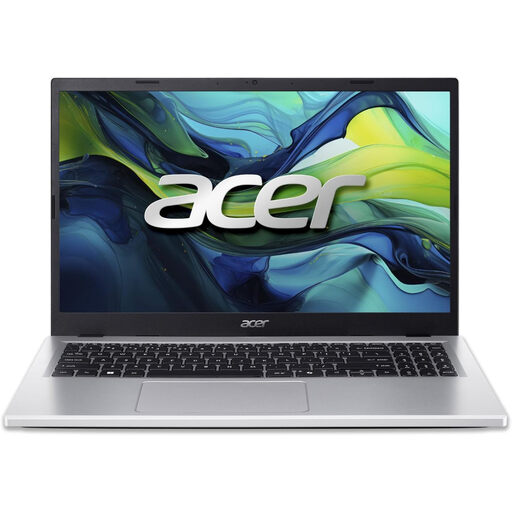 No image available
Acer Aspire Go 15 AG15-71P, Intel Core i5-13420H, 8GB RAM, 256GB SSD
This Windows 11 Home configuration is an option for everyday documents and coursework if 8GB RAM and 256GB storage cover your applications and files.
It lists a 15.6-inch Full HD screen. Check whether its memory, connections and battery endurance suit your particular course or work routine.
Joybuy
Common questions
Should I decide on Windows, macOS or ChromeOS before comparing specifications?
Yes: establish which operating systems run your required applications before comparing laptop configurations. The University of Warwick advises students to seek course-specific requirements, while Loughborough University identifies software that does not work on Apple devices. Check the exact course or employer list rather than treating any operating system as universally compatible.
How much memory and storage do I need for work or study?
Choose RAM and SSD capacity against the applications you run together and the files you keep locally. Microsoft’s Windows 11 minima of 4GB RAM and 64GB storage cover installation requirements, not your productivity workload; specialist course software may set different requirements.
Can a Chromebook be my only university laptop?
It can be your only laptop if your course confirms that every required task works on that device. The University of Edinburgh and the University of Kent caution that Chromebooks may not meet all study needs, and Google says Android app availability varies by Chromebook. Check named applications and institution-managed services individually.
What should I check when buying a refurbished laptop?
Check the exact configuration, condition, charger and support for the operating system and applications you need. Review the seller’s terms for the individual listing separately from your rights if goods are faulty or misdescribed; GOV.UK explains that those problems can give consumers remedies.
What matters for a home desk and video meetings?
Check the exact laptop’s camera, microphone, screen and ports against your meetings and desk equipment. If you use an external display, wired network connection or other peripherals, confirm how each will connect before buying; do not assume an adapter is included.


