For layered poster work in Photoshop, start with Adobe’s recommended 16GB or more of memory and enough free SSD space for the application, working files and scratch disks. If your work is mainly vector layouts, give more weight to software compatibility, the display and how the laptop fits your desk. For posters going to print, check the print provider’s file and colour requirements rather than assuming a wide-gamut display will match the finished print.
Who needs which poster-design laptop?
Layered poster designers
If you combine large images, text, effects and many layers in Photoshop, compare memory and free SSD space before prioritising a thinner laptop. Adobe recommends at least 16GB of RAM, 100GB of available storage and a fast internal SSD for Photoshop.
Colour-conscious print preparers
If clients review your posters or you send them to a printer, examine the exact display configuration and ask the print provider for its file requirements. ASUS and Lenovo make colour-related claims for particular creator displays, but a laptop display specification alone cannot establish how a poster will print.
Space-conscious home-office creatives
If your desk is small or you move between rooms, consider the built-in screen alongside the space needed for an external monitor and peripherals. Apple’s MacBook Pro and Lenovo’s Yoga Pro 7i illustrate different screen-size and connection choices; check the configuration you would buy.
What matters when choosing a laptop?
Check that your essential design software works on the operating system, then match memory and storage to your files. Decide how much built-in screen space you need at your desk before treating portability as the deciding factor.
| Concern |
What to check |
Who this matters to |
| Layered-file editing |
Compare memory with Adobe’s 16GB-or-more Photoshop recommendation. Check free SSD space as well as total capacity. |
If I work with large images and many layers while keeping other applications open, I need room for both the work and Photoshop’s scratch files. Around 33% of consumers put layered-file editing first. |
| Display and print preparation |
Check the exact panel’s colour claims and obtain the print provider’s file, colour-profile and proofing instructions. |
When a poster will be reviewed or printed, I want to assess its colours without mistaking the screen for a print proof. For around 25% of consumers, display and print preparation is the primary concern. |
| Desk space and connections |
Compare screen size with available desk space; verify the ports and external-display support needed for your equipment. |
I need room for layout tools and references, but the laptop must also fit beside my monitor and connect to my peripherals. Desk space and connections come first for around 25% of consumers. |
| Portability and software fit |
Check the laptop’s size and confirm that your applications, plug-ins, fonts and peripherals work with its operating system. |
If I move the laptop around the home or depend on an established Windows or macOS workflow, changing size or platform affects my daily work. Around 17% of consumers prioritise portability and software fit. |
Buying mistakes to avoid
-
Choosing Photoshop’s minimum specification as your target
Adobe lists 8GB of RAM as a minimum but recommends 16GB or more, alongside available storage and a fast SSD. The minimum does not leave the same specification headroom for layered files and other open applications.
Compare the exact laptop configuration with Adobe’s recommendations, then allow space for your own images, exports and working files.
-
Assuming every version of a laptop family is alike
Display, graphics, memory and storage can differ between configurations within a creator-laptop range. A family name or product photograph cannot identify the specification of a particular model.
Match the full model and configuration to the display, memory, storage and graphics information on the product detail page.
-
Leaving monitor and peripheral checks until later
A home-office setup may need connections for a monitor, external storage or an SD card. Apple lists several built-in connection types for MacBook Pro, but another laptop’s ports may differ.
List the equipment you use and check the exact model’s ports and external-display support before ordering.
If a required connection is absent, your setup may also need a compatible dock, adapter or cable.
-
Relying on a return policy instead of checking compatibility
Returning a laptop does not resolve an avoidable mismatch between your design workflow and the configuration you ordered. A retailer’s voluntary return terms are also distinct from statutory rights.
Record the exact configuration, check your software and peripherals, and read the seller’s terms before placing the order.
Relevant laptop brands to consider
ASUS
The ProArt range offers Windows creator laptops in compact and larger-screen configurations.
- ASUS describes selected ProArt displays as wide-gamut and colour-focused, and offers configurations with dedicated graphics.
- Those display and hardware claims do not apply to every ProArt laptop; check the full model number and configuration.
Apple
MacBook Pro is a macOS route for poster designers whose applications and working files fit an Apple-based workflow.
- Apple lists a Liquid Retina XDR display and built-in Thunderbolt, HDMI and SDXC connections for MacBook Pro.
- Before changing platforms, check your plug-ins, fonts, printer setup and any client handoff requirements for macOS compatibility.
Lenovo
The Yoga Pro 7i Gen 10 Aura Edition is a 14.5-inch Windows creator-laptop option for a smaller desk or more frequent movement around the home.
- Lenovo describes this model with a 14.5-inch 3K OLED display and makes colour-accuracy claims for it.
- Its built-in screen leaves less room for tool panels and references than a 16-inch screen; check the exact display configuration.
Joybuy laptops for poster-design workflows
These Windows and macOS laptops offer different combinations of screen size, memory and graphics hardware for poster work. Match a configuration to your applications and desk setup; a larger specification is not necessary for every layout.
 No image available
ASUS ProArt P16 H7606WW-SE006W, 16-inch 4K OLED
Consider this Windows configuration if poster design sits alongside graphics-intensive creative work. Its listed configuration includes an AMD Ryzen AI 9 HX 370, NVIDIA GeForce RTX 5080 16GB, 64GB RAM and a 2TB SSD. Check the exact display’s colour specifications for print-sensitive work, and allow for the free SSD space your files require.
Joybuy
 No image available
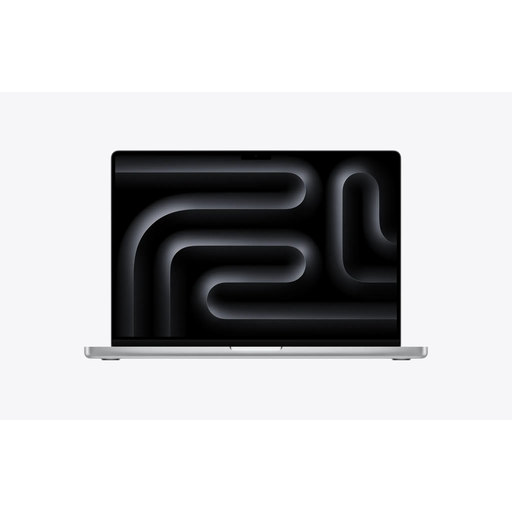
Apple MacBook Pro 16.2-inch M5 Max, 36GB/2TB, Silver
Consider this 16.2-inch macOS model if your poster applications, fonts and peripherals work with macOS and you want a larger built-in screen. The product name specifies an M5 Max chip with an 18-core CPU, a 32-core GPU and a 2TB SSD. Confirm the exact memory configuration before ordering.
Joybuy
 No image available
Lenovo Legion Pro 7 16IAX10H, 83F5000UUK
This Windows gaming laptop is worth considering if poster work is part of a mixed workflow that uses dedicated graphics. Its named configuration has a 16-inch display, an Intel Core Ultra 9, NVIDIA GeForce RTX 5090 graphics, 64GB RAM and a 2TB SSD. Check the panel’s colour details before choosing it for print-sensitive work.
Joybuy
 No image available
Lenovo LOQ Essential 15ARP11, 15.6-inch FHD
For Photoshop-based poster work, its listed 16GB RAM meets Adobe’s recommended memory level; check whether that capacity suits your other open applications too. The configuration names an AMD Ryzen 7 170, GeForce RTX 5050 graphics, a 1TB SSD and a 144Hz display. Confirm the display’s colour characteristics against your review and print needs.
Joybuy
 No image available
MSI Summit 16 AI Evo, 16-inch QHD+
Consider this configuration if you want a 16-inch screen and 32GB RAM for a Windows poster-design setup without choosing a dedicated-graphics model. Its title lists an Intel Core Ultra 7 255H, Intel Arc graphics and a 1TB SSD. Check the display’s colour details and the connections your home-office equipment requires.
Joybuy
Questions about poster-design laptops
Is 8GB RAM enough for designing posters in Photoshop?
Adobe lists 8GB as Photoshop’s minimum, but recommends 16GB or more. If your posters use large images and many layers, compare laptops against the recommended level rather than treating the minimum as the target for that workflow.
How much free storage should I allow for Photoshop poster work?
Adobe recommends 100GB of available storage, a fast internal SSD and additional high-speed storage for scratch disks. That available-space figure is not a total SSD-capacity requirement: also make room for your images, exports and other files.
Will a wide-gamut display make my printed poster match the screen?
No display specification alone can establish how the finished poster will look in print. Use the exact laptop’s colour information when comparing screens, then follow your print provider’s file-format, colour-profile, bleed and proofing instructions.
Can I cancel an online laptop purchase in the UK?
GOV.UK states that customers generally have 14 days from receiving an online purchase to tell the seller they wish to cancel. Check which rules apply to your order and follow the seller’s return instructions; cancellation after a change of mind is distinct from remedies for a faulty or misdescribed laptop.


