What to check before choosing
Start with your course's compulsory applications and equipment, then decide which everyday or specialist demands shape the hardware choice. UWE Bristol says required software can determine the device type.
Windows laptop
Consider when: Your course specifies Windows applications or peripherals, or you need the general compatibility route described by UWE Bristol.
Check: Windows alone does not establish that a model meets your course's processor, memory, storage or port requirements.
Mac laptop
Consider when: Your course confirms that its compulsory applications and peripherals work on macOS.
Check: UWE Bristol warns that some specialist applications are unavailable on macOS and that Windows cannot be installed on Apple-processor Macs in the way it could on earlier Intel-based models.
Chromebook
Consider when: Your institution confirms that browser-based tools cover the coursework and assessments you must complete.
Check: The University of Bristol and UWE Bristol caution against treating a Chromebook as a general primary university computer where specialist applications are required.
| Concern |
What to check |
Who this matters to |
| Software and peripherals |
Ask for the exact compulsory applications, supported operating systems and requirements for attached equipment. |
If my course depends on an installed application or a particular peripheral, I need the laptop to run it before anything else. Around 33% of consumers put compatibility first. |
| Everyday portability |
Consider carrying weight and keyboard comfort, then check the battery information against how you study away from a charger. |
When I move between home and classes, I need a laptop I can carry and use comfortably for writing and online work. For roughly 27% of consumers, everyday portability is the primary concern. |
| Demanding or accessible work |
Match processor, memory, storage, graphics and accessibility equipment to the course's stated requirements. |
If my work involves rendering, advanced programming or accessibility software, basic document use is not a sufficient test of fit. About 20% of consumers place these capability needs first. |
| Refurbished condition |
Confirm the exact model, physical and battery condition, included charger and remaining operating-system support. |
With a refurbished laptop, I need confidence that its condition and software support will last through my intended study use. Condition and support are the main priority for around 20% of consumers. |
Joybuy laptops for different study needs
These Windows laptops cover several memory, storage and carrying-weight configurations; the Chromebook is a separate option for courses that confirm ChromeOS compatibility. Check your institution's requirements against the exact model before choosing.
 No image available
ASUS Vivobook 15 X1504VA, Core 5 120U, 24 GB, 1 TB SSD
Consider this Windows laptop if your course needs the listed memory and storage for its work. The product name specifies a 15.6-inch display, Intel Core 5 120U processor, 24 GB memory and 1 TB SSD; confirm compulsory software and practical battery runtime before relying on it away from a charger.
View on Joybuy
 No image available
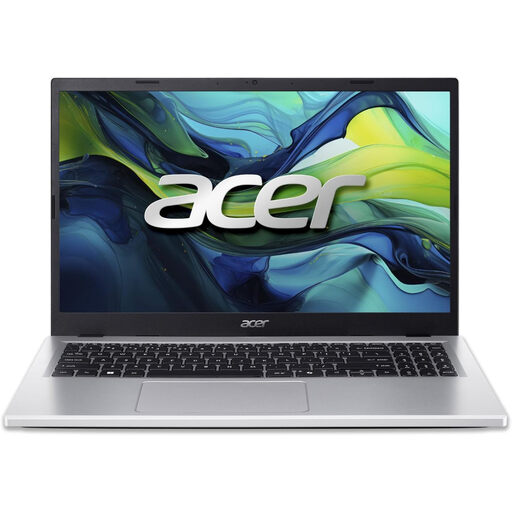
Acer Aspire Go 15 AG15-71P, Core i5-13420H, 8 GB, 256 GB SSD
Consider this Windows 11 Home model for coursework that fits its listed configuration. It has a 15.6-inch Full HD screen, Intel Core i5-13420H processor, 8 GB RAM and 256 GB SSD; check whether your course needs more memory and whether its battery performance suits your study day.
View on Joybuy
 No image available
ASUS Vivobook 14 X1407QA-LY003W, Snapdragon X, 16 GB, 512 GB SSD
Consider this model if you want the listed 16 GB memory and 512 GB SSD in a laptop for study across locations. It uses a Snapdragon X processor; confirm that every compulsory Windows application and peripheral driver works with this configuration before choosing it.
View on Joybuy
 No image available
Acer Chromebook Plus 514 CB514-5H, Core i3-1315U, 8 GB, 256 GB SSD
Consider this Chromebook only if your institution confirms that ChromeOS covers the required applications, peripherals and assessments. The listed configuration includes a 14-inch WUXGA display, Intel Core i3-1315U processor, 8 GB RAM and 256 GB SSD; check its remaining ChromeOS update schedule before buying.
View on Joybuy
 No image available
MSI Modern C2RMG-282UK, Core 5, 16 GB, 512 GB SSD
Consider this laptop for study that calls for its listed 16 GB memory and 512 GB SSD. The product name also identifies an Intel Core 5 processor and Full HD display; confirm the exact processor, screen size and Windows version against your course requirements.
View on Joybuy
Common questions
Is a Chromebook suitable as my main university laptop?
Only if your course confirms that its required applications, peripherals and assessments work on ChromeOS. The University of Bristol and UWE Bristol caution that Chromebooks are not generally suitable as primary university computers where specialist installed software is needed.
Will a Mac run the same course software as a Windows laptop?
Not necessarily: UWE Bristol warns that some specialist applications may be unavailable on macOS. Check the exact applications and peripherals with your course, particularly before choosing an Apple-processor Mac that cannot install Windows in the way an earlier Intel-based Mac could.
Can I use my own laptop for an on-screen school exam?
Do not assume your personal laptop will be permitted. The Joint Council for Qualifications says the exam centre will tell candidates what equipment they need, so ask the centre how devices and any approved access arrangements are handled.
What should I check on a refurbished study laptop?
Confirm the exact model, condition, battery, included charger and remaining operating-system support against your course requirements. The Office for Product Safety and Standards also advises second-hand buyers to use a trusted source and check instructions and recall information.
What if a refurbished laptop bought from a trader is faulty?
For a trader sale covered by the Consumer Rights Act 2015, goods must be of satisfactory quality, fit for purpose and as described; remedies can include repair or replacement. Keep the listing, condition description and receipt, and distinguish a fault from simply changing your mind. Rules for a private sale may differ.


