Bright-window product-photo editors
You edit close to daylight and need to judge what is on screen without a window obscuring the image. Brightness specifications and reflection treatment matter, but so does where you place the laptop.


For product-photo editing beside a bright window, prioritise a documented SDR brightness specification and check how the screen handles reflections; brightness alone will not remove a reflected window. If you use Photoshop, Adobe recommends 16GB or more memory, a fast internal SSD and room for scratch-disk work, with larger workloads calling for a closer look at memory and storage.
You edit close to daylight and need to judge what is on screen without a window obscuring the image. Brightness specifications and reflection treatment matter, but so does where you place the laptop.
You make visual decisions before publishing product images. Check the exact display’s colour claims and keep your editing environment controlled rather than assuming a wide-gamut specification guarantees consistent results.
You work with substantial image libraries or layered files. Adobe’s Photoshop requirements make memory, SSD capacity and scratch-disk space practical checks alongside the display.
Start with whether you can see and judge an image at your window-side desk. Then check the display’s colour claims and whether the configuration has enough room for your editing workload.
| Concern | What to check | Who this matters to |
|---|---|---|
| Bright-room readability | Check SDR brightness for the exact display, its finish or reflection treatment, and whether the window will appear in the screen. | When a window is close to my desk, I need to see image detail without fighting a reflection; around 40% of consumers put readability and reflection control first. |
| Colour judgement | Check the exact panel’s stated gamut and accuracy, plus colour-management support in your editing workflow. | For catalogue images, I need a dependable basis for judging colour before publication; colour judgement is the main concern for around 30% of consumers. |
| Large-file workflow | For Photoshop, compare memory and SSD space with Adobe’s recommendations and the size of your active files and scratch-disk workload. | If I regularly edit large RAW batches or layered files, I need capacity that keeps those jobs workable; around 30% of consumers place this workload first. |
An HDR peak figure does not tell you how bright a display can remain during ordinary SDR editing. ASUS states up to 1,600 nits as an HDR peak for the ProArt P16 H7607, while Apple specifies up to 1,000 nits SDR outdoors for MacBook Pro; those figures are not like-for-like.
Compare SDR specifications for the exact configurations, then check panel finish and reflection treatment separately.
Lenovo lists the Yoga Pro 9i configuration 83L0006FUK with a glossy, 1,000-nit display. Its brightness figure does not mean a window reflected in the panel will disappear.
If possible, view the screen from your usual seating angle. Position it away from a direct window reflection or use a controllable blind.
Large libraries and layered work also need space beyond the application itself. Adobe recommends 16GB or more memory, a fast internal SSD, 100GB of available disk space and additional high-speed scratch storage for the cited Photoshop requirements.
Allow for your active catalogue and backups, and confirm whether the chosen laptop’s memory or storage can be upgraded later.
If libraries and scratch files outgrow the internal drive, you may need to manage work across additional storage.
Display finish, memory and storage can vary within a laptop line. Lenovo’s UK listing marks the cited Yoga Pro 9i configuration 83L0006FUK out of stock; another Yoga Pro 9i should not be assumed to have its specifications.
Check the full model number, display configuration and current availability before deciding, along with the seller and applicable warranty terms.
MacBook Pro is a macOS route if a documented SDR brightness figure and P3 colour support matter at a bright desk.
The ProArt P16 H7607 is a Windows route to consider when a 4K OLED display and anti-reflection coating suit your workspace.
The Yoga Pro 9i Gen 10 Aura Edition configuration 83L0006FUK is a Windows example with a 16-inch Tandem OLED display and substantial listed memory.
These laptops offer different starting points for a window-side photo-editing setup, from MacBook Pro configurations to Windows models with substantial memory and storage. Check the exact screen’s brightness, finish and colour specifications before treating any configuration as suited to your desk.
 No image available
Consider this configuration if you use macOS and need room for large editing files. It lists an 18-core CPU, 40-core GPU, 48GB memory and a 2TB SSD. Apple specifies up to 1,000 nits SDR outdoors for the MacBook Pro display line; confirm this unit’s display configuration, including whether it has optional nano-texture, and plan around direct window reflections.
 No image available
The 32GB memory and 4TB storage make this a configuration to assess for sizeable photo libraries. Before choosing it for window-side or colour-critical work, check the exact display’s SDR brightness, finish and colour specifications.
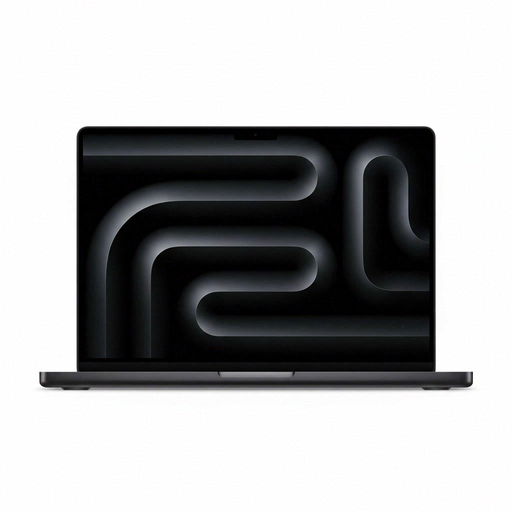 No image available
This smaller MacBook Pro configuration is worth considering if you prefer a 14.2-inch workspace for editing. It lists a 15-core CPU, 16-core GPU, 24GB memory and a 2TB SSD. Apple documents up to 1,000 nits SDR outdoors for the MacBook Pro display line; check this unit’s display configuration and whether optional nano-texture is included.
 No image available
Consider this Windows configuration if you want a 16-inch 4K OLED touchscreen and 64GB memory for larger editing projects. It lists a 2TB SSD and an RTX 5080 with 16GB graphics memory. Check brightness, reflection treatment and colour specifications for this H7606 unit: ASUS’s published H7607 display claims should not be applied to it.
 No image available
The 64GB memory and 2TB SSD make this a configuration to assess if large editing files are your priority. It lists an Intel Core Ultra 9 processor and RTX 5090 graphics. Check the exact display’s brightness, reflection treatment and colour specifications before choosing it for a bright-window desk.
Look for a documented SDR brightness specification for bright-light use rather than choosing by an HDR peak figure alone. Apple specifies up to 1,000 nits SDR outdoors for MacBook Pro, while ASUS specifies an anti-reflection coating for the ProArt P16 H7607 but describes its up-to-1,600-nit figure as an HDR peak. You will still need to avoid a direct window reflection.
Adobe recommends 16GB or more for the cited Photoshop requirements, making it a starting point rather than a promise of performance for every workload. If you regularly handle large RAW batches or layered files, assess the memory of the exact configuration against those projects.
Check space for your active images, backups and scratch files, not just the application installation. Adobe recommends a fast internal SSD, 100GB of available disk space and additional high-speed storage for Photoshop scratch disks.
UK consumer law protects buyers of goods, whether purchased remotely or in person, as GOV.UK explains. Keep your order and configuration details and a record of the fault, then contact the retailer about the problem; a change-of-mind returns policy is a separate issue.
Check an appropriate electrical-equipment collection or recycling route rather than assuming ordinary household rubbish is suitable. GOV.UK explains that the UK’s WEEE rules encourage recovery, reuse and recycling; ask your local authority or retailer about the route for the laptop and its battery.