Bright-window waveform editors
If you edit waveforms, markers or restoration controls beside a window, check the exact panel’s brightness rating and reflection treatment before relying on resolution alone.


Choose a laptop by checking the exact screen’s reflection treatment and brightness rating, then confirm that your recording software and audio interface work with its operating system. A lighter 14-inch model may suit frequent trips between locations; a larger screen may suit a more stationary editing setup. Peak HDR brightness alone does not establish how easily you will see waveforms beside a window.
If you edit waveforms, markers or restoration controls beside a window, check the exact panel’s brightness rating and reflection treatment before relying on resolution alone.
If you carry your laptop between recording locations, weigh screen visibility and storage against the burden of carrying the computer and its accessories.
If your editing setup requires Windows, check connections for your audio interface, recording media and external display, along with the memory and storage of the exact configuration.
Start with the screen you will actually use beside the window, then check what you must carry and connect. Confirm software compatibility before committing to either operating system.
| Concern | What to check | Who this matters to |
|---|---|---|
| Screen visibility | Check the exact panel’s reflection treatment and whether its brightness figure describes ordinary use or peak HDR. | When I edit beside a window, I need to see fine waveform detail without a reflection obscuring the controls. Around 42% of consumers put screen visibility first. |
| Portability | Compare the laptop and charger you would carry, and check whether the screen size gives you enough editing space. | Moving between recording locations makes carrying burden more important to me than extra screen space; roughly 33% of consumers prioritise portability. |
| Workflow compatibility | Confirm your DAW, plug-ins and interface drivers against the operating system, then check the required connections. | I need my existing recording setup and peripherals to work together, even if that means carrying a larger laptop. About 25% of consumers make compatibility and connections their primary concern. |
Peak HDR brightness and reflection control describe different aspects of a screen. A high peak figure alone cannot tell you whether window reflections will obscure editing controls.
Check the rating conditions and panel finish of the exact configuration, and position the screen away from the window’s reflection path where possible.
ASUS lists different displays, memory and storage within the ProArt P16 H7606 family; the cited Lenovo display specification also belongs to a particular configuration.
Check the full model code, panel, memory, storage, ports and included accessories on the product page for the version you intend to buy.
A connector that fits your audio interface does not establish support for its driver, power requirements or your DAW and plug-ins.
List the versions and models you use, then check each manufacturer’s compatibility information for the chosen laptop and operating system.
The current MacBook Pro range is a macOS option with a Liquid Retina XDR display and built-in connections for peripherals.
The ProArt P16 H7606 family offers a 16-inch Windows creator-laptop route with several display and capacity configurations.
The ThinkPad X1 Carbon Gen 13 Aura Edition is a compact Windows route worth considering when carrying weight matters.
These listings include MacBook Pro options for macOS workflows and ASUS, Lenovo Legion and MSI options for Windows workflows. Compare each model’s screen and carrying burden against where you edit.
 No image available
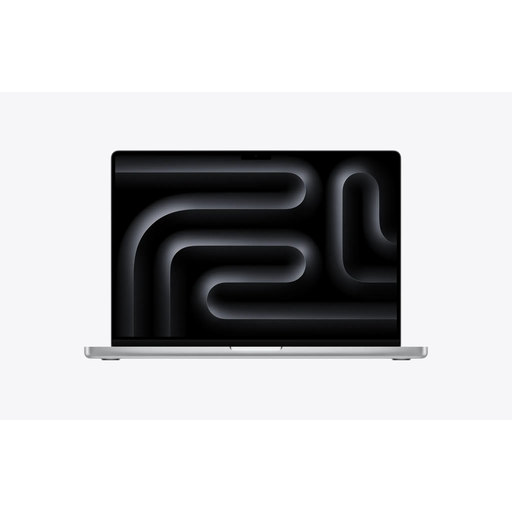
Consider this compact macOS option if your DAW and audio interface support it.
The listed configuration has a 15-core CPU, 16-core GPU, 24GB memory and 2TB storage. Check the panel’s reflection treatment and whether a power adapter is included.
 No image available
The larger screen may suit a macOS editing layout with more on-screen controls, provided the computer and its accessories suit your carrying needs.
The product name specifies an 18-core CPU, 32-core GPU, 36GB memory and 2TB storage. Check ordinary-use screen brightness, reflection treatment, software compatibility and the included power accessories.
 No image available
Consider this Windows model if a 16-inch editing screen and the listed memory and storage suit your work.
Its name specifies a 4K OLED touchscreen, AMD Ryzen AI 9 HX 370, NVIDIA GeForce RTX 5080 16GB and Windows 11 Home. Check this suffix’s brightness and reflection treatment, as well as your audio-workflow compatibility.
 No image available
This 16-inch Windows option may suit an editing setup that needs the listed memory and storage.
The name specifies an Intel Core Ultra 9, NVIDIA GeForce RTX 5090 and Windows 11 Home. Check the exact screen’s brightness and finish, your audio-software compatibility, and the laptop and charger you would carry.
 No image available
Consider the 18-inch format if on-screen editing space matters more to you than a compact computer for travel.
The name specifies an Intel Core Ultra 9, NVIDIA GeForce RTX 4070 and 2TB SSD. Check the panel’s ordinary-use brightness and reflection treatment, along with your software compatibility and carrying needs.
Check reflection treatment and brightness together for the exact panel. Apple’s 1,600-nit figure for the current MacBook Pro range is peak HDR brightness, while Lenovo specifies a 500-nit anti-reflective panel for a particular ThinkPad X1 Carbon configuration; those figures describe different conditions and should not be treated as a like-for-like visibility test.
No. A headphone jack does not establish compatibility with an external audio interface. Check the interface manufacturer’s operating-system and driver requirements, then confirm its connector and power needs alongside your DAW and plug-in versions.
A 14-inch model may be easier to accommodate when you move between locations, provided its screen gives you enough room for your usual waveform and plug-in layout. A 16-inch model gives you a larger screen, but compare the complete laptop and charger before accepting the extra carrying burden.
Ask your retailer or local authority about a suitable take-back or recycling route. GOV.UK explains that UK waste electrical and electronic equipment rules regulate this equipment to reduce waste sent to landfill or incineration; the available route will depend on your circumstances.