Musicians practising at a desk
If your paper score already has a stand, you need the laptop screen at a readable height without losing the surface space needed for the score, accessories and any separate input devices.


Choose a desk riser when your sheet music already has its own place on a desk and there is room to raise the laptop beside it. Choose a dedicated floor laptop stand when digital notes need an independent position beside a standing music stand. In either setup, check the laptop’s size and weight against the stand’s limits, measure the space it will occupy and consider a separate keyboard and mouse if you will work at the raised screen for prolonged periods.
If your paper score already has a stand, you need the laptop screen at a readable height without losing the surface space needed for the score, accessories and any separate input devices.
When you play, teach or rehearse standing up, a dedicated floor laptop stand lets you position digital notes independently of the music stand. Its height and laptop support still need to suit your setup.
If you pack away after each session, folding size matters alongside adjustment and the stand’s stated laptop limits. Check how the laptop will be held in place once the stand is set up.
Start with where the sheet music will sit: that determines whether the laptop needs a place on the desk or a separate floor position. Then check viewing height, device compatibility and whether the setup must travel.
| Concern | What to check | Who this matters to |
|---|---|---|
| Space beside the score | Measure the laptop and the available desk or floor space after positioning the music stand. Check the stand’s support surface and stated load limit. | I need both paper music and digital notes visible without one stand crowding the other. Around 40% of consumers put layout fit first. |
| Raised-screen use | Compare the stand’s actual adjustment positions with your reading height; allow room for a separate keyboard and mouse if you will use the laptop for prolonged work. | I read notes on screen but also spend longer sessions typing or editing, so screen height alone will not settle my setup. Around 30% of consumers prioritise a workable raised-screen arrangement. |
| Storage and transport | Check folded size and the exact laptop-size and weight limits before choosing a stand to carry between sessions. | Moving between lessons or rehearsal spaces makes a stand that packs away practical for me. Portability comes first for around 30% of consumers. |
A higher screen changes where the laptop’s built-in keyboard sits. For prolonged laptop use, the Health and Safety Executive advises using a separate keyboard and mouse so the screen can be elevated on a riser or similar support.
Decide whether you will mostly glance at notes while playing or also type for extended periods. For the latter, plan the keyboard, mouse and available desk space together with the stand.
A separate keyboard and mouse also need space beside the score.
Limits vary by model: Kensington specifies 10–17 inch devices up to 3 kg for its EQ riser, while Targus specifies devices up to 16 inches for its HyperSpace stand. Twelve South lists both a minimum laptop width and a weight limit for Curve Flex.
Check your laptop’s dimensions and weight against the exact stand you intend to buy, including how its support surface holds the device.
A broad desk platform uses tabletop space that may be needed for the score; a floor stand instead needs a stable place beside the music stand.
Position the sheet music first, then measure the remaining desk or floor area and the height at which you normally read. Choose the stand format around that arrangement.
The EQ Adjustable Aluminium Laptop Stand is a fold-flat desk-riser option for a laptop beside separately supported sheet music.
The HyperSpace desk stand offers adjustable screen elevation for setups that need more height than a compact riser.
The LTSTND is a wide desk-platform option when the laptop’s size and stated support capacity take priority.
The 12185 is a freestanding laptop-stand option for positioning digital notes beside a separate standing music stand.
Curve Flex is an articulated laptop stand to consider when adjustable angle and fold-flat storage matter in a desk setup.
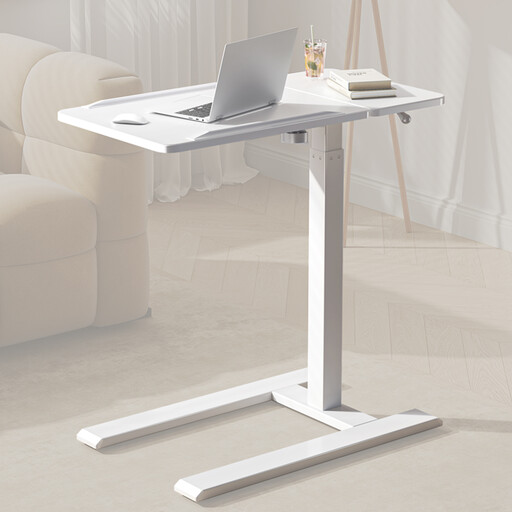
This adjustable overbed table offers a movable surface for a laptop in a practice setup with room beside the sheet music. It is a different format from a compact desk riser or a dedicated floor laptop stand.
 No image available
Consider this height- and tilt-adjustable table if a separate wheeled surface fits beside your score. Before using it for a laptop, check its load limit, the space it needs and how the laptop will stay in place when the top is tilted.
Not if you will also use the laptop for prolonged typing. The Health and Safety Executive advises a separate keyboard and mouse so the screen can be raised on a riser or similar support; plan space for both beside your sheet music.
Measure the laptop, the space left after positioning your sheet music and the viewing height you need when seated. Compare those measurements with the exact stand’s support surface, device limits and adjustment positions.
A dedicated floor laptop stand is worth considering when digital notes need their own position beside a standing music stand or there is no suitable desk. Check its height range, floor footprint and laptop support method; Thomann UK lists the K&M 12185 with a 700–1,250 mm height range and a laptop support plate.
No general consumer requirement to buy a stand follows from the Health and Safety Executive’s Display Screen Equipment guidance. The rules it describes concern employers whose workers regularly use screen equipment as a significant part of their normal work; for your own setup, choose equipment around the task and duration of use.