
24/7 Customer Support

Free returns

Same-day & Next-day Delivery

Quality Guaranteed

Unlock Your Welcome Offers: FREE Delivery | Up to 80% OFF | Free 30-day JoyPlus trial
Download the APP
A larder fridge provides chilled storage without taking up space with a freezer compartment. That makes it useful for families who already own a separate freezer, fresh-food shoppers, home cooks, offices and smaller households that need to maximise refrigerator space.
However, choosing by capacity or appearance alone can lead to expensive mistakes. The most suitable model depends on installation type, available clearance, internal layout, energy use and how often you shop.
A fridge may look tall or wide but offer less practical storage because of thick insulation, fixed shelving or oversized door fittings. Compare net capacity in litres, not just the outside dimensions. A 126L model may suit one or two people, while households buying larger quantities of fresh food may need a 241L, 304L or 316L larder fridge.
An integrated larder fridge must match the kitchen cabinet housing, door fixing system and ventilation requirements. A sliding hinge system is not automatically compatible with every existing cabinet door. Check the appliance dimensions and the required niche size before ordering, particularly when replacing an older integrated appliance.
A freestanding larder fridge offers simpler positioning, but it still needs clearance around the cabinet and should not be pushed tightly against a wall or heat source.
UK refrigerators use the current A to G energy label, rather than the older A+, A++ and A+++ system. An E-rated fridge is a legitimate current classification, but the label should be considered alongside annual energy consumption, capacity and usage habits. A larger appliance can use more electricity overall even when it has the same rating as a smaller model.
Select capacity according to household size and shopping routine:
Adjustable glass shelves can accommodate tall bottles and containers. Door racks are useful for condiments and drinks, while a dedicated crisper drawer helps separate fruit and vegetables from the main shelf area. If you regularly store large trays or meal-preparation containers, check shelf spacing rather than relying on the headline litre figure.
A freestanding larder fridge can be moved or replaced with less disruption. Measure width, depth and height, including skirting boards, handles and the door-opening arc. Slim models around 54–55cm wide can be practical in narrower kitchens and utility rooms.
An integrated larder fridge needs more careful planning. Compare the appliance size with the cabinet niche, confirm the hinge arrangement and allow the ventilation gap specified in the installation instructions. Sliding hinges can be useful when fitting the appliance to a compatible furniture door. A reversible door is valuable where the opening direction must avoid a wall, worktop or adjacent cabinet.
A frost-free fridge uses circulating air to reduce ice accumulation and manual defrosting. The Midea model below specifies Total No Frost and Multi-Air Flow, while some other models use static cooling with automatic defrost. These systems should not be treated as interchangeable, so check the product specification carefully.
Noise is measured in decibels, or dB(A). Models rated at 39–40 dB(A) may be more appropriate for open-plan kitchens, bedrooms used as kitchenettes or offices where background appliance noise is noticeable. Also check whether the model includes LED lighting, temperature adjustment and removable door seals, as these features affect everyday convenience.
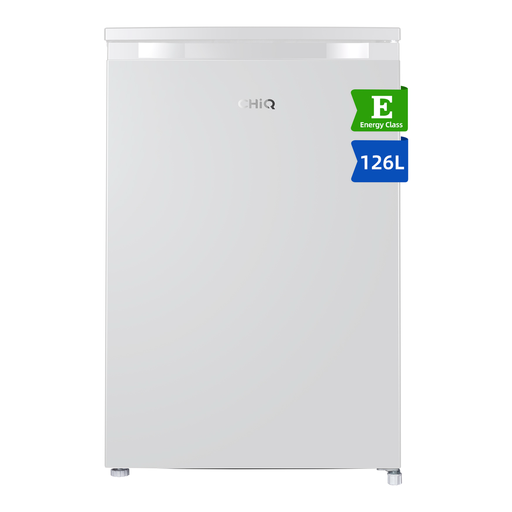
Why This Fits Their Persona: Its 850mm height and 545mm width suit flats, rented homes, student accommodation, utility rooms and small offices where full-height storage is unnecessary.
The listed 126L net capacity, 55cm-class footprint and adjustable feet make its space requirements clearer than choosing by appearance alone.
E energy rating, 39 dB noise level, two shelves, three door bins, a crisper drawer and seven temperature settings.
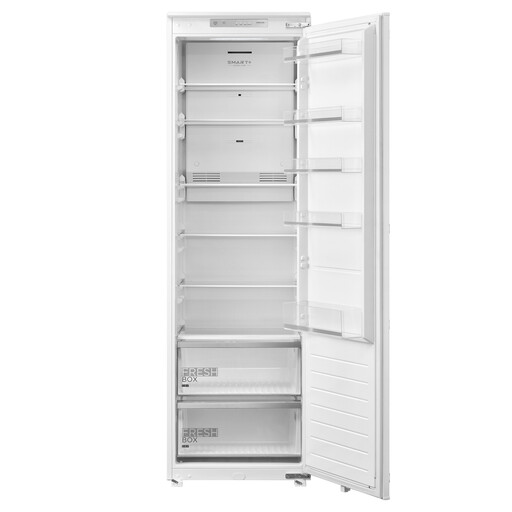
Why This Fits Their Persona: This fully integrated white model is designed for a streamlined fitted kitchen and offers dedicated fresh-food capacity for households that do not need an integrated freezer.
Its stated 178.5 x 54 x 54.5cm dimensions and sliding hinge fitting help buyers compare cabinet compatibility before installation.
304L capacity, Total No Frost, Multi-Air Flow, five glass shelves, humidity-controlled crisper and 39 dB operation.
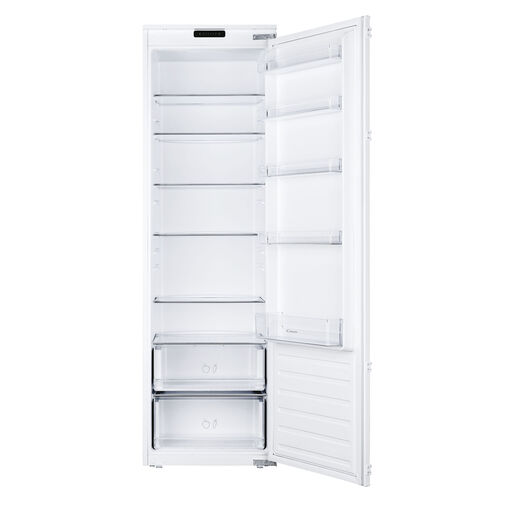
Why This Fits Their Persona: Its 316L capacity suits larger families, frequent fresh-food shoppers and home cooks who need substantial chilled storage within a fitted kitchen.
The required niche is listed at approximately 177.5 x 56 x 55cm, helping prevent a mismatch between the appliance and tall cabinet housing.
Five glass shelves, five door balconies, LED lighting, automatic defrost, reversible sliding hinge and 39 dBA noise level.
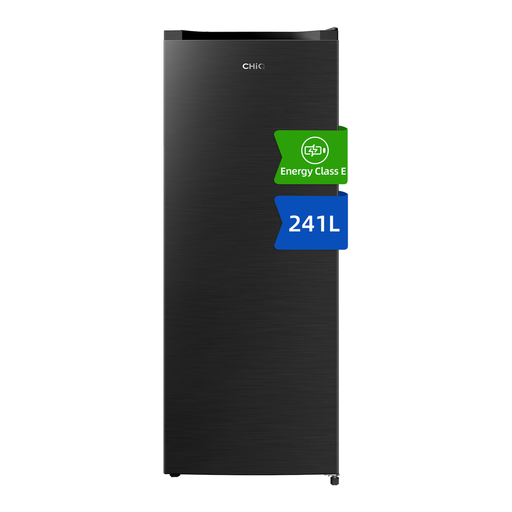
Why This Fits Their Persona: A 54cm-wide black steel appliance provides substantial fresh-food storage for families and renters who want freestanding flexibility rather than cabinet integration.
The listed 241L capacity and 540mm width make the storage-to-floor-space trade-off easier to assess before delivery.
E energy rating, reversible door, adjustable glass shelves, salad crisper, LED lighting and a 2-year warranty.
We have compiled a complete, real-time list of products that fully satisfy these strict selection criteria and UK safety regulations.
It can be, provided the capacity matches the household’s shopping pattern. A tall larder fridge of around 241L or more may suit a family that buys fresh food frequently. Households that batch-cook or store large quantities may prefer a 304L or 316L model. Remember that a larder fridge has no freezer compartment, so separate frozen-food storage is required.
The required clearance varies by model and installation type. Follow the manufacturer’s instructions for rear, top and base ventilation. Integrated models also need a suitable cabinet niche and correctly fitted furniture door. Do not block ventilation openings, and have electrical or cabinet work completed by a suitably qualified person where required.
Noise and electricity consumption are separate measurements. A 39 dB(A) or 40 dB(A) fridge may be less noticeable in an open-plan room, but its running cost depends on the energy label, annual consumption, capacity, temperature setting and installation. Compare the official energy information rather than using noise level as a substitute for efficiency.