
24/7 Customer Support

Free returns

Same-day & Next-day Delivery

Quality Guaranteed

Unlock Your Welcome Offers: FREE Delivery | Up to 80% OFF | Free 30-day JoyPlus trial
Download the APP
A larder fridge provides chilled storage without taking up space with a freezer compartment. It can work well in a studio flat, student accommodation, utility room, office or family kitchen. However, choosing by price or litre capacity alone can lead to an appliance that does not fit your room, holds less usable food than expected or costs more to run than anticipated.
Before buying, watch for three common pitfalls:
The most suitable model depends on your available space, household size and how often you buy fresh food.
Measure height, width and depth, then check the manufacturer’s product dimensions rather than relying on the category name. Leave the ventilation clearance specified in the instruction manual, particularly around the rear and top of a freestanding appliance.
For a kitchen beneath a worktop, an under-counter fridge is usually the practical format. Compact models may be approximately 82–85cm tall, while a tall larder fridge can be around 177–179cm high. Also measure the door opening area. A reversible door fridge can be useful in narrow kitchens, galley layouts and utility rooms because the hinge side can be changed to suit the room.
An integrated model has different requirements. An integrated larder fridge or built-in larder fridge needs a compatible cabinet or tall housing unit, correct niche dimensions and an appropriate hinge system. Sliding hinges, for example, connect the furniture door to the appliance door and should be checked against the existing kitchen fitting.
Capacity is measured in litres, but shelf spacing and door storage determine how much food is genuinely convenient to store.
Consider the types of food you buy. Adjustable or removable shelves make it easier to store tall bottles and containers. A crisper drawer is useful for fruit and vegetables, while door bins provide accessible storage for bottles, sauces and smaller items.
UK domestic refrigeration products use the A–G energy label, with the efficiency class shown on the product listing and label. An E-rated fridge is common in this selection, but the annual energy consumption figure in kilowatt-hours is also worth checking when comparing models.
Noise is measured in dB(A). A rating around 39–40dB may be more suitable for an open-plan kitchen, office or bedroom-adjacent space than a louder appliance. A frost-free fridge uses automatic frost management, reducing the need for manual defrosting. Static cooling models may require more maintenance, so check the defrost system before ordering.
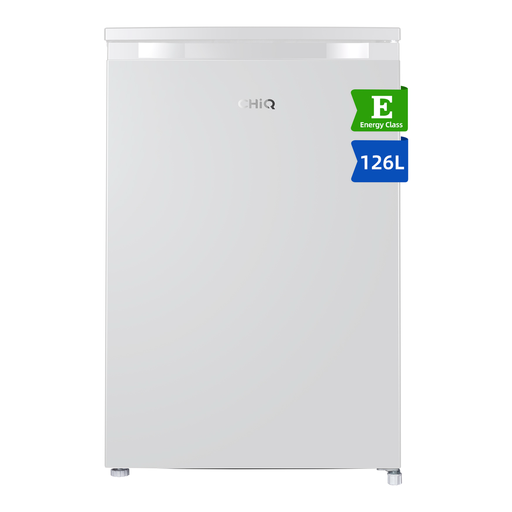
Why This Fits Their Persona: Its 545mm width and 850mm height suit smaller UK kitchens, utility rooms, rental properties and offices where floor space is limited.
The listing provides measured dimensions, a 126-litre net capacity and a 39dB noise rating, making comparison easier than relying on general “compact” wording.
E-rated operation, seven temperature settings, two shelves, three door bins, a crisper drawer and adjustable feet.
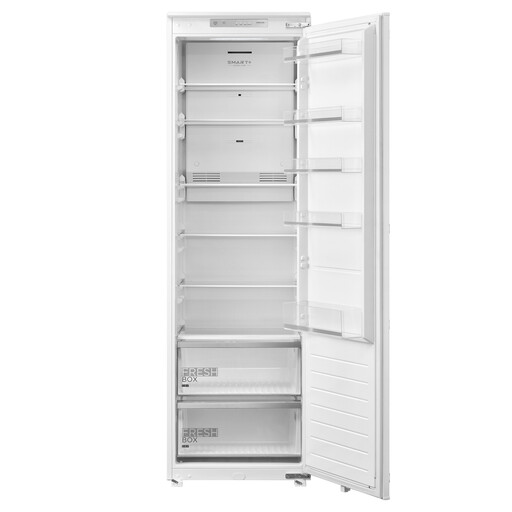
Why This Fits Their Persona: It is intended for homeowners planning a streamlined fitted kitchen with substantial fresh-food storage behind cabinetry.
Its listed 178.5 x 54 x 54.5cm dimensions, sliding hinge and 39dB rating help buyers confirm cabinet compatibility before purchase.
304-litre net capacity, Total No Frost, Multi-Air Flow, five glass shelves and a humidity-controlled crisper.
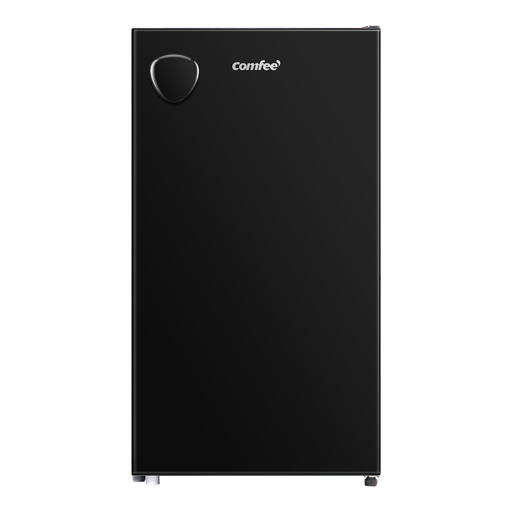
Why This Fits Their Persona: This compact black fridge is suited to bedrooms, studio flats, home offices and drink storage where a smaller footprint is important.
The 44.5 x 47 x 82.7cm dimensions are clearly stated, while the reversible door and adjustable feet help with flexible placement.
88-litre capacity, removable glass shelves, interior light and a dedicated cooler zone for short-term drink chilling.
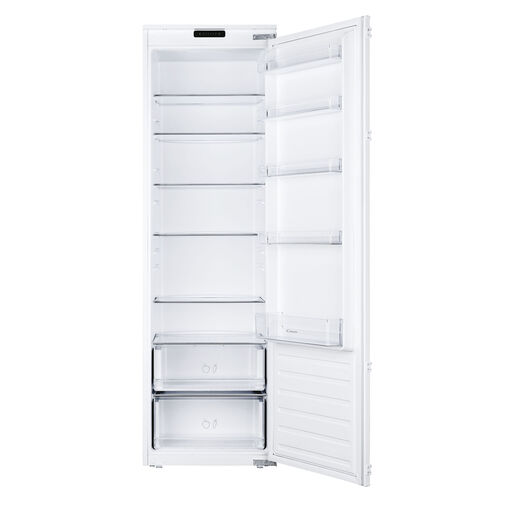
Why This Fits Their Persona: Its tall integrated format and 316-litre capacity are suitable for larger households, frequent fresh-food shoppers and home cooks.
The specified housing niche of approximately 177.5 x 56 x 55cm helps prevent problems caused by selecting a tall appliance without checking cabinet dimensions.
316-litre capacity, five glass shelves, five door balconies, automatic defrost, LED lighting and a reversible sliding-hinge door.
We have compiled a complete, real-time list of products that fully satisfy these strict selection criteria and UK safety regulations.
For a freestanding larder fridge, place the appliance on a stable, level surface with the recommended ventilation gap. Adjustable feet help compensate for uneven flooring. Do not push the rear tightly against a wall if the instructions require airflow.
Check that the socket is accessible and that the cable is not trapped or damaged. Avoid positioning the fridge beside a cooker, radiator or other heat source. Allow hot food to cool before refrigeration, and avoid overloading shelves because blocked airflow can affect cooling performance.
A white larder fridge may blend easily with existing appliances, while black finishes can suit offices, bedrooms and modern utility spaces. Colour is cosmetic, so prioritise dimensions, capacity, hinge direction and energy information first.
It can be, provided the capacity matches your shopping pattern. Smaller 88L and 126L models are generally more appropriate for limited storage or supplementary use. Families may prefer a 170L model or a tall integrated option exceeding 300L, particularly when buying substantial amounts of fresh food.
Running cost depends on the appliance’s annual kWh figure, your electricity tariff, room temperature, thermostat setting and maintenance. The E energy rating provides a standard comparison category, but check the full energy-label information before purchase. Keeping the door seal clean and allowing ventilation can also support normal operation.
Lifespan varies according to construction, usage, installation and maintenance. Follow the manufacturer’s instructions, keep ventilation openings clear, avoid repeated unnecessary door opening and clean the interior and seals regularly. Retain your order details and warranty information in case support is required.