Detail-first support players
You want room to read maps, team information and ability UI while practising. Native resolution and the monitor’s fit on your desk matter more to you than the highest advertised refresh rate.


Start with the screen detail you need for maps, team information and ability UI, then choose a refresh mode your PC or console can actually output. A 32-inch 4K monitor at around 144–165Hz suits detail-led practice; a 4K 240Hz model makes more sense if high frame rates matter to you and your system can deliver them. Dual-mode OLED adds a faster Full HD option, but that mode gives up 4K detail.
You want room to read maps, team information and ability UI while practising. Native resolution and the monitor’s fit on your desk matter more to you than the highest advertised refresh rate.
You use a capable PC and want a large display with a high-refresh option for fast-action practice, without giving up a detailed 4K mode.
You practise on more than one device. The useful checks are the resolution and refresh modes supported by each monitor input, alongside your devices’ ports and cables.
Decide whether readable 4K detail or a faster operating mode is your priority. Treat console connectivity as a separate check: an HDMI 2.1 label alone does not establish every resolution and refresh combination.
Consider it when: You want a detailed large-screen view and a refresh rate around 144–160Hz meets your practice needs.
Trade-off: The cited LG and BenQ IPS models are specified at 144Hz, while the cited ASUS Mini-LED model is specified at 160Hz; check the exact model rather than assuming a 240Hz mode.
Consider it when: You want a 4K view and a 240Hz option for PC practice that your system can drive.
Trade-off: Compare screen-care instructions and the exact warranty terms for the model you buy; do not assume OLED coverage is the same across sellers.
Consider it when: You will switch between detailed 4K play and speed-led Full HD sessions.
Trade-off: The Full HD mode has less pixel detail for maps and UI. ASUS specifies 4K 240Hz and Full HD 480Hz as distinct modes on the PG32UCDP.
| Concern | What to check | Who this matters to |
|---|---|---|
| Large-screen detail | Check native resolution and desk fit, including the stand footprint or mounting arrangement. | If maps and ability UI need to remain readable on a large screen, I would put native 4K detail ahead of a faster mode; roughly 42% of consumers would make detail their primary concern. |
| High-refresh practice | Check the refresh rate at the resolution you intend to use and whether your PC and connection can output that mode. | For fast-action sessions, I would prioritise a usable high-refresh mode over keeping every session at 4K; around 33% of consumers would put refresh speed first. |
| Device compatibility | Match the monitor’s input-specific modes to your PC or console, cable and any VRR requirements. | When I move between PC and console, I need the intended display mode to work on each device; approximately 25% of consumers would treat compatibility as their main concern. |
LG states that a PC needs a graphics card supporting DisplayPort 1.4 with DSC or HDMI 2.1 to enable 144Hz on the 32GR93U-B. Input requirements differ by model.
Compare the monitor’s mode table with your graphics card or console output and the cable you intend to use.
Using the intended mode may require a compatible cable or other connection equipment.
BenQ specifies the EX3210U at 726.7 mm wide and 269.9 mm deep with its stand. Its mounting option does not make the supplied stand any smaller.
Measure your available width and depth, then check the exact monitor’s stand dimensions or mounting specification before ordering.
MSI states that its MPG 321URXW QD-OLED has a three-year OLED warranty including burn-in safeguards. That statement does not establish the terms for another model or seller.
Read the warranty and screen-care terms for the exact product you are buying, including any exclusions.
ASUS specifies Full HD 480Hz and 4K 240Hz as separate modes on the PG32UCDP. The faster mode is not a 4K 480Hz mode.
Choose it if you expect to use both resolutions and accept the lower detail of Full HD during speed-led sessions.
These examples show which specifications to compare on particular models, not what every monitor from each brand offers.
Dell UK lists the AW3225QF as a 31.6-inch curved QD-OLED monitor with 3840 × 2160 resolution and a 240Hz refresh rate.
LG UK specifies the 32GR93U-B as a 32-inch 4K 144Hz monitor and has also listed the dual-mode OLED 32GS95UE-B.
ASUS lists the PG32UQXR as a 32-inch 4K 160Hz Mini-LED monitor and the PG32UCDP as a 31.5-inch dual-mode WOLED monitor.
MSI specifies the MPG 321URXW QD-OLED as a 4K 240Hz monitor with HDMI 2.1.
BenQ specifies the EX3210U as a 32-inch 4K 144Hz IPS monitor.
These monitors offer different ways to practise on a large screen: 32-inch-class choices for a detailed view and a 34-inch WQHD option if you prefer a wider format. Compare each listing’s supported modes with your device before choosing on refresh rate alone.
 No image available
Consider this if you want to switch between detailed viewing and a faster practice mode. The title specifies 4K UHD, dual mode and a maximum of 330Hz; check which resolution and connection deliver the mode you plan to use.
For extended sessions with static game UI, review the screen-care and warranty terms for this OLED model.
 No image available
Consider this if you want a curved, large-screen 4K option and 165Hz meets your practice needs. The title specifies 3840 × 2160 resolution and USB-C with 65W power delivery.
Check the supported resolution and refresh rate for the input you will use, along with adaptive-sync compatibility if you need it.
 No image available
Consider this 32-inch Ultra HD model if a large, detailed view is your starting point. Before planning high-refresh practice, check the exact refresh modes available through your chosen input and source device.
 No image available
Consider this if a wider large-screen layout matters more to you than native 4K detail. Its title specifies WQHD and 240Hz; check that your games and device support the display mode you want.
WQHD is not the native 4K route discussed above. Review the OLED screen-care and warranty terms if you regularly leave static UI on screen.
 No image available
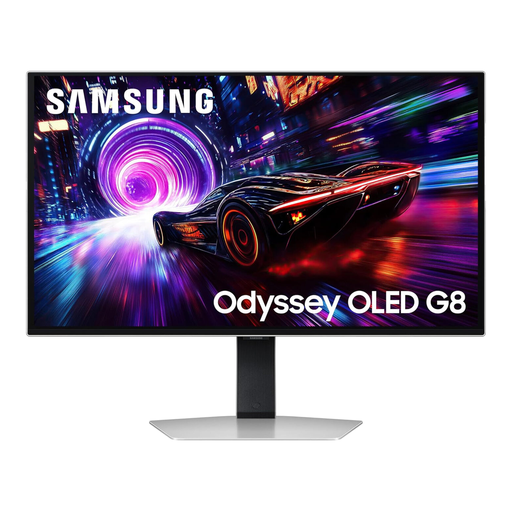
Consider this for a 32-inch practice setup if its exact display modes suit your PC or console. Check the offered variant’s resolution, input configuration, supported refresh modes and stand adjustment before ordering.
Review the screen-care and warranty terms if your practice involves prolonged static UI.
No: a 32-inch-class 4K monitor at 144–165Hz is a reasonable detail-led choice if that refresh range suits your practice. Choose a 240Hz route when you value the faster mode and your PC can supply suitably high frame rates; a dual-mode model’s still-faster Full HD option comes with less detail.
Your monitor, graphics card, selected input and cable must support the same 4K refresh mode. For the 32GR93U-B specifically, LG says enabling 144Hz requires a graphics card supporting DisplayPort 1.4 with DSC or HDMI 2.1; check the requirements for any other model separately.
Yes, if the individual monitor supports the console output mode you intend to use. ASUS specifies native 4K 120Hz over HDMI 2.1 for both consoles on the PG32UQXR; also check the game’s output settings and the exact monitor model before buying.
Ask the retailer how its electrical-equipment take-back service works for your purchase. GOV.UK states that retailers subject to the in-store take-back duty must offer to take back waste equipment of the same type as an item the customer buys; confirm the available drop-off or collection arrangement before disposing of your old monitor.