For a large desk-based display, start by comparing 32-inch 4K monitors: native resolution addresses clue detail, while panel type and HDR specifications matter if dark scenes are a priority. A 4K IPS model rated at 144Hz is worth considering if you do not need the features of a 240Hz QD-OLED model. Whichever you choose, check the output modes your PC or console and the monitor’s ports actually support.
Who is this for?
Atmosphere-first detective players
If you spend time examining locations and following scenes set in low light, compare native 4K resolution alongside the panel and HDR specifications. LG, Samsung, Dell and ASUS document different approaches across their 32-inch-class models; a refresh-rate figure alone will not describe their picture characteristics.
PC and console crossover players
If the same screen will serve a PC and a PS5 or Xbox Series X|S, check the monitor’s HDMI ports and the output modes each device supports. PlayStation and Xbox both make clear that high-refresh console output depends on compatible equipment and supported games.
Large-screen, feature-conscious players
If a 32-inch 4K desk display is the main requirement, compare what the extra features would do for the games you play. LG’s 32GR93U-B provides a documented 4K IPS route rated at 144Hz; the 240Hz QD-OLED models documented by Samsung, Dell and ASUS are different choices, not prerequisites for detective games.
What matters when choosing?
Choose the screen format and picture characteristics first, then check connection modes against the device you will use. A console-ready connection is a check that applies to either panel route, not a separate type of screen.
32-inch 4K IPS at 144Hz
Consider it when: You want 4K detail on a large 16:9 desk screen without choosing QD-OLED features specifically; LG’s 32GR93U-B is a documented example.
Bear in mind: LG rates that model at up to 144Hz, and says reaching that mode requires a compatible graphics card through DisplayPort 1.4 with DSC or HDMI 2.1.
32-inch-class 4K QD-OLED at 240Hz
Consider it when: Dark-scene presentation and the features of a high-refresh OLED panel are priorities. Samsung, Dell and ASUS each document 4K QD-OLED models rated at 240Hz.
Bear in mind: That refresh rate is not necessary for every detective game. Read the exact model’s panel-care guidance and warranty rather than treating manufacturer protection features as a guarantee.
| Concern |
What to check |
Who this matters to |
| Clue detail and dark scenes |
Check for native 3840 × 2160 resolution, then compare the exact panel and HDR specifications. HDR viewing also requires support from the game and connected device. |
I want to inspect documents and environmental clues without making dark locations harder to follow. Around 46% of consumers put visual detail and dark-scene presentation first. |
| PC and console connections |
Check which port supports your intended resolution, refresh rate and variable refresh rate (VRR), and whether your device and cable can use that mode. |
If I switch between a PC and a console, I need the display to accept the modes I plan to use on both. Device compatibility is the main concern for around 27% of consumers. |
| Desk fit and feature value |
Compare screen dimensions, stand adjustment and available desk space; decide whether 240Hz or OLED features meet a need you have. |
I want a genuinely large view, but the screen and stand still have to work on my desk. For around 27% of consumers, practical fit and a proportionate feature set come first. |
Buying pitfalls to avoid
-
Choosing by maximum refresh rate alone
A 240Hz specification does not tell you whether a monitor has the resolution, panel characteristics or connections you want for examining clues and following dark scenes. RTINGS considers motion performance alongside picture-quality factors in its gaming-monitor guidance.
Set your requirements for native resolution and picture characteristics before deciding whether your games and hardware give you a reason to choose 240Hz over 144Hz.
-
Assuming every 4K screen will run your device at 120Hz
The available output mode depends on the device, game and display connection. PlayStation limits PS5 120Hz output to supported games, while Xbox says 4K at 120Hz requires an HDMI 2.1-compliant display.
Compare the monitor’s exact port capabilities with your PC or console, then check the detected display modes after connecting it.
If your existing cable cannot carry the chosen mode, you may need a suitable replacement.
-
Treating OLED-care features as a blanket guarantee
Samsung and ASUS describe protection features on their OLED models, but those manufacturer descriptions do not replace the care instructions or warranty terms for the particular monitor.
Read the exact model’s warranty and panel-care guidance before ordering, and keep its documentation for reference.
-
Leaving returns and the old monitor until later
A large screen takes space to unpack and assess. If it arrives faulty or misdescribed, GOV.UK identifies those as grounds for a remedy; its guidance on electrical equipment also says not to put an old monitor in a household bin.
Keep the packaging while you check the panel, ports and desk fit. Before replacing an existing screen, ask the seller about its return process and arrange an appropriate electrical-recycling route.
Brands and product lines to consider
These manufacturer-documented models illustrate different 32-inch-class choices; a brand’s inclusion here does not indicate that every model in its range has the same features.
LG UltraGear
LG’s 32GR93U-B is a 32-inch 4K IPS option rated at 144Hz for consumers who do not specifically want a QD-OLED panel.
- LG lists 3840 × 2160 resolution, DisplayHDR 400, Adaptive Sync and HDMI 2.1 for this model.
- LG says its 144Hz mode needs a compatible graphics card through DisplayPort 1.4 with DSC or HDMI 2.1; check the connection you intend to use.
Samsung Odyssey
Samsung documents the 32-inch Odyssey OLED G8 G80SD as a 4K QD-OLED gaming monitor rated at 240Hz, with integrated Gaming Hub features.
- The model combines Samsung’s stated 4K QD-OLED and 240Hz specifications in a flat-screen format.
- Samsung’s OLED Glare Free and OLED Safeguard+ descriptions are manufacturer claims, not guarantees of results; check the exact warranty and connections for the variant you choose.
Alienware
Dell lists the Alienware AW3225QF as a curved 32-inch 4K QD-OLED monitor rated at 240Hz.
- Dell specifies a 1700R curve and height, swivel and tilt adjustment for this model.
- A curved panel is a format choice rather than a universal advantage; consider your desk position and whether you prefer a flat screen.
ASUS ROG
ASUS documents the ROG Swift OLED PG32UCDM Gen3 as a 31.5-inch-viewable 4K QD-OLED model rated at 240Hz.
- ASUS lists HDMI 2.1 and DisplayPort 2.1a UHBR20. RTINGS placed this model at the top of its tested 4K gaming-monitor ranking on 1 September 2026.
- That external ranking does not determine whether its connections, OLED-care terms or features suit your own games and setup.
Joybuy products for this setup
These choices cover large 4K OLED screens, a smaller 4K IPS alternative and a wider WQHD option. If 32-inch 4K clue detail is your priority, check the size and resolution of each model before comparing its other features.
 No image available
Dahua 32-inch 4K 165Hz curved OLED gaming monitor
Consider this if you want a large 4K OLED screen and the curved format suits your desk position.
The product name specifies 3840 × 2160 resolution, 165Hz, USB-C 65W and a USB hub. Its HDR400 wording should not be taken as confirmation of a particular certification; check the exact HDR specification if that matters to you.
Check the curve against your viewing distance and read the model’s OLED care and warranty terms.
View on Joybuy
 No image available
Samsung Odyssey Gaming OLED G8 LS32DG802SUXXU, 32-inch
This flat 32-inch model is worth considering if you want a large 4K QD-OLED screen for detective games.
Samsung identifies the G80SD model as 4K QD-OLED and rated at 240Hz. Check the exact HDR, VRR and HDMI output modes needed by your device rather than relying on the refresh-rate figure alone.
Read the warranty and panel-care terms if OLED ownership considerations affect your decision.
View on Joybuy
 No image available
LG UltraGear G8 27G850A, 27-inch 4K Nano IPS
Consider this 4K IPS option if its smaller 27-inch screen suits your desk better than the 32-inch format discussed above.
The product name lists dual 240Hz and 480Hz modes, DisplayHDR 600, DisplayPort 2.1 and HDMI 2.1. Check which resolution is available in each mode and what your graphics card or console can output through the chosen connection.
Its 27-inch size is an important difference if the larger view is your main reason for changing monitors.
View on Joybuy
 No image available
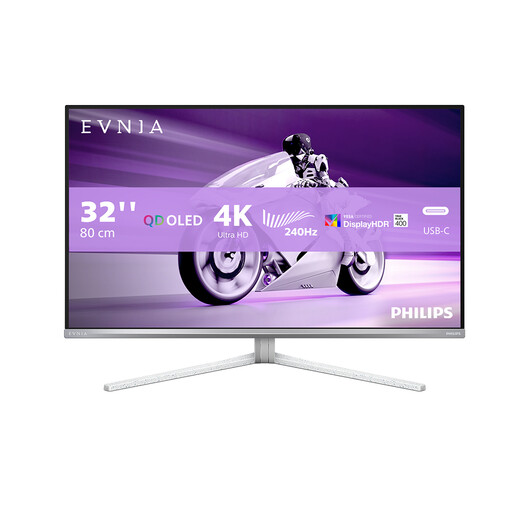
PHILIPS Evnia 32M2N8900, 32-inch UHD OLED
This is a 32-inch UHD OLED choice for consumers focused on a large screen and 4K detail.
The product name lists HDR400, FreeSync Premium Pro and G-Sync compatibility. Confirm the precise model variant and refresh rate before comparing it with other displays, as the available product information gives conflicting refresh-rate figures.
Check the exact HDR designation and OLED warranty and care terms if those affect your choice.
View on Joybuy
No image available
Samsung Odyssey G8 LS34DG850SUXXU, 34-inch curved WQHD OLED
Consider this model if you prefer a wider curved screen over the 32-inch 4K format.
Its product name specifies a 34-inch WQHD OLED display rated at 175Hz. WQHD is not the 4K resolution prioritised for the clue-detail route, so check the game presentation and available desk space before choosing the wider format.
If you will connect a console, confirm its supported resolution, refresh rate and VRR modes for this monitor. Read the OLED care and warranty terms as well.
View on Joybuy
Frequently asked questions
Do I need 240Hz for detective games?
No: 240Hz is not a requirement for choosing a monitor for detective games. Compare native 4K resolution, the picture characteristics you want and device compatibility first; LG’s documented 32-inch 4K IPS model rated at 144Hz is an alternative if you do not need a 240Hz QD-OLED model.
What should I check for PS5 or Xbox Series X|S at 4K and 120Hz?
Check the exact monitor port, connection and console display settings, as well as support in the game you intend to play. PlayStation says PS5 120Hz output applies to supported games; Xbox says 4K at 120Hz requires an HDMI 2.1-compliant display.
What if a monitor bought online arrives faulty or does not match its description?
A faulty or misdescribed monitor may give you a remedy separate from a change-of-mind return. GOV.UK identifies faults and inaccurate descriptions as grounds for a refund; keep the listing, order details and evidence of the problem, and distinguish any retailer change-of-mind policy from your rights concerning faulty goods.
How should I dispose of an old monitor?
Use an appropriate electrical-recycling route rather than putting the monitor in a household bin, as GOV.UK’s electrical-equipment guidance advises. Ask the seller about its takeback arrangements or check your local electrical-recycling options before replacing the screen.


