
24/7 Customer Support

Free returns

Same-day & Next-day Delivery

Quality Guaranteed

Unlock Your Welcome Offers: FREE Delivery | Up to 80% OFF | Free 30-day JoyPlus trial
Download the APP
A kitchen bin is more than just a place for rubbish; it's a part of your daily routine. Choosing the right one can make your kitchen cleaner, more hygienic and even more stylish. However, with so many options on the market, it's easy to fall for marketing gimmicks or end up with a product that fails within months. As a Joybuy Product Recommendation Officer, my role is to help you see past the hype and focus on what truly matters.
Before you invest in a new large kitchen bin, be aware of these common pitfalls that can lead to buyer's remorse:
To ensure your new kitchen waste bin is a lasting and practical addition to your home, focus on these core specifications.
The capacity of a bin is measured in litres, but a larger number doesn't always mean it's the right fit.
Crucially, always check the external dimensions (Length x Width x Height). A bin with a large capacity might have a surprisingly slim profile, while another could be too bulky for your designated space. Measure your alcove or under-counter area before you buy.
The opening mechanism is central to a bin's convenience and longevity.
The materials determine the bin's durability and how easy it is to keep clean.
Here are some recommendations that align with different household needs, focusing on models that successfully avoid the common pitfalls.
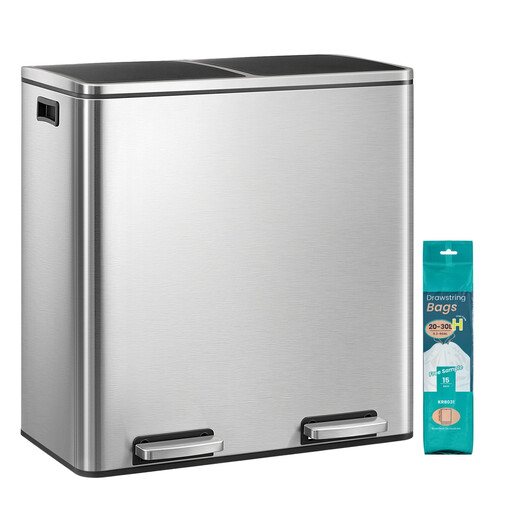
Why This Fits Their Persona: This bin is designed for households that take recycling seriously. The dual 30L compartments make it simple to separate general waste from recyclables in one sleek unit, eliminating the need for a second, unsightly recycling caddy in the kitchen.
It features two independent, sturdy metal foot pedals, avoiding the flimsy pedal trap. The stainless steel body is durable and the separate inner buckets make it a genuinely practical recycling solution, not just a gimmick.
Effortless waste separation with a 60L total capacity. The soft-close lids for both compartments ensure quiet operation in a busy family kitchen.

Why This Fits Their Persona: For those who prioritise ultimate hygiene and convenience, this bin offers true hands-free operation. Its very large 65L capacity is ideal for busy families and the stylish wooden legs give it a contemporary look that elevates it from a simple utility item.
As a product from an established brand, it features more reliable infrared sensor technology than generic alternatives, avoiding the unreliable sensor trap. The fingerprint-proof coating also directly addresses the issue of smudged stainless steel.
The inclusion of an ozone filter to help neutralise odours is a tangible benefit. Its huge 65L capacity significantly reduces the frequency of emptying.
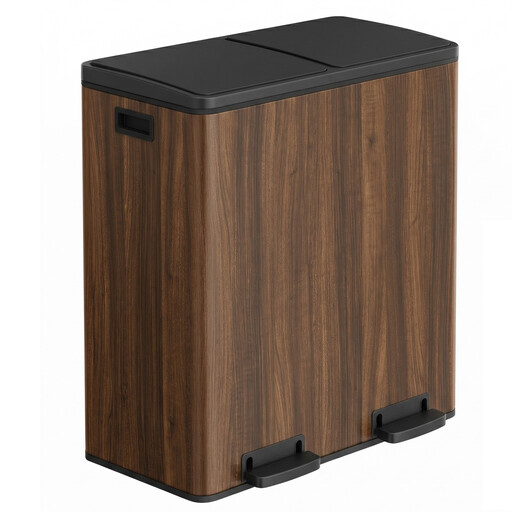
Why This Fits Their Persona: This bin is for someone who sees their kitchen bin as part of the decor. The dark walnut finish on the steel body provides a warm, sophisticated look that blends seamlessly with modern kitchen cabinetry, moving far beyond the typical metallic or plastic appearance.
It doesn't sacrifice function for form. The body is made of durable steel and it uses a reliable dual-pedal mechanism, avoiding the flimsy build trap while offering a unique aesthetic that sidesteps the smudging issues of plain stainless steel.
The unique wood-effect finish offers a premium, furniture-like appearance. It still provides the full practicality of a dual-compartment recycling system with soft-close lids.
We have compiled a complete, real-time list of products that fully satisfy these strict selection criteria and UK safety regulations.
This depends on the specific model, the quality of the batteries used and how frequently it is activated. A good quality automatic rubbish bin using 4-6 AA batteries can often last from 6 to 12 months. To maximise battery life, ensure the bin is placed where it won't be accidentally triggered by people walking past.
A 60l kitchen bin with two 30L compartments is a very popular and effective solution for many families. It provides ample space for a week's worth of recycling (depending on your local council's collection schedule) and several days of general waste. This setup encourages more frequent emptying of food waste, which can contribute to a more hygienic kitchen environment.
For a stainless steel kitchen bin, especially one without a specific fingerprint-proof coating, the method is key. Use a soft microfibre cloth dampened with warm water and a drop of mild washing-up liquid. Always wipe in the direction of the steel's grain. Afterwards, use a second, clean and dry microfibre cloth to dry it completely. This two-step process prevents water spots and streaks from forming. Avoid using abrasive scouring pads or harsh chemical cleaners, as they can scratch the surface.