Hosts with wide seating
If guests sit well to either side of the screen, check how the picture holds up away from the centre. RTINGS identifies viewing angle as particularly important for a wide seating arrangement.


Choose a large TV around the seating layout and room lighting, not screen size alone. RTINGS says wide viewing angles matter when viewers sit across a room; for dark scenes in controlled light, OLED’s individually controlled pixels are worth considering, while a bright room calls for a close look at reflection handling on the exact TV. Plan how the group will hear voices and play recordings before settling on a model.
If guests sit well to either side of the screen, check how the picture holds up away from the centre. RTINGS identifies viewing angle as particularly important for a wide seating arrangement.
If most recordings are watched in controlled evening light, contrast in dim sets and dark costumes may shape the choice. RTINGS explains that OLED pixels can control their light output independently.
If windows or lamps reflect in the screen, assess the precise TV under similar lighting. Samsung distinguishes treatments that soften visible reflections from those that diffuse incoming light.
For group opera viewing, start with the outermost seats and the room’s usual lighting, then plan sound and playback. An OLED screen is worth considering for controlled-light viewing of dark scenes; a Mini LED or Neo QLED set warrants consideration where ambient light is harder to control, but neither label establishes how a particular TV looks from a side seat.
| Concern | What to check | Who this matters to |
|---|---|---|
| Picture from side seats | Assess the exact TV from the furthest left and right seats, using dark scenes and faces; look for independent viewing-angle tests. | I do not want guests at the ends of the sofa to lose detail or see shifted colours. Around 33% of consumers put side-seat picture consistency first. |
| Voices and sound | Check audio outputs and compatibility with the intended soundbar or AV receiver; confirm any model-specific centre-speaker function. | When singers are difficult to follow across a large room, I would prioritise an audio setup I can use with the TV. Clear voices and sound are the main concern for around 33% of consumers. |
| Reflections | Identify where windows and lamps appear on the screen, then assess the model’s reflection treatment in comparable light. | Daytime light falls across my viewing room, so I need to judge whether reflections will distract from the performance. Around 20% of consumers primarily focus on bright-room visibility. |
| Playback access | Confirm access to the intended service or recording device, including app availability or the required HDMI connection. | I mainly watch recordings from a particular source and need a dependable way to play them on the new screen. Playback compatibility comes first for around 14% of consumers. |
A larger picture does not establish that viewers at the edges of a wide seating arrangement will see consistent colour and contrast. RTINGS highlights viewing angle as a separate consideration.
Mark out the outer seats and assess the exact TV from those positions, rather than judging it only from straight ahead.
Samsung describes anti-reflection as softening visible reflections and anti-glare as diffusing incoming light. The distinction matters when a room has a prominent window or lamp in the screen’s sightline.
Identify the troublesome light source and, if possible, assess a dark recording with the room lit as it normally would be.
OperaVision says its content is available on televisions through the YouTube app, but the playback route still needs to work on the TV or a connected device you intend to use.
Check the intended service for the exact model and consider whether an existing HDMI-connected streaming device or player provides the access you need.
Soundbar placement and connections can affect the setup. Sony’s Acoustic Center Sync, for example, requires specified compatible TV and audio equipment rather than working with every soundbar.
Before mounting the TV, check its audio connections, space for speakers and the exact compatibility requirements of any planned system.
LG’s large OLED range is relevant when viewers spread across the room and most opera watching takes place in controlled light.
Samsung offers large OLED and Neo QLED/Mini LED options to compare for shared rooms with different lighting.
Sony is relevant if a large Google TV and a planned compatible audio system are part of the setup.
These 75-inch TVs are options to assess for a shared opera-viewing room. Compare each one from the outer seats, under the room’s usual lighting, and against your playback and audio plans.
 No image available
Consider this large screen for a shared room, provided its picture remains suitable from the outer seats.
The product name specifies a 75-inch 4K Ultra HD Smart TV with Wi-Fi. Check its reflection handling in your usual room light.
 No image available
For dark-stage recordings in a shared room, compare this model’s contrast and picture from side seats rather than relying on its display label alone.
The product name specifies 4K HDR, a 144 Hz native refresh rate and up to 512 dimming zones; the stated maximum should not be read as a confirmed zone count for this variant. Check access to your intended app and audio connections.
 No image available
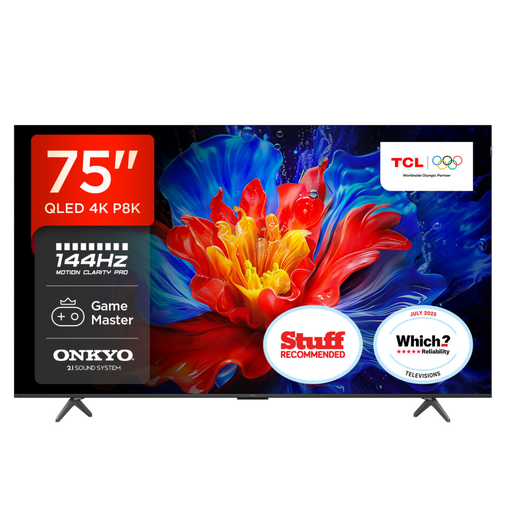
If group listening is a priority, this model’s stated audio system gives you a feature to assess from the seats where guests will sit.
The product name specifies 4K HDR and an ONKYO 2.1 sound system. Check viewing angles, reflections, the intended streaming app and connections for any external audio equipment.
 No image available
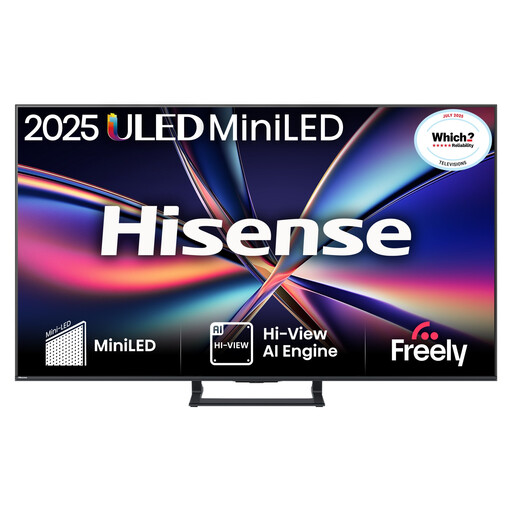
Consider this model if you want to assess a large Mini LED screen for the room, while checking its picture from side seats and under your usual lighting.
The product name specifies 4K HDR, a 144 Hz native refresh rate and Audio by Bang & Olufsen. It advertises up to 2,048 local-dimming zones, not a confirmed count for this variant; also check the intended app and audio connections.
 No image available
For a large shared room, assess this screen from the outer seats and confirm that VIDAA provides a playback route for your recordings.
The product name specifies 4K HDR and a built-in subwoofer. Plan a secure installation with anti-tip anchoring, and check reflections and any audio connections you intend to use.
Consider OLED when dark scenes and wide seating matter most in controlled light; consider Mini LED or Neo QLED when bright-room viewing is the harder problem. RTINGS explains OLED’s independently controlled pixels and the importance of viewing angle, while Samsung’s bright-room guidance discusses reflection treatments. Assess the exact TV from side seats before deciding.
Yes, OperaVision says its content can be accessed on a television through the YouTube app. Confirm the app is available on the particular UK TV you plan to use, or arrange a compatible external streaming device.
Not necessarily; decide after considering whether voices are clear from the group’s seats. If planning external audio, check the TV’s outputs and the exact soundbar or receiver compatibility. Sony’s Acoustic Center Sync is one option only with specified compatible equipment and connections.
Compare energy information for the exact TV model and screen size rather than assuming one panel technology uses less energy. GOV.UK states that electronic displays, including televisions, fall within the scope of UK energy-information regulations.
Ask the retailer about its electrical waste take-back and collection arrangements before ordering. GOV.UK says an in-store take-back service offered by a retailer is free, while transport costs may apply if the retailer collects an item from your home.