Choose a large 16:9 4K monitor if you want a conventional screen layout; consider 21:9 if horizontal space matters more, and 49-inch 32:9 only if you want that exceptionally wide format and have room for it. Before committing to an ultrawide for Squad, check how the game handles its aspect ratio and interface. Whichever format you choose, the graphics card, connection and in-game performance must support the resolution and refresh mode you intend to use.
Who these screens suit
Players considering a wider battlefield view
Offworld Industries describes Squad as featuring 50-versus-50 battles across expansive maps. Players who want more horizontal screen space can compare 21:9 and 32:9 monitors, but should check the game’s aspect-ratio and interface behaviour before choosing either format.
Players who prefer a large 16:9 screen
A 32-inch-class 4K display keeps a conventional layout for Squad and other 16:9 content. Dell and ASUS both list large 4K gaming models, although the PC still has to drive the chosen resolution at an acceptable frame rate.
Players prioritising refresh and variable refresh rate
A high-refresh specification is worth assessing alongside the graphics card, cable, monitor input and variable refresh rate (VRR) setting. As BenQ explains, VRR requires a compatible signal from the graphics card; the panel specification alone cannot provide it.
What matters when choosing
For Squad, choose the screen format you can use comfortably, then check game behaviour and whether your PC can drive the mode you want.
Large 16:9 4K
Choose when: You want a large, detailed screen without changing to an ultrawide layout.
Accept that: Driving 4K at a high game frame rate depends on your PC; a 240Hz panel does not make Squad run at 240fps.
21:9 ultrawide
Choose when: Horizontal screen space matters, but you do not want the full width of a 49-inch 32:9 display.
Accept that: You need to check Squad’s ultrawide interface behaviour and your desk fit. A 45-inch 5120 × 2160 model also makes greater demands on the graphics card than a 3440 × 1440 model.
49-inch 32:9
Choose when: You specifically want an exceptionally wide screen and can accommodate it at your desk.
Accept that: The format calls for a separate check of Squad’s aspect ratio, interface and field of view; physical size does not establish game compatibility.
| Concern | What to check | Who this matters to |
|---|
| Horizontal view |
Compare 21:9 and 32:9 screen sizes; check Squad’s current aspect-ratio and interface behaviour. |
I want space to follow movement across Squad’s expansive maps, but I need the game interface to remain usable. Around 33% of consumers put a wider tactical view first. |
| Detail and familiar layout |
Compare a 16:9 4K screen with the PC performance you expect at your chosen game settings. |
Keeping a conventional layout matters more to me than extra width when I play and use other 16:9 content; around 27% of consumers prioritise this combination of detail and format. |
| Motion and VRR |
Match the graphics card, input, cable and monitor setting to the intended refresh and VRR mode. |
I would rather prioritise fluid motion than the widest or highest-resolution screen, provided my PC can drive it. That is the primary concern for around 20% of consumers. |
| Desk and connection fit |
Measure usable desk width and depth, including the stand, and check available graphics-card outputs. |
A screen that fits my seating position and existing connections comes before maximising its size; roughly 20% of consumers place setup fit first. |
Buying pitfalls
-
Assuming every connection delivers the advertised maximum refresh rate
A monitor’s refresh mode depends on the signal path. BenQ notes that VRR also requires compatible graphics-card output.
Match your graphics-card output, monitor input and cable to the resolution and refresh rate you intend to use, then enable and check VRR after setup.
-
Choosing 49-inch 32:9 on size alone
Samsung lists its 49-inch Odyssey OLED G9 at 5120 × 1440, but that specification does not establish how Squad presents its interface on a 32:9 screen or whether the monitor fits your desk.
Measure your space and check current Squad aspect-ratio, interface and field-of-view behaviour. Compare 21:9 if you want width without committing to 49-inch 32:9.
-
Using a quoted pixel response time as the whole comparison
Samsung qualifies its quoted GtG response time by measurement conditions; results can vary with content, settings and input-source performance.
Consider the response-time figure alongside screen format, resolution, refresh mode, VRR compatibility and your PC’s game performance.
-
Assuming OLED-care features prevent panel wear
ASUS describes OLED Care Pro as a way to reduce burn-in risk, not a guarantee against it.
Read the exact model’s care guidance and warranty terms, and consider how much time the screen will show static desktop content as well as games.
Relevant brands to consider
LG UltraGear
LG’s large curved OLED range includes 45-inch 21:9 options, including the 45GX950A-B with a 5120 × 2160 mode.
- LG lists the 45GX950A-B at 165Hz in its higher-resolution mode and 330Hz in a separate lower-resolution mode.
- The higher-resolution mode places greater demands on the PC. LG’s 800mm viewing-distance figure for its curved design is an assumption, so assess fit from your own seat.
Alienware
Dell lists both the 34.2-inch 3440 × 1440 AW3425DW and the 31.6-inch 4K AW3225QF, illustrating the 21:9 and large 16:9 routes.
- Dell specifies 240Hz for both models; the AW3225QF also lists height, swivel and tilt adjustment.
- Neither panel refresh figure establishes Squad’s frame rate on your PC. Check the intended output and connection for the exact model.
Samsung Odyssey
Samsung’s 49-inch Odyssey OLED G9 G95SD represents the 32:9 Dual QHD route, with a listed 5120 × 1440 resolution.
- Samsung lists a 240Hz refresh rate for this model.
- Its width makes desk fit especially important, while the monitor specification alone cannot establish Squad’s 32:9 interface behaviour.
ASUS ROG
The ROG Strix OLED XG32UCWMG is a 32-inch-class 4K option with a separate lower-resolution, higher-refresh mode.
- ASUS lists 4K at 240Hz and FHD at 480Hz as distinct modes.
- Assess each mode against your PC and intended games. ASUS’s OLED-care measures aim to reduce burn-in risk, not eliminate it.
MSI
The MPG 341CQPX is a 34-inch QD-OLED ultrawide option for shoppers comparing the 21:9 route.
- Joybuy lists this model as UWQHD with a 240Hz refresh rate and DisplayPort, HDMI and USB-C connections.
- Check that your PC can use the intended connection and mode, and confirm Squad’s ultrawide presentation before choosing it for that purpose.
Joybuy monitor choices
These models cover 34-inch ultrawide choices and one large conventional-format choice for Squad-style play. Choose the format first, then check game presentation, desk fit and the connection needed for your intended mode.
 No image available
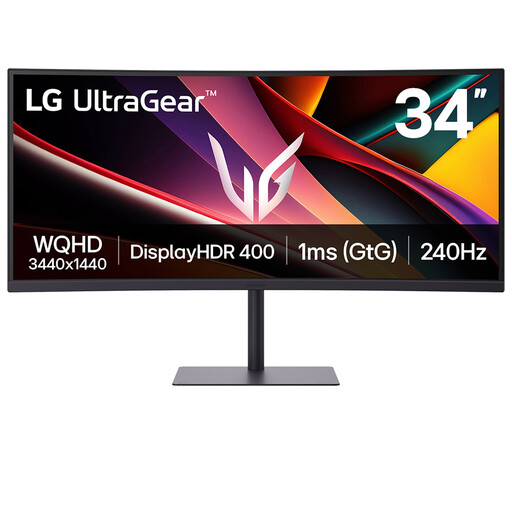
LG UltraGear 34G630A-B 34-inch VA WQHD monitor
Consider this 34-inch model if you want an ultrawide screen rather than a conventional layout; check Squad’s interface behaviour at the intended aspect ratio.
Its product title specifies a VA panel, WQHD and 240Hz. Check that your graphics card, cable and chosen input can deliver the mode you plan to use.
Joybuy
 No image available
LG UltraGear 34GX900A-B 34-inch OLED WQHD monitor
Consider this 34-inch ultrawide if horizontal screen space and an OLED panel are priorities; check Squad’s aspect-ratio and interface behaviour first.
Its product title specifies 240Hz. Confirm the required PC connection for that mode, and review the model’s OLED-care guidance if you also use static desktop content.
Joybuy
 No image available
Lenovo R34w-30 34-inch UWQHD monitor
This is another 34-inch ultrawide choice for players considering more horizontal screen space; confirm how Squad presents its interface in that format.
The product title identifies a UWQHD gaming monitor. Check the exact pixel resolution and refresh mode for the input you intend to use before pairing it with your PC.
Joybuy
 No image available
Samsung Odyssey OLED G8 LS32DG802SUXXU 32-inch Ultra HD monitor
Consider this model if you prefer a large conventional-format screen to an ultrawide one for Squad and other content.
The product title identifies a 32-inch Ultra HD smart gaming monitor. Check the graphics-card output, cable and monitor input required for your intended refresh mode, as well as expected game performance at your settings.
Joybuy
 No image available
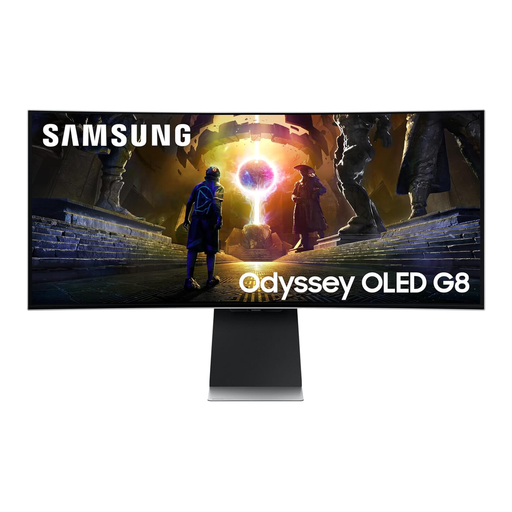
Samsung Odyssey G8 LS34DG850SUXXU 34-inch curved OLED WQHD monitor
This 34-inch curved model suits a buyer considering an ultrawide layout without moving to 49-inch 32:9; check Squad’s aspect-ratio and interface behaviour.
The product title lists 175Hz and 0.03ms. The listed 175Hz mode uses DisplayPort, while HDMI is listed at 100Hz, so check your intended connection before choosing it for high-refresh play.
Joybuy
Questions about the setup
Will a 240Hz monitor make Squad run at 240fps?
No. The monitor’s refresh capability does not determine the frame rate your PC produces in Squad. Check your graphics-card output and connection, then assess game performance at the resolution and settings you intend to use.
Does VRR need a compatible graphics card?
Yes. BenQ explains that a monitor needs a compatible graphics-card signal for VRR. Check the exact monitor’s supported VRR mode alongside your graphics card, connection and monitor settings.
Is a 45-inch curved ultrawide necessarily comfortable at a desk?
No. LG’s 800mm viewing-distance figure for its 45-inch 800R design is an assumption, not a comfortable distance for everyone. Measure your desk depth and consider the screen from your usual seated position.
What should I do with an old monitor?
Check the recycling or take-back options available where you live before disposing of it. UK government guidance on waste electrical and electronic equipment describes measures intended to encourage recovery, reuse and recycling of equipment and components.


