
24/7 Customer Support

Free returns

Same-day & Next-day Delivery

Quality Guaranteed

Unlock Your Welcome Offers: FREE Delivery | Up to 80% OFF | Free 30-day JoyPlus trial
Download the APP
Laundry detergent pods are convenient, pre-measured and easy to store, but choosing between washing capsules, liquid pods and eco laundry detergent sheets is not always straightforward. A low shelf price may hide a small pack size, while a strong fragrance may not suit everyone in the household.
This guide from the Joybuy Product Recommendation Officer breaks down the main buying traps, practical specifications and suitable options for different UK households.
A 60-pod box may look cheaper than an 85-wash pack until you compare the cost per wash. Dosage can also vary according to load size, water hardness and soil level. Some products require two pods for larger or heavily soiled loads, reducing the advertised number of washes.
Before buying, check:
Scented laundry pods can leave clothes smelling fresh, but fragrance longevity does not necessarily indicate stain-removing ability. Ingredients such as enzymes, surfactants and optical brighteners are more relevant to cleaning and fabric appearance.
If you prefer scented washing pods, check the listed fragrance ingredients. Products containing limonene, linalool, citronellol or similar fragrance compounds may not suit every household. Always read the packaging if someone in your home is sensitive to fragrances.
Packaging reductions and plastic-free formats can be useful, but environmental claims should be assessed carefully. Look for clear information about the packaging, ingredients, disposal and washing instructions.
Eco laundry detergent sheets are compact and convenient, particularly for flats, travel or smaller storage areas. However, you should still check whether the sheet is intended for your machine type, load size and preferred wash temperature. A smaller format may also require half or multiple sheets depending on the cycle.
Most laundry detergent capsules should be placed at the back or bottom of the empty drum before adding clothes. They should not normally be placed in the detergent drawer unless the product instructions specifically say otherwise.
A typical guide is:
Do not overload the drum. Crowded laundry can restrict water movement and reduce cleaning, even when the detergent itself is suitable.
Bio laundry detergent contains enzymes designed to break down certain food, protein, starch and grease stains. Non-bio laundry pods generally omit biological enzymes and are often selected by households washing baby clothes or garments for people with sensitive skin.
Neither label should be treated as a universal guarantee of suitability. If skin sensitivity is a concern, compare the full ingredient list, fragrance content and care instructions. A product described as dermatologically tested or certified by a third party should still be used according to its label, and individual reactions can differ.
Optical brighteners may improve the visual appearance of white fabrics, while fragrance ingredients affect scent rather than core cleaning. Consider whether these additions are useful for your routine.
Many current washing liquid capsules are designed to dissolve in quick or low-temperature cycles. This can be useful for UK households using 20°C or 30°C programmes. However, the outer film may not dissolve properly if the machine is overloaded, the cycle is unsuitable or the pod has been exposed to moisture.
For reliable use:
Laundry capsules can cause serious eye damage or skin irritation, and some products may be harmful to aquatic life. Store them securely, ideally in a high, locked location, and follow the label if accidental contact or ingestion occurs.

Why This Fits Their Persona: A practical starting option for regular UK laundry routines, with pre-dosed capsules and a 48-wash pack.
The pack size and one- or two-capsule guidance make it easier to calculate cost per wash instead of relying only on the box price.
Fast-dissolving formula is listed for quick and cold washes; the box is described as recyclable and plastic-free apart from glues and varnishes.
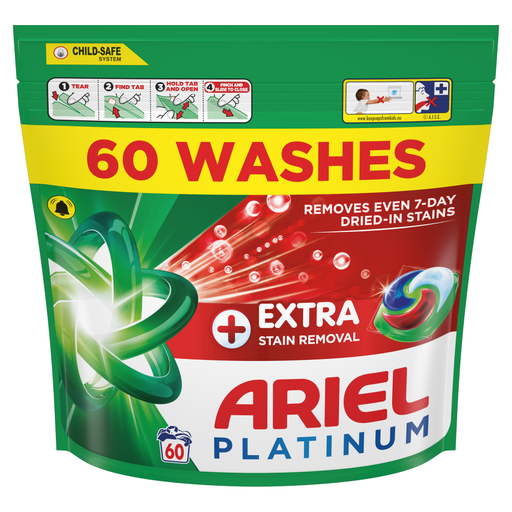
Why This Fits Their Persona: Suitable for households prioritising a concentrated formula and clear dosing for everyday and heavily soiled laundry.
The listing specifies one pod for a 4–5 kg load and two for larger loads, heavy stains or hard water, helping shoppers plan usage realistically.
Multi-chamber capsule format; listed as suitable for 20°C programmes and formulated with surfactants, enzymes and optical brighteners.
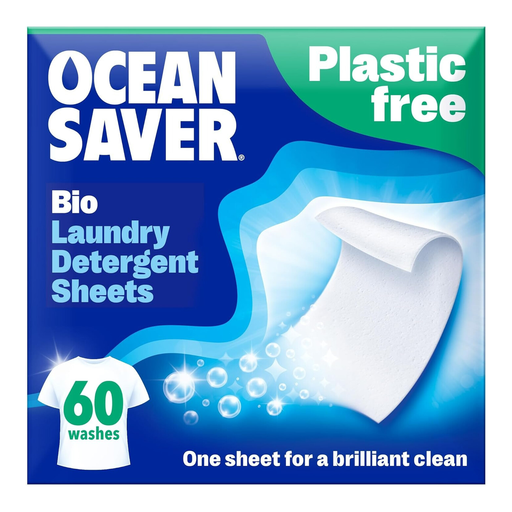
Why This Fits Their Persona: A compact alternative to liquid detergent for flats, travel, shared homes and shoppers seeking a pre-portioned format.
The pre-portioned sheet avoids measuring liquid and the product listing provides separate guidance for half sheets and small cycles.
The listing describes the sheets as plastic-free, biodegradable and compatible with front-load and top-load machines.

Why This Fits Their Persona: Designed for households looking for a non-bio option for everyday family clothing, subject to checking the full label and individual suitability.
The non-bio positioning helps shoppers avoid automatically choosing enzyme-containing bio detergent when that is not their preference.
The listing describes a 50-wash pack and use in cold or quick cycles, with dosage guidance for standard and larger loads.
We have compiled a complete, real-time list of products that fully satisfy these strict selection criteria and UK safety regulations.
They can be convenient and reduce measuring waste, but value depends on the cost per wash and dosage. Compare pack price, standard-load dose and the number of capsules required for hard water or heavily soiled laundry.
Many products are listed for cold or low-temperature programmes, including some 20°C cycles. Place the capsule directly in the drum, use dry hands and avoid overloading the machine. Always follow the specific product instructions.
Keep capsules in their original, closed packaging in a cool, dry place, away from children and pets. Do not puncture, cut or squeeze them. If a capsule leaks or comes into contact with skin or eyes, follow the safety instructions printed on the label.