
24/7 Customer Support

Free returns

Same-day & Next-day Delivery

Quality Guaranteed

Unlock Your Welcome Offers: FREE Delivery | Up to 80% OFF | Free 30-day JoyPlus trial
Download the APP
Laundry detergent sheets are appealing to UK households that want less mess, lighter storage and fewer bulky bottles. Pre-measured strips can suit small flats, family laundry rooms and travel bags, but not every product marketed as “eco” or “concentrated” offers the same ingredients, load guidance or value.
Before switching from liquid or powder, watch for three common buying traps.
A pack containing 60 sheets does not always mean 60 full loads. Some instructions recommend half a sheet for lighter loads, while others require two sheets for hard water, larger machines or heavily soiled clothing. Always compare the recommended loads, not just the number printed on the front.
Terms such as eco laundry detergent sheets, “natural” and “plastic-free” can describe different features. A product may reduce plastic packaging but still contain fragrance, preservatives or synthetic binders. Check the full ingredient list, packaging instructions and disposal guidance rather than relying on a front-of-pack claim.
For a genuinely lower-waste choice, look for clear information about the pack material, whether the detergent is biodegradable and how used sheets should be disposed of. “Plant-based” also refers to ingredient origin, not automatically to cleaning performance or skin suitability.
Non-bio laundry sheets do not contain biological enzymes, but they can still contain surfactants, fragrance or other ingredients that some people may prefer to avoid. If you are choosing laundry sheets for sensitive skin, baby clothes or bedding, prioritise fragrance-free options and follow the product warning. Stop using any detergent if irritation occurs and seek appropriate medical advice where necessary.
Non-bio laundry sheets are often chosen for family washing, sensitive-skin routines and baby clothing because they do not use biological enzymes. Bio sheets may be considered for heavily soiled everyday items, but shoppers should read the label carefully and follow garment-care instructions.
Fragrance-free laundry detergent sheets are useful for people who dislike scented products or want to minimise added fragrance. A scented formula may be more suitable if you prefer a noticeable finish, but fragrance ingredients can matter to allergy-conscious households.
Also check whether the formula contains phosphates, chlorine bleach, added dyes, parabens, phthalates or optical brighteners. A longer exclusion list is not automatically proof of better cleaning, so balance ingredient preferences with the stated load guidance.
The correct dose depends on more than drum size. Water hardness varies across the UK and hard water can require more detergent for the same load. For example, some products specify one strip for a 4–5kg load with soft water or light soiling and two strips for heavier soiling, hard water or loads up to 7kg.
Read the instructions for your washing machine and avoid adding extra detergent by guesswork. Overdosing can increase cost and may leave unwanted residue, while underdosing may be noticeable on heavily soiled clothing.
Compact washing machine detergent sheets should be kept sealed in a cool, dry place. Moisture can make sheets stick together or dissolve prematurely. Keep all detergent products away from children and pets and avoid contact with eyes.
UK shoppers should also check the product label for hazard warnings, manufacturer details, ingredient information and disposal instructions. Never assume that “zero waste” means the used sheet can be flushed or composted. Follow the packaging guidance and your local waste rules.
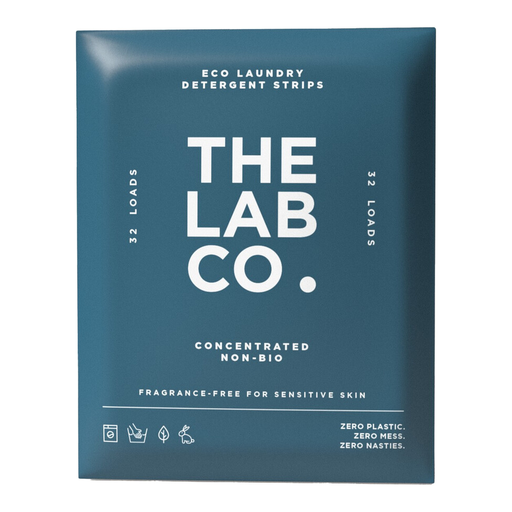
Why This Fits Their Persona: A compact starting point for renters, students and smaller UK households who want fragrance-free, pre-portioned washing without storing a large bottle.
The listed 32-load capacity and one-to-two-strip guidance make the expected usage clearer than judging by sheet count alone. It is listed as free from added fragrance, parabens, phosphates, phthalates, chlorine bleach and added dyes.
Non-bio formula; suitable for hand washing and machine washing; compact fragrance-free format.
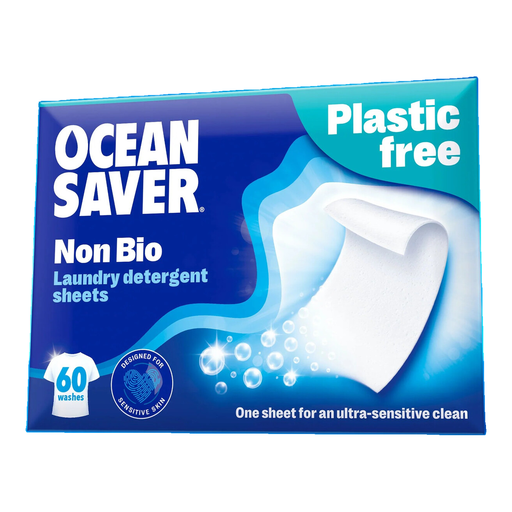
Why This Fits Their Persona: Suits eco-conscious families and shoppers seeking a larger supply, plant-based positioning and a non-bio option for regular household laundry.
The pack states 60 washes and provides half-sheet and full-sheet guidance. Its listed formula is non-bio, plastic-free and biodegradable; check the current pack for final ingredient and disposal information.
60-sheet format; designed for cold washes from 20°C; pre-portioned and suitable for home, small spaces or travel.
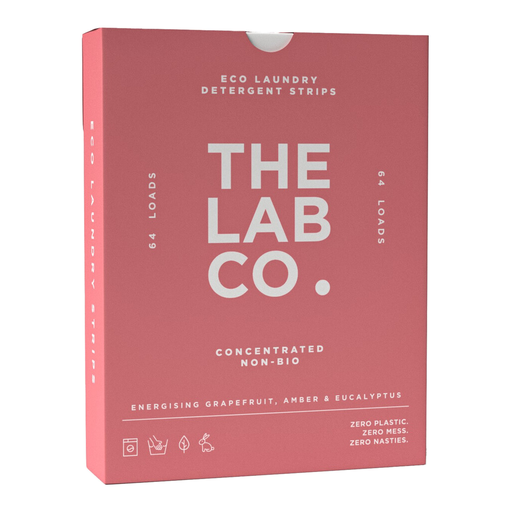
Why This Fits Their Persona: A practical choice for larger households, activewear users and anyone wanting a higher stated load capacity in a lightweight format.
The 64-load listing provides a clearer comparison for frequent washing, while instructions still distinguish between lighter loads and hard water or heavier soiling.
Non-bio strips; no listed parabens, phosphates, phthalates, chlorine bleach or added dyes; suitable for everyday clothing, activewear and swimwear.
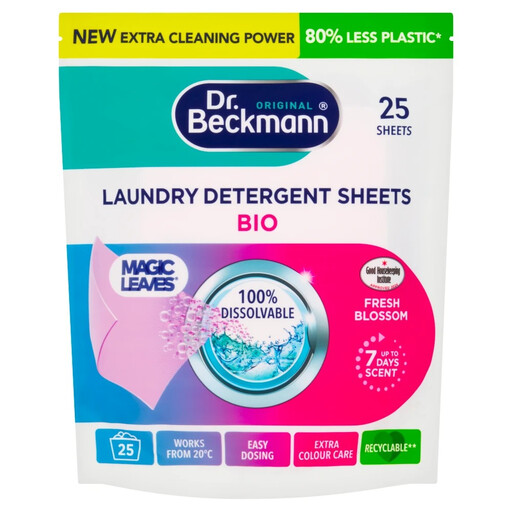
Why This Fits Their Persona: Suitable for shoppers who prefer a bio formula, a noticeable fragrance and a format stated for temperatures from 20°C to 60°C.
The directions state one sheet for loads up to 4.5kg and specify placement in the back of the drum. Its ingredient list clearly identifies enzymes, perfumes and preservatives.
Bio formula; suitable for short cycles and hand washing; stated operating range of 20°C to 60°C.
We have compiled a complete, real-time list of products that fully satisfy these strict selection criteria and UK safety regulations.
For travel, travel laundry detergent sheets can be more convenient than carrying liquid through airport security or packing a powder container. Take only the amount required, keep it dry and follow the same dosing instructions as at home.
Not necessarily. Calculate the cost per recommended wash, including occasions when two sheets are needed. A larger pack may reduce the cost per load, but a smaller pack can be sensible if you are testing fragrance or formula suitability first.
Many products are designed for cold or low-temperature cycles, but the stated range differs. Check the label before washing at 20°C. Stain treatment, cycle length, load size and water hardness can all affect results.