
24/7 Customer Support

Free returns

Same-day & Next-day Delivery

Quality Guaranteed

Unlock Your Welcome Offers: FREE Delivery | Up to 80% OFF | Free 30-day JoyPlus trial
Download the APP
Choosing laundry detergent is not simply a matter of picking the largest bottle or the most attractive fragrance. UK households need to consider water hardness, washing temperature, fabric type, skin sensitivity, load size and the true cost per wash.
Marketing can also make comparison difficult. A compact pack may contain fewer washes than expected, while a “concentrated” formula can cost more if you use excessive doses. The right choice depends on how and what you wash.
A 1.5-litre bottle may appear better value than a small concentrated liquid, but the bottle size does not show how many loads it covers. Check the recommended dose per wash, including adjustments for hard water, larger loads and heavy soiling.
For example, one product may recommend 25ml for a standard load, while another requires 35ml or more. Compare the approximate number of washes and cost per load rather than millilitres alone.
Non-bio laundry detergent is commonly selected for babies, children and people who prefer a milder wash. However, non-bio describes the absence of biological enzymes, not the absence of perfume. Many non-bio products still contain fragrance ingredients.
If you are fragrance-sensitive, check for terms such as fragrance-free, “unscented” and the ingredients list. A product with a floral or fruit scent may not suit someone trying to avoid added fragrance, even if it is non-bio.
An eco-friendly laundry detergent may use plant-based ingredients, concentrated dosing or reduced packaging. These are useful features, but they do not automatically indicate that the product suits every fabric, stain or household.
Check whether the packaging is recyclable, whether refills are available, how much detergent is required and whether the formula is intended for low-temperature washing. Also follow the manufacturer’s safety instructions: laundry products should be kept away from children and handled carefully around the eyes.
Bio laundry detergent contains enzymes designed to break down particular types of stains, including protein, grease and starch. This can be useful for family clothing, food marks and heavily soiled items. It may not be suitable for every fabric, so read garment-care instructions before use.
Non-bio laundry detergent is often chosen for baby clothing, sensitive skin routines and everyday garments. It may be a practical option for households that prefer to avoid biological enzymes, although individual skin responses vary. For persistent marks, pre-treat a small, colourfast area first.
A concentrated laundry liquid allows you to adjust the dose for load size, soil level and water hardness. It can also be used for some stain pre-treatment, provided the label permits it and you check colourfastness.
Washing pods are convenient because they remove measuring from the routine. They must be placed in the back or bottom of the drum before adding clothes, never in the detergent drawer. Use dry hands and keep the container securely closed, as pods can cause serious eye damage and must be stored safely.
Laundry detergent strips are lightweight and compact. They can reduce the need for bulky plastic bottles and are convenient for smaller homes, travel or limited storage. Dosage is generally based on one strip for a standard load, with two recommended by some products for hard water or heavier soiling.
A low-temperature laundry detergent can be useful for 20°C or cooler programmes, which many households use for lightly soiled clothes. However, wash performance still depends on the stain, detergent dose, cycle length and load size.
Check whether the product is intended for colours, whites, bedding, activewear or delicate materials. Several detergents are not recommended for wool or silk. Always follow the garment label and avoid overfilling the drum, as crowded laundry restricts water and detergent movement.
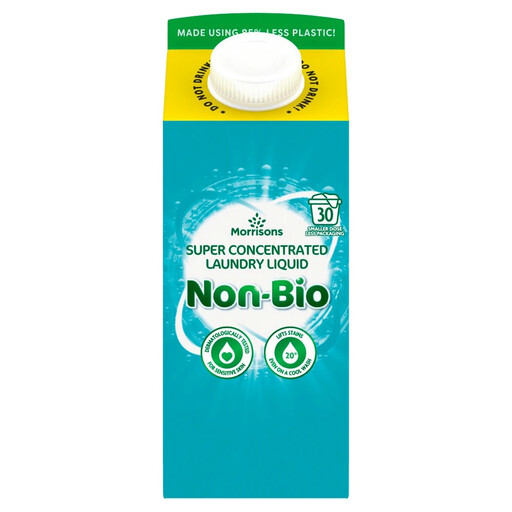
Why This Suits Their Persona: A compact liquid format with stated dosing for standard, hard-water and larger loads, suitable for shoppers comparing everyday cost and storage space.
The 750ml pack gives a clear alternative to judging value by bottle size alone, with dosage guidance of 25ml for a standard load and extra detergent for harder conditions.
Non-bio formula; listed as dermatologically tested; designed for stain removal at 20°C.
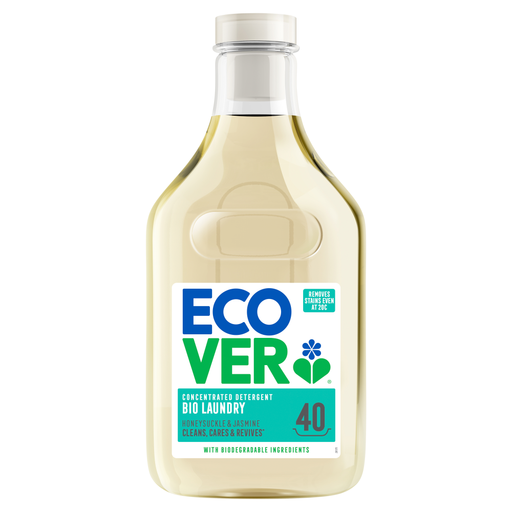
Why This Suits Their Persona: A plant-based liquid for households wanting concentrated dosing, a floral fragrance and packaging details that support refill and recycling considerations.
The product information specifies 35ml or 50ml dosing, refill-station availability and recyclable PCR bottle and cap materials, making environmental features easier to assess.
Bio enzyme formula; stated suitability for 20°C washes; not recommended for wool or silk.
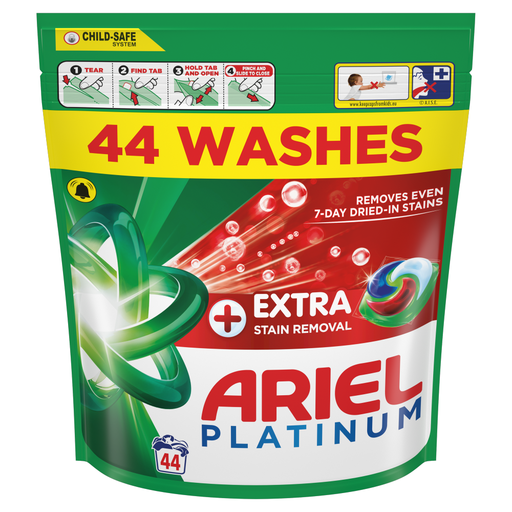
Why This Suits Their Persona: A pod format for busy households washing large loads, heavily soiled clothing or garments with dried-in marks.
The stated directions distinguish between standard loads and large, heavily stained or hard-water loads, rather than presenting one dose as suitable for every wash.
Suitable for programmes from 20°C to 95°C; pod format avoids measuring; contains enzymes and optical brighteners.
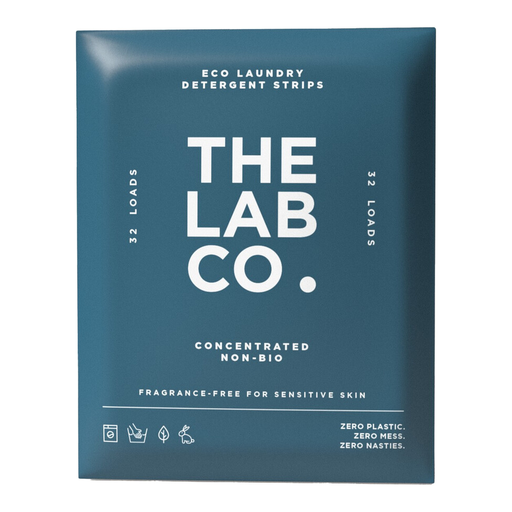
Why This Suits Their Persona: A compact, unscented non-bio option for customers who want to avoid added perfume in everyday clothing and bedding.
It is specifically described as fragrance-free and non-bio, helping shoppers distinguish scent-free requirements from the broader non-bio category.
One strip is specified for a 4–5kg light load; two may be used for hard water or heavier soiling; free from added dyes and chlorine bleach.
We have compiled a complete, real-time list of products that fully satisfy these strict selection criteria and UK safety regulations.
It can be, but only when dosed correctly. Compare the labelled number of washes and calculate the price per load. Using extra liquid unnecessarily can remove any saving and may leave residue on fabrics or inside the machine.
Some strips specify two strips for hard water or heavy soiling. Check the individual instructions, as dosing varies. UK water hardness differs by area, so local water information and your detergent label are useful references.
Many families choose non-bio for baby and children’s clothing, but the decision should reflect the garment label and personal preferences. Check the full ingredients and fragrance information, use the recommended dose and run an additional rinse if your washing-machine guidance supports it. If irritation occurs, stop using the product and seek appropriate medical advice.