Single-speaker smartphone interviewer
You are recording a seated narrator to a compatible phone or portable device and want a discreet microphone close to their voice without managing a wireless receiver.


For one seated speaker in a small booth, a wired lavalier is a straightforward choice if its plug and your recording device are compatible. Consider wireless when cable-free movement or an onboard recording backup matters enough to justify charging and managing a radio link. A professional lavalier capsule suits a more specialised, recurring setup, but it needs a compatible recording or bodypack system.
You are recording a seated narrator to a compatible phone or portable device and want a discreet microphone close to their voice without managing a wireless receiver.
You may use different recording devices, need the interviewee to move without a microphone cable, or value a separate recording of a take that would be difficult to repeat.
You record interviews regularly and can check the complete connection from a discreet lavalier capsule through its power source and input to the recorder.
Choose when: One person will remain seated and the phone or recorder has a confirmed compatible microphone input.
Trade-off: A cable limits movement and can pick up contact with clothing; a 3.5 mm socket alone does not establish plug compatibility.
Choose when: Cable-free movement, connections to different device types or an onboard recording backup would help the interview.
Trade-off: Transmitters and receivers need charging and setup. Ofcom notes that shared licence-exempt wireless-microphone ranges can experience interference.
Choose when: Recurring interviews call for discreet placement and you already use, or can specify, a compatible recording system.
Trade-off: A capsule such as the Sennheiser MKE 2 is not a complete phone-recording kit; its connector, powering and recording chain must work together.
| Concern | What to check | Who this matters to |
|---|---|---|
| Speech and clothing noise | Check where the capsule can be clipped and how its cable or mount can be kept clear of rubbing fabric. Shure advises securing a lavalier cable to clothing to reduce contact noise. | I want the narrator’s words to remain clear without fabric rustle intruding on a quiet take. Around 36% of consumers would put speech clarity and clothing-noise control first. |
| Device connection | Match the microphone plug or receiver output to the recorder input; confirm any required CTIA-compliant adapter and test the recording app. | If I record directly to a phone, I need the microphone and app to work together without complicating the session. Roughly 29% of consumers would prioritise a confirmed connection and simple workflow. |
| Backup and movement | If using wireless, check whether the chosen system records onboard, how to retrieve those files and how its transmitters are charged. | I may not be able to ask someone to repeat their testimony, and they may need to move during the interview. Around 21% of consumers would put a recoverable take or freedom from a cable first. |
| Recorded-file handling | Plan participant information, access to identifiable files and a retention approach before recording. Where UK GDPR applies, the Information Commissioner's Office requires a valid lawful basis and transparent handling. | I need to explain who can hear identifiable testimony and how it will be stored before we begin. Roughly 14% of consumers would make responsible file handling their primary concern. |
The Shure MVL is intended for compatible mobile-device inputs or an appropriate CTIA-compliant adapter. A recorder’s physical socket does not, by itself, establish that its microphone input matches the plug.
Check the exact plug, input and adapter requirements, then make a test recording in the app you intend to use.
You may need a compatible adapter or a different recorder interface.
Wireless recording brings charging and pairing into the session. Ofcom also notes that shared licence-exempt wireless-microphone ranges can be subject to interference.
Charge and test the complete system before the interview. If a take cannot readily be repeated, check whether your chosen model can record onboard and confirm that recording is enabled and its files can be retrieved.
A quiet booth does not prevent contact noise when clothing touches a lavalier capsule or cable.
Position the microphone near the upper chest, keep the capsule clear of rubbing fabric and secure its cable. Record a short test while the speaker moves naturally.
Oral-history audio may contain personal information. Where UK GDPR applies, the Information Commissioner's Office requires a valid lawful basis, transparent processing and retention tied to the purpose.
Explain the project to participants before recording, decide who may access the files and document when their continued retention will be reviewed. If relying on consent as the lawful basis, check that it is specific and informed.
The MVL represents a wired, direct-to-mobile route for a seated interview.
Wireless GO (Gen 3) illustrates a compact wireless route with an external-lavalier option.
The MKE 2 represents a lavalier-capsule route for a compatible production or bodypack system.
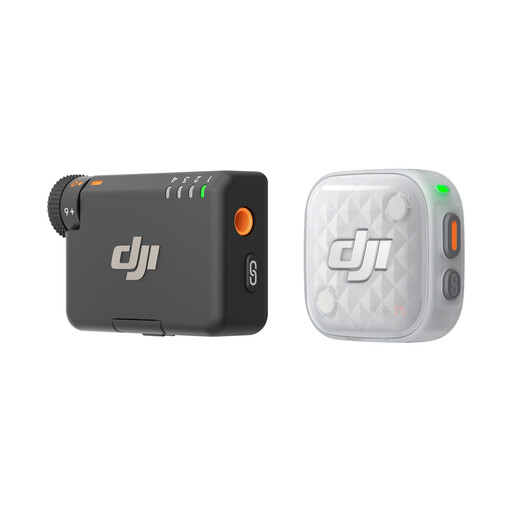
These DJI clip-on wireless microphone bundles suit a cable-free interview setup. The two bundles differ in transmitter and receiver configuration; check the connection to your recording device and whether you need a separate lavalier capsule.
 No image available
Consider this bundle if the interview setup calls for two clip-on transmitters rather than one.
 No image available
Consider this configuration when one interviewee needs a clip-on microphone and the mobile receiver suits your recording device.
A wired lavalier can be enough for a seated, single-speaker interview when its plug matches the recording device and the cable can be kept clear of clothing noise. Choose wireless for a specific need such as cable-free movement or a suitable onboard recording backup, rather than for a quoted long-range figure that does not help in a small booth.
Clip it near the upper chest, away from fabric that will brush the capsule, and secure any cable to the garment. Shure advises controlling cable contact with clothing; a short test recording while the speaker moves can reveal rustle before the interview starts.
Consent is not automatically the only lawful basis for handling an interview recording. Where UK GDPR applies to identifiable audio, the Information Commissioner's Office says you must identify a valid lawful basis and provide fair, transparent information; if you rely on consent, it must be specific and informed. Seek project-specific advice if testimony may contain particularly sensitive information.
Set a retention approach that reflects the recording’s purpose rather than assuming every oral-history file has the same deadline. The Information Commissioner's Office says personal data must not be kept longer than necessary; document who can access the recording and when continued retention will be reviewed.
No: check the exact product’s operating frequencies and the applicable Ofcom requirements before use. Ofcom notes that licence-exempt wireless-microphone ranges can be shared with other low-power equipment and may experience interference, so licence status alone would not remove the need for a recording plan.