What matters when choosing?
Identify the device that will record the take before choosing a connector. Then work out where the capsule and cable can sit without touching clothing as you read.
| Concern |
What to check |
Who this matters to |
| Voice capture and clothing noise |
Look for a secure clip and a way to keep fabric off the capsule. Check that the cable can be given strain relief below the clip. |
If my quieter lines and pauses matter, I do not want fabric movement competing with my voice; around 42% of consumers put clean capture and placement first. |
| Device connection |
Match the microphone plug to the actual TRRS, TRS or system-specific input; check adapters and plug-in power where required. |
I need the microphone to work with the phone or recorder I already use, rather than discovering the plugs differ after ordering; device compatibility comes first for around 33% of consumers. |
| Production setup and pickup control |
Confirm the bodypack connector and mounting accessories. If considering cardioid pickup, compare it at the intended close position with an omnidirectional lavalier. |
For repeated performances, I need the microphone to fit my existing system and stay in a consistent position; around 25% of consumers make system integration or pickup control their primary concern. |
For initial placement, RØDE advises putting a lavalier on the chest roughly a hand-span, or 20–30 cm, from the mouth. That is a starting point for a full spoken-word test, not a substitute for listening for rubbing, plosives and changes in level as you turn or move.
Joybuy product choices
These choices include a transmitter-and-receiver kit and two lapel-microphone listings. For a booth recording, check the exact device connection and clip-on arrangement rather than choosing wireless features solely because they are available.
 No image available
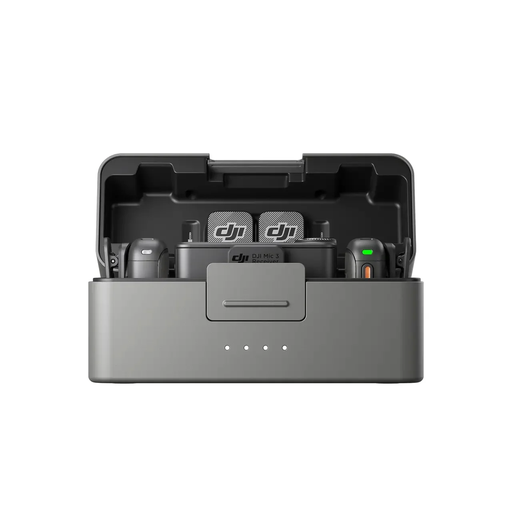
DJI Mic 3, 2 TX + 1 RX + Charging Case
Consider this kit if a transmitter-and-receiver setup suits how you record readings.
The named configuration has two transmitters, one receiver and a charging case. Before ordering, check whether the supplied mounting arrangement suits a clip-on poetry microphone and whether the connection works with your recording device.
Joybuy
 No image available
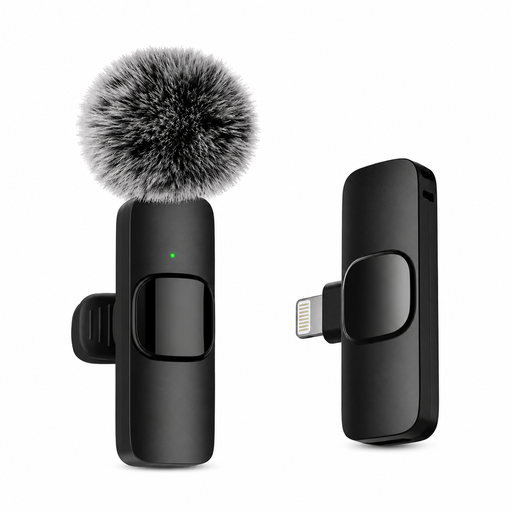
Verbex K9-Black Single-Mic Lavalier Microphone
This lapel-microphone listing may be relevant if you intend to record on an iOS device.
The title identifies a single-microphone variant and describes iOS compatibility. Confirm the exact connector, supported device and connection method before treating it as a direct-to-phone option.
Joybuy
 No image available
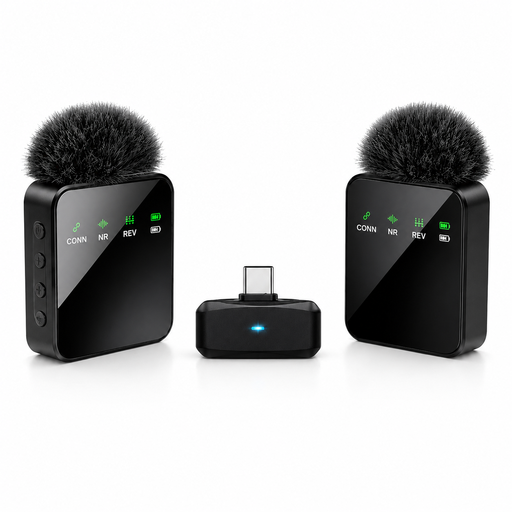
Verbex ST5 Dual-Mic Type-C Lapel Microphone
Consider this listing if its lapel format and stated Type-C interface match the recording setup you have in mind.
Confirm whether the supplied variant has one or two microphones and whether Type-C carries audio to your intended device. The exact connection method also needs checking before a booth session.
Joybuy
Frequently asked questions
Should I choose a TRRS or TRS lavalier for a poetry reading?
Choose the plug that matches the device recording the reading. Shure describes the MVL as a TRRS option for most compatible Android and iOS devices with a suitable jack or CTIA-compliant adapter; RØDE specifies a powered 3.5 mm TRS microphone input for the Lavalier GO. Check the exact input rather than assuming the plugs are interchangeable.
Where should I clip the microphone?
Start on the chest around a hand-span, approximately 20–30 cm, from the mouth, as RØDE advises. Keep fabric away from the capsule and test a full passage at your normal reading volume, including any natural head or body movement.
Will a cardioid lavalier make a small booth quieter?
Not automatically: directional pickup can help with unwanted side sound only if the microphone stays suitably positioned. Audio-Technica notes that its BP898 cardioid lavalier has a pronounced close-range proximity effect, so compare its tone with an omnidirectional option at the position you will actually use.
Do I need wireless equipment for a seated booth reading?
Not if a compatible wired lavalier reaches your recorder or interface and its cable can be kept clear of clothing. Wireless is more relevant when you need to move away from the recording device or already use a matching bodypack system; it still requires the correct microphone-to-transmitter connection.


