Phone-first recipe creators
If you record beside the worktop straight into a phone, establish the microphone's plug and adapter path before buying. Shure specifies a 3.5 mm TRRS jack or an appropriate CTIA-compliant adapter for its MVL.


Choose the connection to your recording device before choosing a lavalier's pickup pattern: a compatible TRRS microphone can suit direct phone recording, while a TRS microphone needs a matching input or transmitter. In an untreated room, close, stable placement matters; wireless transmission does not remove appliance noise or reflections. A directional lavalier may help with ambient pickup if its connector, power requirements and mounting position suit your setup.
If you record beside the worktop straight into a phone, establish the microphone's plug and adapter path before buying. Shure specifies a 3.5 mm TRRS jack or an appropriate CTIA-compliant adapter for its MVL.
If you move between preparation and cooking while speaking, look for a stable place to clip the capsule and a cable route that stays clear of your movements. RØDE's lavalier-mounting guidance describes cable management as a way to limit movement noise.
If appliances run nearby or the room sounds reflective, start with close placement and quieter recording moments. Shure and Sennheiser also describe directional lavalier options, but their system connections and mounting requirements need checking before they become a practical choice.
For recipe narration in an untreated room, establish where the sound will be recorded, then decide how to keep the microphone close and secure while cooking.
Consider when: You record beside a compatible phone and want to avoid managing a separate transmitter; Shure's MVL is a portable-device example.
Trade-off: The cable needs a clear route around the worktop, and a 3.5 mm plug alone does not establish phone compatibility.
Consider when: You have a compatible microphone input or wireless transmitter and need to move away from the recording device. RØDE specifies Lavalier GO for its Wireless GO series.
Trade-off: A wireless link adds transmitter setup and power management; it does not remove room reflections.
Consider when: Nearby ambient noise is a particular concern and you can use the required system. Shure specifies ambient-noise rejection for its MX184 and MX185 variants, while Sennheiser describes the cardioid ME 4 for speech in noisy environments.
Trade-off: Orientation, connector and power requirements need more attention; these are not automatically direct-to-phone microphones.
| Concern | What to check | Who this matters to |
|---|---|---|
| Room and appliance noise | Check the pickup pattern, a workable close mounting position and whether a windscreen is supplied. A directional option also needs a compatible system and suitable orientation. | When appliances interrupt narration, I want my voice to remain clear without assuming the microphone will isolate it completely. Around 36% of consumers would put room-noise control first. |
| Device compatibility | Match the microphone's TRRS, TRS or locking connector to the recorder or transmitter; confirm any adapter and power requirements. | If I record on a phone or an existing camera, I need a connection that works with that specific device. For around 29% of consumers, compatibility would be the primary concern. |
| Movement and mounting | Check the clip or other mounting method, cable routing and whether your setup needs a separate transmitter. | Moving between ingredients and the hob, I need the microphone to stay put without its cable rubbing against clothing. Around 21% of consumers would prioritise hands-free movement and mounting. |
| Moisture and handling | Check protection claims for the exact microphone model and separately for any connector, transmitter or recorder. | With repeated cooking setups, I want to know which parts can be kept away from splashes and which have stated protection. For around 14% of consumers, durability around cooking would come first. |
A TRRS phone microphone, a TRS lavalier and a locking TRS model can have different electrical or physical connection requirements despite their similar-looking plugs.
Identify your exact phone, recorder or transmitter, then check the required plug, adapter, power and locking connection against the manufacturers' guidance.
Wireless transmission changes how audio reaches the recorder; it does not itself suppress reflections or running appliances.
Keep the microphone securely mounted near the mouth, use a windscreen where appropriate and test narration while making your usual cooking movements. Record away from active noise sources when practical.
Fabric touching the capsule or a moving cable can be heard in a recording. RØDE describes a secondary cable loop as one way to provide strain relief.
Make a short test while reaching, stirring and turning. Adjust the mounting and cable route, then listen again before recording the full narration.
A separate mounting accessory or another recording take may be needed if clothing contact persists.
Deity states an IP57 rating for the W.Lav Pro 3.5 mm lavalier; that does not establish the protection of a connected transmitter, recorder or phone.
Check each component's stated protection separately and keep electronics and connectors away from splash zones.
Shure offers different connection routes within its lavalier ranges: the MVL is intended for compatible portable devices, while the MX183, MX184 and MX185 belong to a professional system.
Lavalier GO is a compact lavalier to consider if you use a compatible TRS microphone input or a Wireless GO-series transmitter.
Sennheiser has distinct lavalier options for buyers considering a directional speech microphone or a moisture-conscious stage microphone.
The W.Lav Pro 3.5 mm is a system-dependent option if you need a compact lavalier with a stated microphone-level moisture-protection rating.
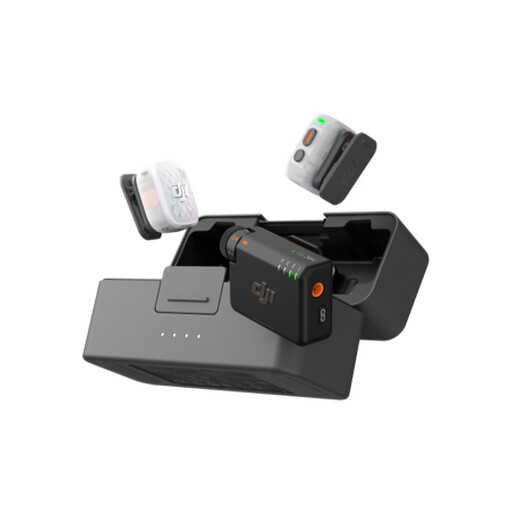
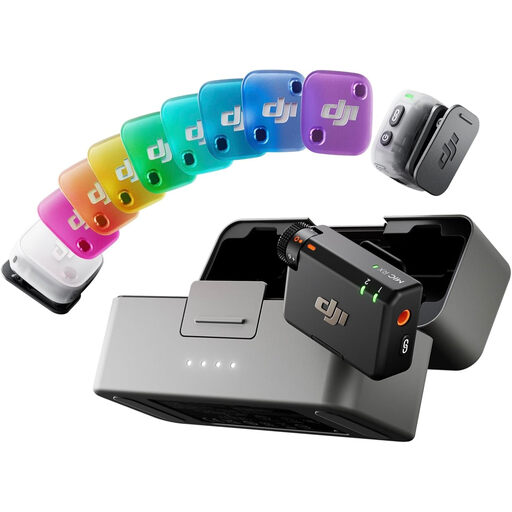
These DJI microphone bundles are options to consider for wearable narration while moving around a recipe setup. Check how each bundle connects to your recording device and test placement in your room; neither bundle's name establishes that it will remove kitchen noise.
 No image available
Consider this bundle if you want to record wearable narration while moving around the recipe setup. The named bundle contains two transmitters, one receiver and a charging case; confirm the receiver's connection to your recording device and check the microphone's mounting and windscreen arrangements. For wireless use, check the transmitter's UK operating band against Ofcom's applicable conditions.
 No image available
Consider this bundle if you need a wearable microphone setup for narration with both hands occupied. Its named contents are two transmitters, one receiver and a charging case; confirm the exact phone or recorder connection path rather than assuming a particular recording method. Check the mounting and windscreen arrangements, and confirm the transmitter's UK operating band against Ofcom's applicable conditions.
No: match the microphone's plug to the phone's input or adapter. Shure specifies a TRRS connection or appropriate CTIA-compliant adapter for the MVL, whereas RØDE specifies a TRS connection for Lavalier GO and compatibility with its Wireless GO series.
It can work for recipe narration when mounted close to the mouth, but it will not remove reflections or appliance noise. RØDE describes close placement as helpful to the speech-to-background balance; if you consider a directional model instead, check its orientation and recording-system requirements.
Start with the microphone's own mounting guidance and test it while moving. For its MX100-series lavaliers, Shure advises placement approximately 76–152 mm below the neckline. Keep the capsule clear of fabric contact and listen for cable noise while reaching and stirring.
That depends on the transmitter's operating band and conditions of use. Ofcom identifies licence-exempt bands for some wireless microphones and licensing arrangements for certain other frequencies; check the exact transmitter documentation against Ofcom's applicable frequency and power conditions before use.