Solo phone narrators
If you record recipes alone and stay near the desk, a wired phone lavalier keeps the setup simple. Check the phone’s microphone input and any adapter before choosing one; Shure specifies those conditions for its MVL.


For one mostly seated narrator, start with a wired lavalier if its connector suits the recording device; choose wireless when movement matters, or a two-transmitter kit when both people need their own microphone. At a shared desk, close placement and a test recording with normal room activity matter more than assuming a noise-cancellation feature will remove nearby sounds or echo.
If you record recipes alone and stay near the desk, a wired phone lavalier keeps the setup simple. Check the phone’s microphone input and any adapter before choosing one; Shure specifies those conditions for its MVL.
If another person, a keyboard or appliances can be heard nearby, concentrate on keeping the capsule close to your voice and making the space quieter. Shure’s microphone-placement guidance cautions that a microphone cannot separate speech from unwanted room reflections on its own.
If someone else speaks during the recipe, two wearable microphones let you place one close to each voice. If only you speak but move away from the desk, a single wireless clip-on may cover the movement without requiring a second transmitter.
Choose it when: One person narrates mainly from the desk and the phone or tablet accepts the microphone’s connection.
Trade-off: There is no wireless link to manage, but the cable limits movement. Shure says its MVL needs a compatible TRRS input or an appropriate CTIA-compliant adapter.
Choose it when: The narrator needs to move between the shared desk and recipe preparation.
Trade-off: Cable-free movement brings charging and wireless setup; it does not change how much room sound reaches a poorly placed microphone.
Choose it when: A helper or co-presenter needs a separate close microphone.
Trade-off: Two microphones mean more equipment to position and charge. DJI says one Mic Mini receiver can pair with two transmitters, but that does not make one shared microphone equally suitable for two voices.
For recipe narration at a shared desk, settle the recording connection and the number of speakers before deciding which extra recording features matter.
| Concern | What to check | Who this matters to |
|---|---|---|
| Speech amid desk noise | Check that the clip holds the capsule close without clothing rub, then test with normal desk and appliance sounds present. | I need my narration to remain clear while someone else uses the desk, so placement and the room’s noise come first; around 36% of consumers would make speech clarity their primary concern. |
| Device connection | Identify the recording input and connector standard; confirm any required phone adapter or compatible wireless receiver. | If I record on my existing phone or camera, I need a microphone I can actually connect without an uncertain workaround. Roughly 29% of consumers would put compatibility and straightforward setup first. |
| Another voice or movement | Decide whether two people need separate microphones and whether the narrator must move beyond a cable’s reach. | I may hand part of the recipe to a co-presenter or move while demonstrating it; around 21% of consumers would prioritise a second microphone or freedom to move. |
| Keeping a usable take | Check the particular system for monitoring or onboard recording, and make a level-check recording before a full take. | When repeating a recipe take would be difficult, I want to check levels and understand the available recording safeguards; roughly 14% of consumers would make that workflow their main priority. |
An omnidirectional microphone can capture nearby people, desk sounds and reflections along with the narrator. Shure’s placement guidance makes clear that microphone choice alone cannot correct an unsuitable acoustic space.
Clip the mic close to the speaker, avoid clothing contact and test it while the desk is being used. Give a second active speaker their own microphone rather than placing one lavalier between two people.
Shure’s MVL uses a mobile TRRS connection, whereas RØDE’s Lavalier II has a locking TRS connector for compatible equipment. The shared plug diameter does not make the connections interchangeable.
Identify the exact recording input and confirm the connector standard, host equipment and any required adapter before ordering.
A second transmitter addresses a second speaker; it does not improve a lone narrator’s room acoustics. It also adds another microphone to position and charge.
Choose a two-transmitter kit when another person needs their own close microphone, or when that recording arrangement is genuinely planned.
Wireless kits with similar names can include different receiver and transmitter combinations, and a listing can change before you order.
Check the exact model, bundle contents, device connection and current ordering details on the product page you intend to use.
Its MVL is a reference point for a wired lavalier used with a compatible phone or tablet.
Its relevant models span a lavalier for compatible equipment and wireless systems for one or two presenters.
Its Mic Mini is a reference for a compact wireless arrangement when two people may speak.
Its ATR3350 illustrates the longer-cable, battery-powered wired approach.
These wireless clip-on listings cover three two-transmitter bundles for separate speakers and one single-transmitter set for solo narration. Check the exact receiver or phone connection against your recording setup; these options do not replace the wired-phone route discussed above.
 No image available
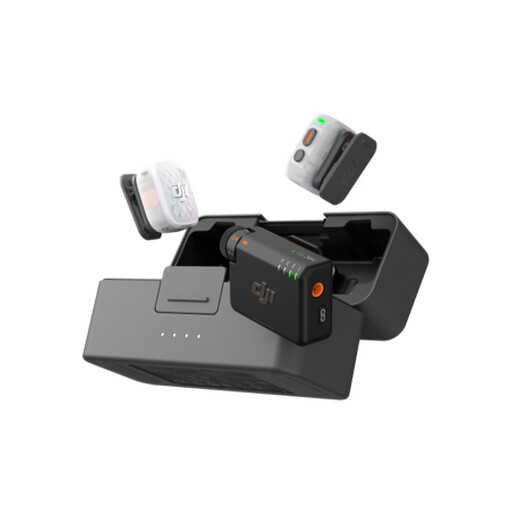
Consider this bundle when two people need separate microphones for recipe narration. The listed kit has two transmitters, one receiver and a charging case; confirm that its receiver connects to your recording device.
 No image available
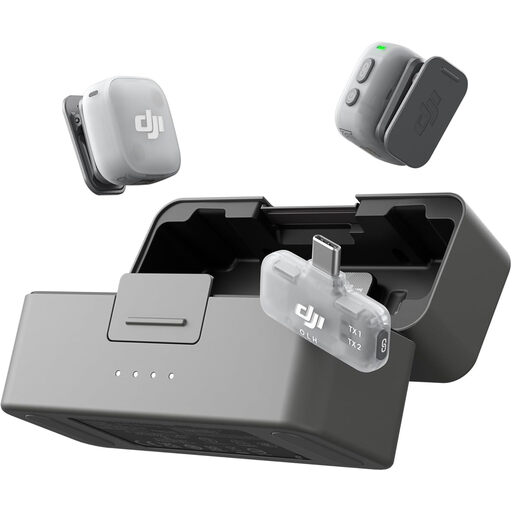
This bundle is relevant when two speakers each need a wearable microphone and the recording setup calls for a mobile receiver. Its listed contents are two transmitters, one mobile receiver and a charging case; check the receiver connection against your device.
 No image available
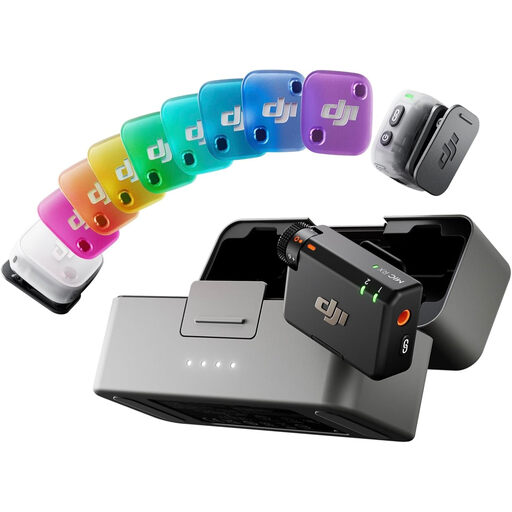
Two transmitters make this bundle relevant when a narrator and co-presenter each need a close microphone. The title lists one receiver and a charging case; confirm the receiver and recording connection needed for your device.
 No image available
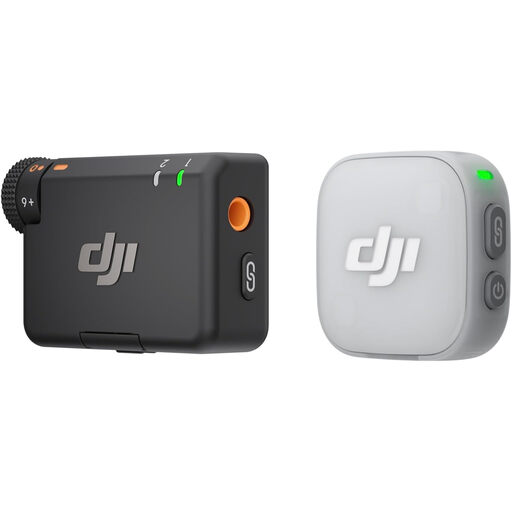
A single transmitter suits one narrator who wants to move while recording. This set lists one transmitter and one receiver, not a second microphone for a co-presenter; confirm that your device and recording app accept the intended connection.
No: a lavalier cannot remove nearby sound or reflections simply by being worn. Shure’s placement guidance supports keeping the capsule close to the narrator; reduce avoidable noise and make a test recording with the desk in normal use.
Only when the microphone connector and phone input match. Shure says its MVL works with most Android and iOS devices that have a 3.5 mm TRRS jack, or with an appropriate CTIA-compliant adapter; check your exact phone and adapter.
If both need clear, consistent speech, a microphone close to each person gives you more control than one omnidirectional lavalier placed between them. DJI says a Mic Mini receiver can pair with two transmitters; check the contents of the particular kit before ordering.
Charge and connect the equipment, then record a short take with normal speaking levels and desk activity. If your particular system offers monitoring, limiting or onboard recording, check those functions in the configuration you will actually use.