Solo travel-diary narrators
If you record yourself speaking to a phone or camera, a lavalier lets you keep the microphone close to your mouth without holding it. Check how securely it stays on the clothing you plan to wear.


For spoken travel diaries in a rehearsal room, choose a wired lavalier if you can manage the cable and confirm a matching microphone input; choose a wireless kit if you need to move freely. If a take is hard to repeat, a system with local recording offers an additional copy, but neither wireless operation nor an omnidirectional capsule removes surrounding sound. Fit the microphone close to your mouth and test it with your clothing and the room active.
If you record yourself speaking to a phone or camera, a lavalier lets you keep the microphone close to your mouth without holding it. Check how securely it stays on the clothing you plan to wear.
When music, other voices or ventilation may be audible, placement and a test in the active room matter more than an advertised wireless range. RØDE Microphones and Shure both emphasise careful lavalier placement.
If you move between locations or capture one-off moments, consider whether local recording would give you another copy alongside the audio sent to your camera or phone. RØDE lists on-board recording for its Wireless PRO system.
Start with the recording device’s input and how far you need to move from it. Then decide whether an additional recording on the microphone system is worth managing for takes you cannot repeat.
Choose when: You can stay near the recording device and have a compatible microphone input.
Trade-off: The capsule needs no wireless link, but the cable restricts movement and can rub against clothing.
Choose when: You walk while recording or regularly change camera positions.
Trade-off: You gain freedom from a cable to the camera but must charge and check the wireless connection.
Choose when: A diary entry is difficult to repeat and you want an additional recording to retrieve afterwards.
Trade-off: You need to manage and transfer those files; local recording cannot prevent clothing rustle or room sound reaching the microphone.
| Concern | What to check | Who this matters to |
|---|---|---|
| Understandable speech | Secure placement near the mouth without clothing contact; a spoken test while the room is active. | If music and other voices are audible, I need my narration to remain understandable. Around 42% of consumers put speech clarity first. |
| Movement and setup | A compatible phone or camera connection, and a kit with enough transmitters for the speakers. | When I change locations or film while walking, I want to set up without managing a cable to the camera. Roughly 33% of consumers prioritise mobility and quick setup. |
| Recording backup | Whether the exact kit records locally and how you will retrieve its files after a session. | If a diary moment cannot be repeated, I want another recording to check if the camera audio fails. About 25% of consumers place recording resilience first. |
An omnidirectional capsule also picks up sound around you. Nearby music and voices may remain prominent even when the microphone is clipped to your clothing.
Place it securely near your mouth, record while the rehearsal room is active and listen back before a one-off take.
RØDE specifies a 3.5 mm TRS microphone input for Lavalier GO. A phone, camera or wireless transmitter with a different input is not automatically compatible.
Identify the exact socket and input requirements of your device, then check the microphone, transmitter and any adapter as a complete connection.
An incompatible connection may mean obtaining a suitable adapter or using a different microphone or receiver.
Noise-reduction modes and range figures do not establish how a kit will handle your rehearsal activity. Ofcom also notes that shared radio frequencies can be subject to interference.
Charge the kit and check its connection, levels and sound in the actual room. For an important take, consider a local-recording or wired fallback that works with your device.
Its lavalier and wireless ranges provide different ways to connect a close-mounted microphone to a recording device.
Mic Mini is a compact wireless option to consider for solo or two-person diary video, depending on the package.
W.Lav Pro is relevant if you want a small external lavalier for a compatible transmitter or recorder.
These kits cover wireless recording for moving between diary positions, with one- and two-transmitter bundles and different receiver connections. If you prefer a wired lavalier, use the connection checks above rather than treating a wireless kit as a direct substitute.
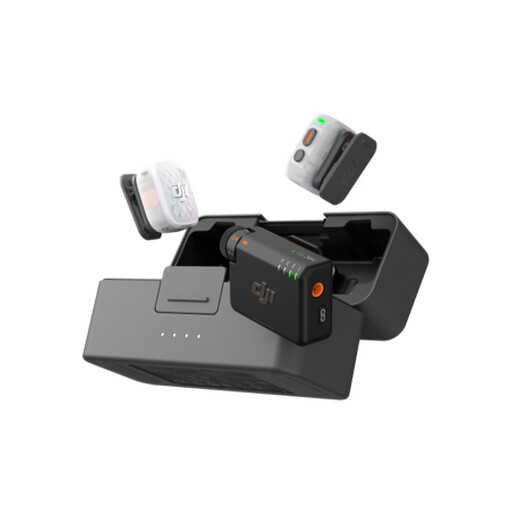 No image available
Consider this two-transmitter bundle if you may record a second speaker or want to assess a local-recording workflow for difficult-to-repeat takes.
Confirm its connection to your device and test the sound with rehearsal activity; a recording feature does not remove room noise.
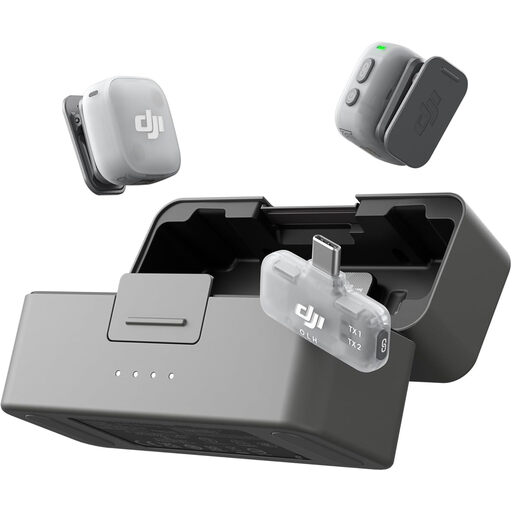 No image available
The two-transmitter bundle is relevant if a second person sometimes joins your diary. Its named mobile receiver makes your exact device connection an important pre-purchase check.
Test the kit in the rehearsal room rather than relying on noise-cancelling claims for speech isolation.
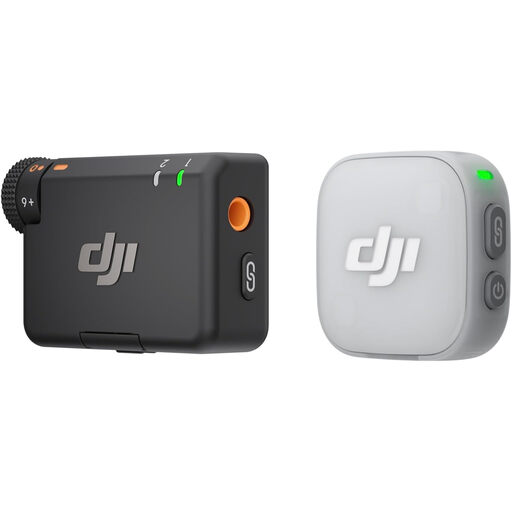 No image available
This one-transmitter bundle suits a solo diary setup when its receiver works with your recording device and app.
If you need a charging case, check the exact package contents before ordering. Make a spoken test with the room active.
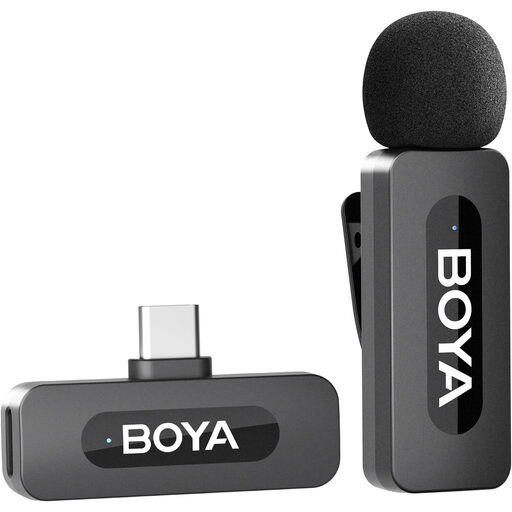 No image available
For solo recording while moving, this USB-C kit is worth checking if your phone or other recording device accepts its receiver through your chosen app.
Its noise-cancellation wording is not a substitute for testing narration against the rehearsal room’s music and voices.
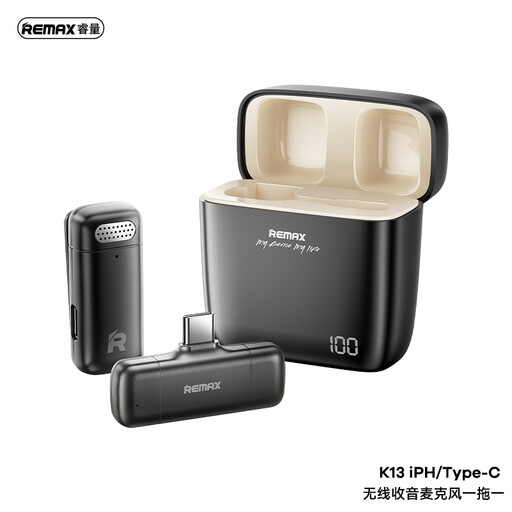 No image available
This wireless kit is an option for a solo diary recorded to a compatible USB-C device. Check that the receiver works with your device and recording app.
Place the microphone close to your mouth and listen to a test recording in the active room.
No. As Shure explains, an omnidirectional microphone picks up sound from all directions. Close, secure placement can help your voice stand out, but record a sample while the room is active before depending on it for a diary entry.
Clip it securely to clothing near your mouth and keep any cable from rubbing as you move. The position that works with one collar or jacket may not work with another, so listen back to a short test before the main recording.
Only if the connection meets the microphone and device requirements. RØDE specifies Lavalier GO for a compatible 3.5 mm TRS microphone input or Wireless GO transmitter; check your own device’s socket, input and any required adapter rather than relying on plug size alone.
That depends on its operating band and the applicable conditions. Check the exact system against current Ofcom guidance before use; Ofcom also notes that frequencies shared with other low-power equipment can experience interference.