What matters when choosing?
Start with the voices you need to retain and the recorder you will use. Then choose a mounting and cable arrangement that works with the participants seated in the rehearsal room.
| Concern | What to check | Who this matters to |
|---|
| Room echo and noise |
Check for a stable lapel or chest mounting point. Test the microphone in the quietest available part of the room; use soft furnishings where possible. |
I need spoken memories to remain intelligible despite reflective surfaces and activity nearby. Around 36% of consumers would make room echo and noise their primary concern. |
| Recording-device fit |
Match the microphone plug to the device input and confirm that any adapter carries microphone audio. Check power requirements for the complete setup. |
If I already have a phone or recorder, I need the microphone to work with that device, not merely have a plug that appears to fit. Roughly 29% of consumers would put connection and recorder fit first. |
| Comfort and movement |
Check that the clip can sit clear of rubbing fabric and that the cable will not obstruct the speaker. If choosing wireless, check the receiver and battery plan. |
I want the speaker to sit or move naturally without clothing or cable noise spoiling a long answer. About 21% of consumers would prioritise comfortable, unobtrusive placement. |
| Both speakers’ voices |
Decide whether questions must be retained; if so, check for two close microphones and suitable recording inputs. Test levels with both people seated. |
I need the interviewer’s questions as well as the interviewee’s answers to be usable later. Around 14% of consumers would make two-person recording their primary concern. |
Brands to consider
These brands illustrate different connection and recording approaches; check the exact model and variant rather than assuming that every product from a brand works with your device.
RØDE
The Lavalier II is relevant to a setup that accepts its 3.5 mm locking TRS connector, including compatible RØDE equipment and professional wireless systems.
- RØDE lists a low-profile omnidirectional capsule, clothing clip, pop filter and mini furry windshield for the Lavalier II.
- Its locking TRS connection is not automatically suitable for a phone’s TRRS input; check the complete connection chain.
Shure
The MVL is a phone- or tablet-oriented lavalier for close-miked speech when the mobile input is compatible.
- Shure specifies use with most Android and iOS devices with 3.5 mm TRRS jacks or an appropriate CTIA-compliant adapter.
- Check that an adapter on a phone without a 3.5 mm jack supports microphone input; a physical connection alone does not establish compatibility.
Audio-Technica
The ATR3350 is a reference for a long-cable wired lavalier arrangement with a compatible camera or recorder.
- Audio-Technica lists a 6 m cable, 3.5 mm mini-plug, clip and foam windscreen for the ATR3350.
- Audio-Technica’s UK page marks the exact ATR3350 as discontinued and out of stock. Check any replacement model’s connector and power requirements separately.
Sennheiser
The EW-D ME2 illustrates a wireless lavalier system for situations where a cable would obstruct movement or seating.
- Sennheiser describes the EW-D ME2 as a digital wireless system with an ME 2 clip-on microphone, bodypack and receiver.
- Check the exact frequency variant against Ofcom’s applicable UK rules, and plan for batteries, receiver connection and possible interference.
Joybuy product choices
These clip-on microphone listings relate to phone-connected interview recording. Before choosing one for oral history, confirm its exact device connection and, where two microphones are listed, how both voices reach the recording.
 No image available
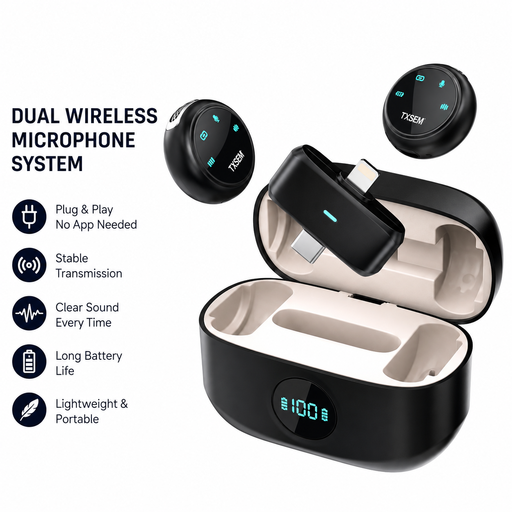
Verbex K31Pro-Black dual-microphone clip-on lavalier
For an interview where two close microphones may be useful, check how the supplied microphones connect to your recording device and whether both speakers can be captured as needed. The listing names iOS and Type-C interfaces, but those descriptions do not establish compatibility with a particular phone or recorder.
View on Joybuy
 No image available
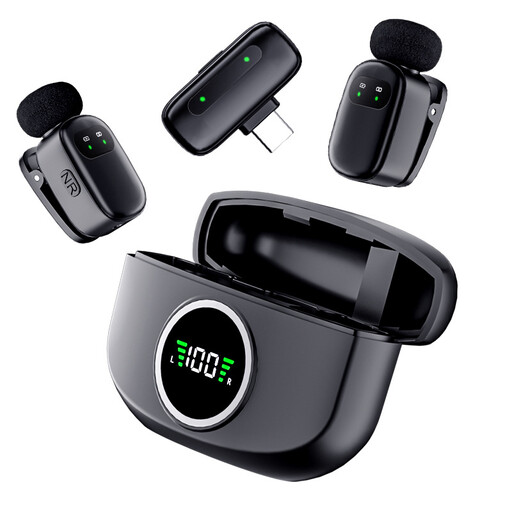
Verbex ST5 Type-C button-style lapel microphone, SKU 10461112
For close-worn interview recording with a Type-C device, check the exact recording connection. Confirm whether this ST5 package supplies one microphone or two before planning to record both speakers: the listing gives conflicting microphone counts.
View on Joybuy
 No image available
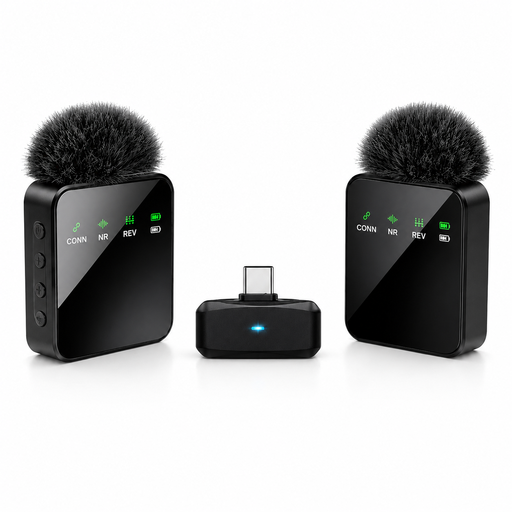
Verbex K21 dual-microphone Type-C button-style microphone
For an interview requiring two close microphones, confirm that the Type-C connection works with your recorder and that its recording workflow retains both voices as needed. Two microphones alone do not establish separate recording tracks.
View on Joybuy
 No image available
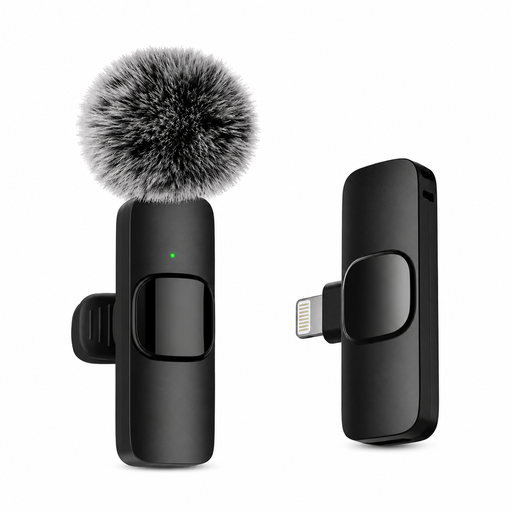
Verbex K9-Black single-microphone iOS lavalier
For close recording of one speaker with an iOS device, check the exact connector and recording path for your device. This is listed as a single-microphone product; retaining the interviewer’s voice clearly may require another microphone and a suitable input.
View on Joybuy
 No image available
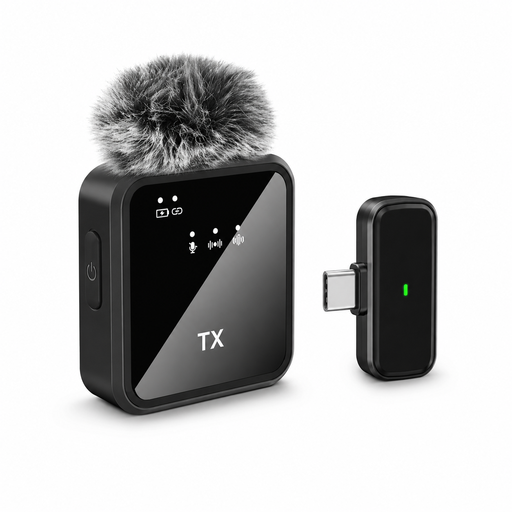
Verbex ST5 single-microphone Type-C lavalier, SKU 10461128
For close recording of one speaker with a Type-C device, confirm that the recording connection matches your phone or recorder. If both sides of the interview must be close-miked, plan a second microphone and a compatible recording input.
View on Joybuy
Common questions
Will a lavalier remove rehearsal-room echo?
No. The University of Leicester favours a close tie microphone over a distant table microphone in an echo-prone room, but the International Association of Sound and Audiovisual Archives warns that hard, reflective surfaces still create audible echo. Choose a quieter position, use soft furnishings where possible and listen to a test recording.
Where should I clip a lavalier for an oral-history interview?
Clip it securely around the lapel or chest, clear of rubbing fabric. The University of Leicester recommends the lapel area, while RØDE suggests a position roughly 20–30 cm from the mouth; test the position with the speaker’s actual clothing.
Do I need one microphone or two for an interview?
Use a close microphone for each person if both the interviewer’s questions and the interviewee’s answers need to remain clear. The University of Leicester suggests considering two microphones when the interviewer may otherwise be too quiet; confirm that your recording setup accepts both before the session.
Can I plug any 3.5 mm lavalier into my phone?
No. Shure specifies the MVL for compatible 3.5 mm TRRS mobile inputs or an appropriate CTIA-compliant adapter, whereas RØDE specifies a locking TRS connector for the Lavalier II. Check your phone’s input and the adapter’s microphone support rather than relying on plug size alone.
Do I need a licence for a wireless lavalier in the UK?
The applicable UK operating route depends on the system’s exact frequencies. Ofcom identifies licence-exempt ranges, but warns that these can be shared with other low-power equipment and experience interference; check the frequency variant and current Ofcom conditions before using a wireless system.


