Single-storyteller recorders
You mainly need to capture one adult’s voice on a phone, camera or computer without managing a second microphone.


Choose a one-transmitter wireless kit when one adult storyteller is the main voice; choose two transmitters when a second speaker also needs close-miked audio. Check the connection to the actual recording device, and consider onboard recording for a session that would be difficult to repeat. Before capturing identifiable pupils or staff, follow the school’s recording and data-handling process.
You mainly need to capture one adult’s voice on a phone, camera or computer without managing a second microphone.
A storyteller and an interviewer, teacher or assistant both need close-miked audio, rather than relying on a microphone placed farther away.
You need the recording, storage and sharing arrangements to fit the school’s approved process when pupils or staff may be identifiable.
Start with the recording device and the number of voices that need close capture. Then test the sound in the intended room and decide whether the session needs a backup recording.
| Concern | What to check | Who this matters to |
|---|---|---|
| Speech clarity | Record a short sample in the room; listen for clothing noise, changing voice levels and the effect of any noise-reduction setting. | If the story must remain intelligible amid classroom activity, I want to hear how the storyteller sounds on the finished recording. Around 36% of consumers put speech clarity first. |
| Connection and setup | Match the supplied receiver, cable or adapter to the recorder; for a bare wired lavalier, check its microphone input and plug-in power. | When I am recording to an existing phone, camera or computer, I need a connection I can set up before the session starts. Connection and setup come first for around 29% of consumers. |
| Speaker coverage | Decide whether one or two people need close microphones; check transmitter count and whether separate channels are needed. | If an interviewer or second adult will speak throughout, I want both voices captured close to their speakers. Around 21% of consumers make multi-speaker coverage their primary concern. |
| Recording backup and handling | Check for onboard recording if a retake would be difficult. For identifiable voices, agree the school’s recording, access and retention arrangements. | For a session that cannot easily be repeated, I want a way to limit recording loss and a clear process for handling the file. Those needs come first for around 14% of consumers. |
RØDE specifies a 3.5 mm TRS connection and 2.7 V plug-in power for Lavalier GO. A phone, camera or computer needs a compatible microphone connection for that lavalier to work.
Identify the recording device’s input and check the microphone, adapter and power requirements before ordering.
A compatible adapter, recorder or wireless transmitter may also be needed.
DJI measures its Mic Mini 400 m figure in an open, unobstructed, interference-free environment; RØDE describes the Wireless GO (Gen 3) 260 m figure as line-of-sight. Neither condition establishes reception in an occupied classroom.
Test the intended room with the recording device in place and the storyteller moving as they will during the session.
A second transmitter helps when another person needs close-miked audio. It does not replace deciding whether audience reactions or general room sound should also be captured.
List the voices the finished recording must contain before choosing a one- or two-transmitter kit.
A second transmitter adds charging, pairing and placement tasks.
Voices that identify a pupil or staff member may be personal data under the Information Commissioner’s Office definition. The Department for Education’s school guidance and ICO guidance make the lawful basis and handling of identifiable information part of the recording decision.
Follow the school’s policy before recording, including the purpose, lawful basis, access, retention and sharing arrangements. Ask the school’s data protection officer or leadership team when the process is unclear.
Its Wireless ME, Wireless GO (Gen 3) and Lavalier GO lines illustrate simple wireless, dual-channel wireless and separate wired-lavalier approaches.
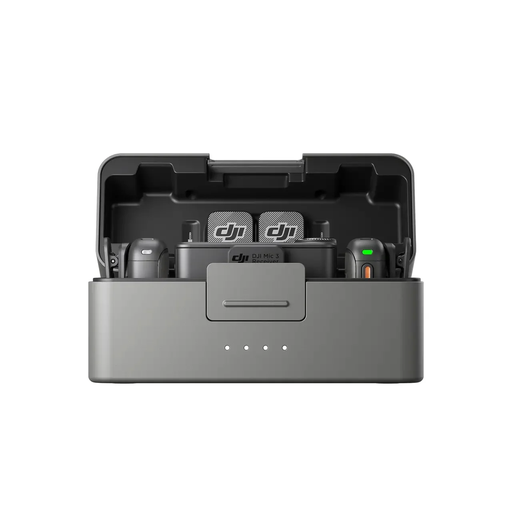
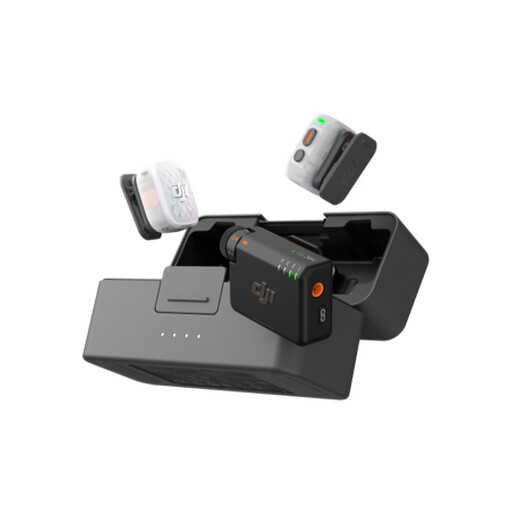
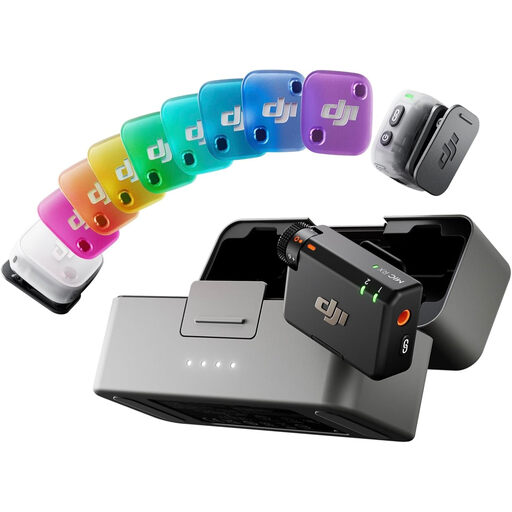
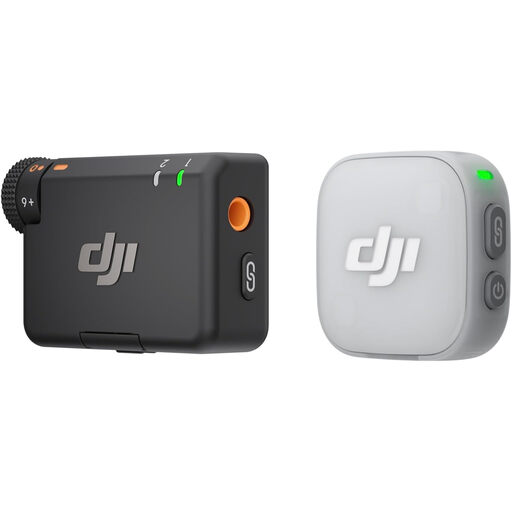
Mic Mini is relevant when a light clip-on transmitter or a two-transmitter kit suits the planned recording.
LARK M2 is an option to consider when transmitter weight and the choice of device connection matter.
These clip-on wireless kits cover one-storyteller and two-speaker setups. Choose the transmitter count for the voices you need, then check the exact receiver connection against your recording device.
 No image available
Consider this kit when a storyteller and a second adult both need close microphones. Its listed configuration has two transmitters, one receiver and a charging case; confirm the receiver connection for your recorder and make a test recording in the classroom.
 No image available
The two-transmitter configuration is relevant when two adults need close-miked voices. Check the precise receiver and connections supplied with this kit, and test any noise-processing setting if audience sound matters.
 No image available
This configuration fits a plan to place one transmitter on the storyteller and another on a second adult. Check how its receiver connects to the intended device, then listen to a recording made in the actual room.
 No image available
Consider the one-transmitter configuration when the adult storyteller is the only person who needs a close microphone. Confirm its receiver connection and session-length suitability, particularly if the story cannot be recorded again.
 No image available
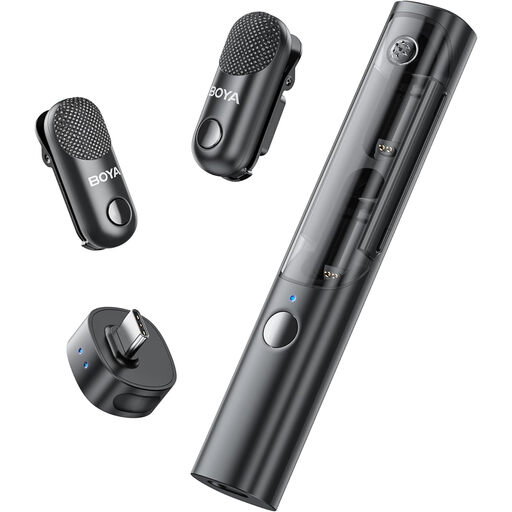
The two-transmitter kit is relevant to a storyteller and second adult using close microphones. Although its name identifies a USB-C version, check the supplied receiver arrangement against the intended recorder and test whether its processing preserves any audience sound you need.
No: consent is not the only possible lawful basis for handling children’s personal information. The Information Commissioner’s Office says a lawful basis must be chosen before processing it, while Department for Education guidance addresses the taking, use and sharing of identifiable school images. An identifiable voice may also be personal data; follow the school’s policy and ask its data protection officer which basis and recording arrangements apply.
Not necessarily: advertised distances depend on their stated test conditions. DJI measures its 400 m Mic Mini figure in an open, unobstructed, interference-free setting, and RØDE describes the Wireless GO (Gen 3) 260 m figure as line-of-sight. Test reception in the intended room with the storyteller moving normally.
No. RØDE specifies a 3.5 mm TRS microphone connection and 2.7 V plug-in power for Lavalier GO. Check the recording device’s input and any adapter or compatible transmitter needed before choosing that microphone.
No. UK government guidance says unwanted electrical products and batteries should not go into household rubbish. Use an appropriate electrical or battery collection route and follow its instructions for the device and battery.