Two-person oral-history interviewers
You need the interviewer and guest to remain intelligible at the same desk. Separate close-miked inputs may also matter if you plan to edit or transcribe their voices individually.


For a local-history interview at a shared desk, choose the number of microphones before choosing a brand: one compatible lavalier can serve a recording centred on one speaker, while two separately placed microphones are the more suitable route when both voices matter. Then match each microphone’s connector and power requirements to the phone, recorder or interface you will use; a two-microphone setup adds equipment and setup time, and two microphones do not automatically mean two separate recording channels.
You need the interviewer and guest to remain intelligible at the same desk. Separate close-miked inputs may also matter if you plan to edit or transcribe their voices individually.
You record to a phone or tablet and want a compact microphone for the person speaking. The lavalier, device input and any adapter need to work together.
You already use, or plan to use, a camera, handheld recorder or wireless transmitter. Its microphone socket and powering requirements determine which lavalier can connect.
Decide whose voice needs its own close microphone, then check the recording device’s input and how you will monitor the interview.
| Concern | What to check | Who this matters to |
|---|---|---|
| Both voices | Check for two microphone inputs and whether your recording app can capture the channels as needed. | If both sides of the conversation will be quoted or transcribed, I want a close microphone on each person rather than relying on one worn by the guest. Roughly 27% of consumers put capturing both speakers first. |
| Device fit | Match the plug to the microphone input: a phone-oriented TRRS connection, a compatible powered TRS input or a suitable interface. | When I am keeping my current phone or recorder, I need a microphone that connects to that device without guessing which adapter will work. For around 33% of consumers, device compatibility is the primary concern. |
| Room sound | Check microphone placement and pickup pattern; confirm the required system connection before choosing a directional model. | With neighbouring conversation at the shared desk, I want to limit distracting sound while keeping the speaker close to the microphone. Around 20% of consumers place noise control first. |
| Session checks | Check any battery and switch, secure the clip and make a short monitored test recording. | If an interview would be difficult to repeat, I need a setup I can check before the conversation starts. Dependable operation comes first for roughly 20% of consumers. |
Shure specifies a TRRS connection for the MVL’s compatible mobile-device route, while the RØDE Lavalier GO uses TRS and requires plug-in power from a compatible microphone input. A plug fitting physically does not establish that it will record.
Identify the exact recording device and microphone input, then check the connector, power requirement and any adapter or interface with the manufacturer.
Your chosen connection may require an additional adapter or interface.
A lavalier worn by one person gives that person the close microphone. RØDE specifies two microphone inputs and headphone monitoring for its AI-Micro interface, but the recording device and app still need to capture the channels in the way your project requires.
Decide before buying whether only the interviewee needs close pickup or whether both voices need their own microphones for later quotation, editing or transcription.
Changing to a two-person setup later means obtaining and positioning a second microphone and a suitable two-input recording path.
Audio-Technica specifies an LR44 battery and an in-line on/off switch for the ATR3350xiS. Either needs attention before an interview begins.
For a battery-powered model, check the switch and battery, carry a spare and listen to a short test recording before starting.
Replacement batteries are an ongoing requirement for this model.
An identifiable recording may contain personal information about several people. The Information Commissioner’s Office says organisations processing personal data must identify a valid lawful basis and be clear about how the data will be used.
Before recording, explain the project’s purpose and plans for storage, access, sharing and publication. If the project uses consent as its lawful basis, make the request specific and informed, including how consent can be withdrawn.
The MVL offers a phone-oriented connection route; the CVL belongs to a different, wireless-bodypack route.
The Lavalier GO is a TRS microphone option; the AI-Micro is an interface for connecting microphones to a recording device.
The ATR3350xiS is a lavalier option to assess for a compatible camera or handheld-recorder setup.
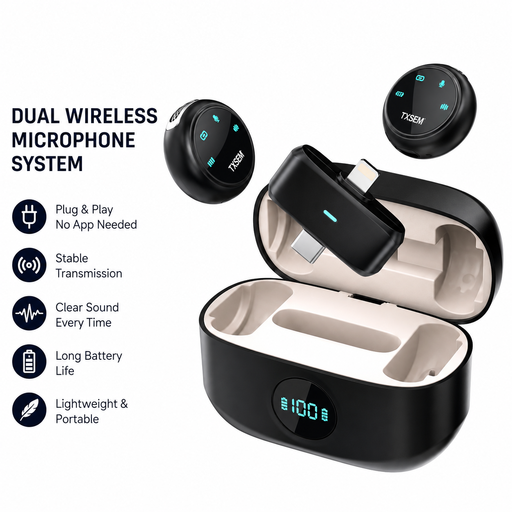
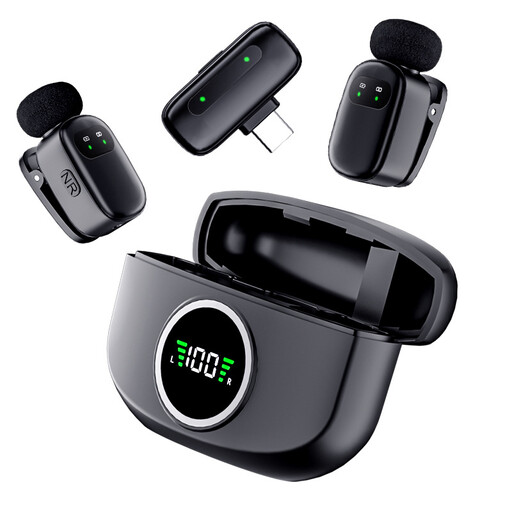
These two dual-microphone, clip-on options are relevant if both people at the desk need a microphone. Before choosing either, confirm its connection to your recording device and whether it can record the two voices as separate channels if your editing workflow requires that.
 No image available
The dual-microphone clip-on format is relevant when the interviewer and guest each need a microphone. The product name lists iOS and Type-C compatibility, but confirm the supplied connection and your exact device before buying; also check whether the microphones record to separate channels.
 No image available
The dual-microphone, button-style format is relevant to a two-person interview. Its product name lists a Type-C interface; confirm how it connects to your recording device and whether separate recording channels and monitoring are available if you need them.
Use two separately placed lavaliers when both the interviewer and participant need close pickup. A two-input interface such as the RØDE AI-Micro offers a connection route, but confirm that the recording device and app capture the channels as your editing or transcription workflow requires.
Only if the microphone plug matches a compatible input. Shure specifies the MVL for most Android or iOS devices with a 3.5 mm TRRS socket or an appropriate CTIA-compliant adapter; if your phone has no such socket, confirm an adapter or interface for that phone and microphone.
Place and secure a microphone close to each speaker you need to record, then listen on headphones for rubbing or nearby noise. If you are considering a directional lavalier, check its system connection too: Shure specifies a cardioid pattern for the CVL, but its TA4F connector is intended for Shure wireless bodypacks, not a standard 3.5 mm phone input.
Consent is not automatically the only lawful basis for an organisation handling identifiable interviews. The Information Commissioner’s Office says organisations must identify a valid lawful basis and explain how personal data will be used; if consent is the chosen basis, it must be specific and informed. Seek advice appropriate to the project before deciding on archival publication or sharing.
A recording can include personal information about more than one person, so an organised project should decide how files will be stored, who can access them and whether they may later be shared or published. Explain those plans to participants before collecting identifiable recordings.