Who is this setup for?

Shared-desk voice recorders

If typing, movement or conversation may occur nearby, you need a stable position for your voice and realistic expectations about background pickup. RØDE’s lavalier mounting guidance supports close placement, not complete isolation.

Phone or laptop first-time recorders

A compact wired lavalier can suit a fixed desk, provided its USB-C, TRRS or TRS connection matches the device and recording setup. RØDE, Shure and Sennheiser specify different connections for their respective models.

Recorders who also work on the move

If you sometimes stand or record away from the desk, a wireless system may be useful. Check its charging routine and whether your intended device and recording app require a receiver; Shure’s MoveMic One, for example, has app-specific direct mobile operation.

What matters when choosing?

Direct USB-C

Choose when: You record at the desk on a mobile device or computer that accepts an external USB-C microphone.

Trade-off: You remain connected by cable and must confirm that your recording app accepts the mic.

Smartphone TRRS

Choose when: Your phone has a compatible 3.5 mm microphone input or an appropriate adapter for a TRRS lavalier.

Trade-off: A physically fitting 3.5 mm plug does not establish compatibility, particularly when an adapter is involved.

Recorder or transmitter TRS

Choose when: You already use a compatible 3.5 mm TRS microphone input, such as one on a suitable recorder or wireless transmitter.

Trade-off: The microphone depends on that recording chain rather than connecting directly to a phone’s TRRS input.

Mobile wireless

Choose when: Moving away from the desk or recording elsewhere matters enough to dispense with a cable to the phone.

Trade-off: Charging, app support and possible receiver requirements add checks to the setup.

Concern What to check Who this matters to
Voice amid desk noise Check that you can mount the mic securely near your mouth and make a test recording with ordinary desk activity nearby. When nearby speech or typing competes with quiet narration, I want my voice to remain prominent without assuming those sounds will disappear. Around 36% of consumers put voice prominence first.
Device connection Identify your device’s USB-C, TRRS or TRS microphone input and confirm any adapter supports an external mic. If my recording depends on a phone or computer accepting the mic, I need the connection to work before anything else. For around 29% of consumers, connector certainty is the primary concern.
Stable, quiet mounting Check the clip and cable length for your seated position; test for fabric rub while breathing and turning. During a long, quiet take, I do not want clothing or cable movement interrupting the narration. Comfortable, low-rustle placement comes first for around 21% of consumers.
Cable-free movement Check device and app compatibility, charging needs and whether your intended use requires a receiver. If I also record away from the desk, freedom to move may justify a more involved setup. Around 14% of consumers prioritise that cable-free flexibility.

Mistakes to avoid

  • Assuming every 3.5 mm lavalier works with a phone

    RØDE’s smartLav+ uses TRRS for smartphone connection, while its Lavalier GO uses TRS for compatible microphone inputs. A plug fitting into a socket does not establish that the mic will work.

    Check the exact device input and microphone output. If you need an adapter, confirm that it supports an external microphone rather than headphones alone.

  • Expecting an omnidirectional mic to erase nearby noise

    An omnidirectional lavalier picks up sound from all directions. Close placement can improve the balance between your voice and background activity, but it cannot guarantee that colleagues or desk sounds will be absent.

    Record at a quieter time where possible, secure the mic roughly 20–30 cm from your mouth as RØDE advises, and listen back to a test made at the actual desk.

  • Concealing the cable without a movement test

    Fabric touching the mic or a moving cable can be audible during quiet narration, even when the microphone looks neatly mounted.

    Keep the capsule clear of rubbing clothing, secure the cable and listen back after turning and adjusting your posture.

  • Leaving workplace privacy until after recording

    If an organisation’s recording captures workers, the Information Commissioner’s Office says monitoring must be lawful and fair. Its worker-monitoring checklist also addresses necessity and a lawful basis.

    Before organisational recording at a shared desk, establish its purpose, avoid unnecessary capture, explain the recording to affected workers and check whether a data protection impact assessment is needed. Microphone choice does not resolve those responsibilities.

Relevant brands to consider

RØDE

RØDE offers lavaliers for different connection chains, from direct smartphone recording to compatible TRS equipment.

  • The smartLav+ uses TRRS for smartphones; Lavalier GO uses 3.5 mm TRS for compatible microphone inputs and Wireless GO systems.
  • Those connectors are not interchangeable. Confirm the input and any adapter before choosing a model.

Shure

Shure’s MVL and MoveMic One represent different portable recording workflows.

  • The MVL is specified for compatible mobile 3.5 mm inputs or an appropriate CTIA-compliant adapter; MoveMic One pairs directly with supported mobile devices through Shure MOTIV apps.
  • MoveMic One’s wider camera, computer and third-party-app use requires checking its optional receiver route.

Sennheiser

Sennheiser offers a direct USB-C lavalier as well as business lavalier lines with different pickup patterns.

  • The wired XS Lav USB-C is specified for mobile devices and computers and comes with a 2 m cable, clip and foam windscreen.
  • Connector and system compatibility for other lavaliers in the range must be checked at individual-model level.

Joybuy option for wireless recording

This wireless microphone bundle is an option to consider if you want to record voice without a cable running to your device. For guided meditations at a shared desk, check your intended device and recording app, then test how much nearby speech and clothing movement the recording captures.
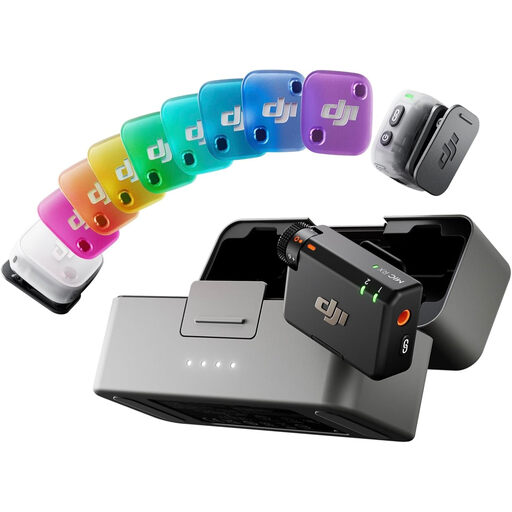
DJI Mic Mini 2 bundle with 2 TX, 1 RX and Charging Case

DJI Mic Mini 2 (2 TX + 1 RX + Charging Case)

Consider this bundle if cable-free voice recording matters to you; confirm compatibility with your device and recording app before buying.

The bundle is listed as 2 TX, 1 RX and a Charging Case. Make a short recording at your desk to assess nearby speech and noise from clothing movement.

View on Joybuy

Common questions

Where should I clip a lavalier for guided meditation?

Clip it securely on your chest, roughly 20–30 cm from your mouth, as RØDE advises. Keep the capsule clear of rubbing fabric and listen back to a short recording while you breathe, turn and adjust your posture.

Will an omnidirectional lavalier keep colleagues out of the recording?

No: it picks up sound from all directions, so nearby speech may still be audible. Close placement can make your voice more prominent, but a quieter recording period and a test at the actual desk remain important.

Do I need USB-C, TRRS or TRS?

Choose the connector for the device and input you will actually use. Sennheiser XS Lav USB-C is a wired USB-C model; RØDE smartLav+ uses smartphone-oriented TRRS; RØDE Lavalier GO uses 3.5 mm TRS for compatible microphone inputs. Check external-mic support if an adapter is involved.

Is a wireless lavalier necessary if I stay at the desk?

Not necessarily: a compatible wired lavalier can serve a seated recording setup without a wireless charging routine. Wireless becomes more relevant if you also move away from the desk; check its app, device and receiver requirements before choosing it.

What if a workplace recording captures colleagues?

If an organisation records or monitors workers, it needs to address the applicable data-protection responsibilities rather than rely on microphone choice. The Information Commissioner’s Office calls for lawful, fair and necessary monitoring with a lawful basis; the organisation should also consider transparency and whether a data protection impact assessment is needed. Its worker-monitoring guidance does not settle every personal, employment or confidentiality question.