A lavalier is worth considering when hands-free movement and a consistent mouth-to-mic distance matter during character performances. Close placement can favour the direct voice over room sound, as explained by MIT OpenCourseWare’s room-acoustics guidance and RØDE’s lavalier-mounting advice, but it cannot remove reflections from an untreated room. Choose the pickup pattern, mounting method and connector around the way you perform and the device you record into.
Who a lavalier may suit
Performers who move between character voices
A clothing-mounted mic can keep voice capture hands-free through changes in posture and delivery. Consistent close placement matters, but room reflections can still be heard; MIT OpenCourseWare explains how the balance of direct and reverberant sound changes with distance.
Home recordists managing nearby noise
If unwanted sound comes mainly from outside the mic’s pickup direction, a correctly aimed cardioid lavalier may be relevant. Shure describes this directional rejection for its CVL, which requires a compatible wireless bodypack.
Creators recording to phones or compact equipment
The recording device determines which connection route is practical. The cited RØDE and Shure models use different TRS, locking-TRS, TRRS and bodypack connections, so check the exact input and any adapter before choosing a mic.
What to check before buying
For character voices in an untreated room, start with what the mic can capture at a consistent position; then check how it handles your delivery, connects to your recorder and sits on your clothing.
| Concern | What to check | Who this matters to |
|---|
| Room sound and nearby noise |
Test close placement in the actual room. If noise is off-axis, check whether a cardioid capsule can stay correctly aimed; Shure describes this pattern on its CVL. |
If household noise competes with my dialogue, I want a clear direct voice without expecting the mic to erase echoes; around 36% of consumers put room sound and noise first. |
| Changing voice levels and movement |
Check the model’s stated high-sound-level suitability and supplied breath protection, then test loud lines, plosives and clothing movement. |
Loud exclamations and quick movements make distracting breath or handling sounds my main worry; around 29% of consumers prioritise performance handling. |
| Device connection |
Match the exact device input and any adapter to the mic’s TRS, locking-TRS, TRRS or bodypack connector. The cited RØDE and Shure models take different routes. |
When I record to an existing phone, camera or transmitter, the mic must work with that equipment; for around 21% of consumers, compatibility comes first. |
| Discreet, repeatable mounting |
Check the capsule profile, clip and cable routing, and try the intended clothing. RØDE describes Lavalier II as low-profile; DPA specifies a 3 mm capsule for its 6060 series. |
A visible mic or shifting position would disrupt repeated takes in costume; around 14% of consumers make discreet, secure mounting their primary concern. |
Mistakes to avoid
-
Expecting a lavalier to remove room echo
Close miking changes the balance of direct voice and room sound; it does not change the room’s acoustics. MIT OpenCourseWare’s room-acoustics guidance and RØDE’s mounting advice support treating placement and the room as separate decisions.
Record a short passage at normal and loud character-voice levels in the intended position. If reflections remain distracting, address the recording environment as well as mic placement.
Room treatment or retakes may add work if reflections remain audible.
-
Choosing by plug size alone
A 3.5 mm TRS mic, a locking-TRS mic and a TRRS mobile mic do not automatically serve the same input. The cited Shure CVL instead uses a TA4F connection for compatible Shure bodypacks.
Note your recorder, camera, phone or transmitter model and check the manufacturer’s compatibility wording for the complete connection, including any adapter.
A compatible adapter, interface or bodypack may be needed for the intended setup.
-
Overlooking clothing rub and breath noise
Animated delivery can move the mic or cable against fabric and bring plosives close to the capsule. Accessories do not replace careful mounting.
Secure the cable, use an appropriate supplied pop filter or windscreen, and make a movement-and-plosive test in the clothing you plan to wear.
-
Assuming cardioid pickup always suits performance
Shure describes unwanted-noise rejection for the cardioid CVL, but directional pickup depends on where noise comes from and how consistently the capsule remains aimed. An omnidirectional model offers a different placement trade-off.
Consider cardioid when off-axis noise is the priority and mounting can stay stable; consider omnidirectional pickup when movement makes consistent orientation harder.
Relevant brands for reference
RØDE
RØDE’s Lavalier GO and Lavalier II illustrate two omnidirectional connection and mounting options: standard 3.5 mm TRS and low-profile locking 3.5 mm TRS.
- RØDE specifies clothing-mounting and pop-filter accessories for the cited models.
- Check the exact recorder or transmitter input; neither connector establishes universal phone or camera compatibility.
Shure
Shure’s MVL is a TRRS option for compatible mobile devices, while its cardioid CVL connects to compatible Shure wireless bodypacks through TA4F.
- Shure describes unwanted-noise rejection for the CVL’s cardioid pattern when direction and placement make that useful.
- Neither connection route removes room reflections; confirm the exact phone, adapter or bodypack before purchase.
Sennheiser
Sennheiser positions the MKE Essential Omni for stage-oriented use, including high voice levels.
- Sennheiser describes high-sound-pressure suitability and sweat protection for the cited line.
- Check the selected connector variant and its transmitter or recorder compatibility rather than assuming direct phone use.
DPA Microphones
DPA presents the 6060 series as subminiature lavaliers for bodyworn use.
- DPA specifies a 3 mm capsule and describes the series for high sound pressure levels.
- Choose the connector for the complete recording chain; small capsule size alone does not establish device compatibility.
Joybuy lavalier options
These Verbex lapel microphones are options to consider for hands-free character-voice recording. Before choosing either, confirm its actual audio connection and device compatibility, and test placement in the untreated room.
 No image available
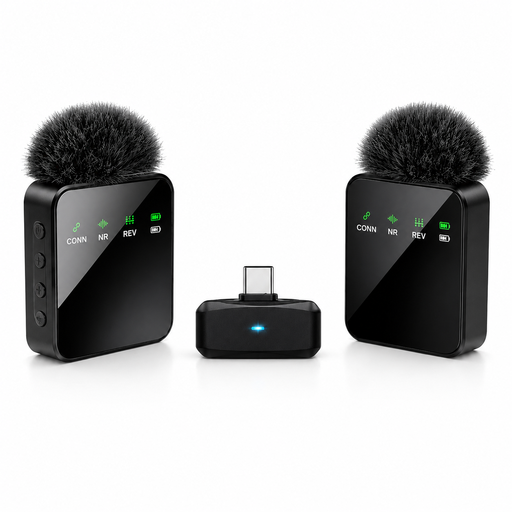
Verbex ST5 dual-mic button-style lavalier, Type-C interface
The lapel format is relevant if you need your hands free while changing character voices.
The name identifies a dual-mic variant and Type-C interface, but confirm what that interface does and how audio reaches your recording device: the product information conflicts about whether operation is wireless. Check the pickup pattern and mounting arrangement for your performance.
View on Joybuy
 No image available
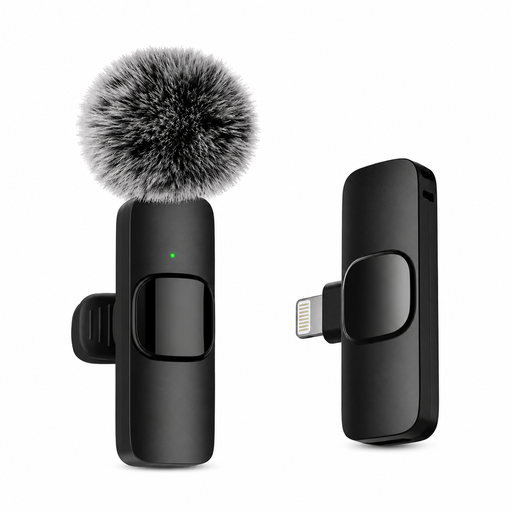
Verbex K9-Black single-mic lavalier
This lapel mic is another hands-free option for recording spoken character performances.
Its product information describes an iOS interface and also mentions Type-C, without establishing how either connects the audio. Wireless descriptions conflict, so confirm the transmission method, pickup pattern, mounting arrangement and compatibility with your exact device before choosing it.
View on Joybuy
Common questions
Will a lavalier remove echo from an untreated room?
No. Close placement can increase the direct voice relative to room sound, but the room still produces reflections, as MIT OpenCourseWare’s acoustics guidance explains. Test the intended recording position and address distracting room sound separately.
Should I choose an omnidirectional or cardioid lavalier for character voices?
Consider omnidirectional pickup when movement makes consistent aiming difficult; consider cardioid when unwanted sound is off-axis and the capsule can stay oriented. Shure describes directional unwanted-noise rejection for its CVL, but neither pattern guarantees a recording free of room reflections.
How can I avoid buying the wrong lavalier connector?
Identify the microphone input on your exact recording device, then match the mic and any adapter to it. RØDE specifies 3.5 mm TRS for Lavalier GO and locking 3.5 mm TRS for Lavalier II; Shure specifies mobile-device TRRS or an appropriate CTIA-compliant adapter for MVL, and a Shure-bodypack TA4F connection for CVL.


