Phone-first family interviewer
If you want to clip a microphone to one seated relative and record to a phone, check the phone input and any required adapter before choosing a TRRS lavalier.


Choose the microphone connection for your recording device first: a TRRS lavalier suits a compatible phone headset input, while a TRS lavalier suits a recorder, camera or compatible wireless transmitter with a TRS microphone input. In an untreated room, keep the microphone close and securely placed rather than expecting an omnidirectional capsule to remove room sound; listen to a short test before recording the full story.
If you want to clip a microphone to one seated relative and record to a phone, check the phone input and any required adapter before choosing a TRRS lavalier.
When speech clarity matters in a reflective or noisy room, plan for secure placement near the speaker and a test that reveals clothing rustle and background sound.
If you need more cable reach or will use a recorder, camera or compatible wireless transmitter, check its microphone input and plan how to route or secure the cable.
Start with the recording device’s input, then decide how to keep the microphone close to the storyteller without introducing clothing or cable noise.
| Concern | What to check | Who this matters to |
|---|---|---|
| Clear speech in the room | Check how the mic will stay near the mouth and clear of rubbing fabric. Test it with the speaker turning their head. | If room sound or clothing rustle could obscure a relative’s words, I want a placement I can keep consistent throughout the conversation; around 42% of consumers put speech clarity first. |
| Phone compatibility | Confirm whether the phone and any adapter accept the microphone’s TRRS connection; a similar-looking TRS plug is not interchangeable. | When recording straight to my existing phone, I need the microphone to work with its actual input; roughly 33% of consumers make that connection their primary concern. |
| Device placement | Check cable length and connector type against the intended speaker-to-device distance, or check the requirements of a compatible wireless setup. | If the recorder needs to sit away from the storyteller, I need enough reach without an awkward cable route; about 25% of consumers prioritise that flexibility. |
TRS and TRRS plugs have different contact arrangements. RØDE warns that connecting a TRS microphone to a TRRS input will generally cause contact-alignment problems.
Identify the recording device’s microphone input and confirm the exact adapter standard before buying.
Point Source Audio notes that concealment can move a lavalier farther from the mouth and introduce clothing or body noise.
For an audio-only family story, try a secure outer lapel or collar position and listen for rubbing during a short test.
The RØDE smartLav+ and Lavalier GO, and the Deity V.Lav, are specified as omnidirectional microphones. Do not rely on that pickup pattern to remove sound from an untreated room.
Reduce avoidable background noise, place the capsule close to the speaker and check that louder speech does not overload the recording.
Fabric movement, head turns and recording-level problems can be difficult to correct after a long conversation.
Record 30–60 seconds using the intended clothing, seat and device position, then listen through headphones before starting.
A story affected by noise may require an inconvenient re-recording, if one is possible.
Its smartLav+ is a phone-oriented TRRS lavalier; Lavalier GO is intended for compatible TRS microphone inputs, including the Wireless GO series.
The MVL is a mobile-device option for close-miked speech where the phone has a compatible 3.5 mm TRRS input or appropriate CTIA-compliant adapter.
The V.Lav is worth considering when the recording device needs to sit farther from a seated speaker.
These two-transmitter kits are options for recording a conversation with two speakers. They are not identified here as clip-on lavaliers: before choosing either, check how its transmitters can be positioned near the speakers and whether it works with your recording device and app.
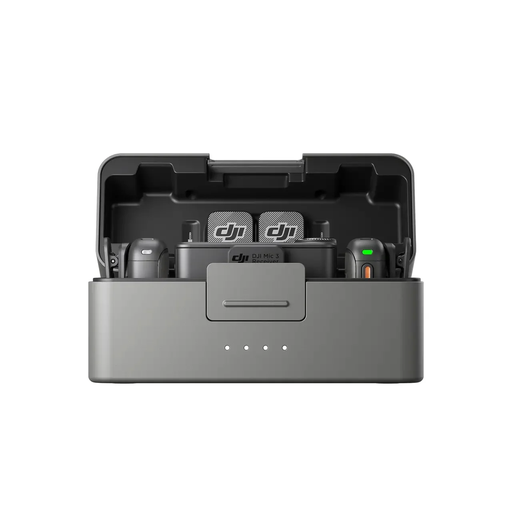 No image available
For an interviewer and storyteller, the two-transmitter configuration is worth considering if both voices need a microphone.
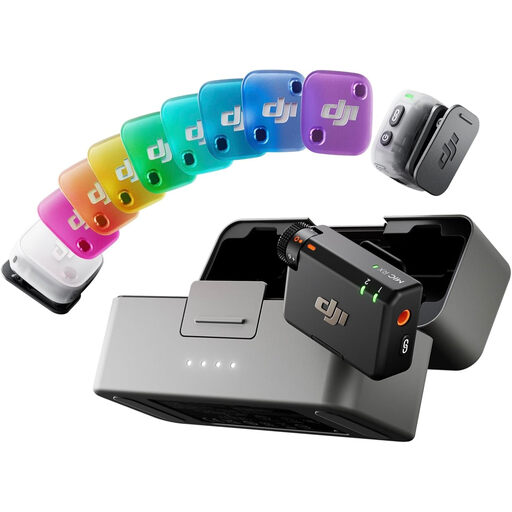 No image available
For a two-person family conversation, this configuration provides a transmitter for each speaker.
Do not count on an omnidirectional lavalier to remove echo. Place it securely near the speaker’s mouth, choose the quietest practical position and listen to a test recording; Point Source Audio notes that hiding a lavalier can increase clothing noise and distance from the mouth.
Choose the connector specified for your recording device: RØDE smartLav+ and Shure MVL are TRRS models intended for compatible mobile-device connections, while RØDE Lavalier GO uses TRS for compatible microphone inputs, including Wireless GO transmitters. Check any phone adapter before ordering.
Try a secure outer lapel or collar position close to the speaker’s mouth and clear of rubbing fabric. Have them turn their head and speak normally in a short test so you can hear whether the position remains usable.
Yes—agree on the recording’s purpose and any intended sharing before you start. GOV.UK’s guidance for recorded user-research sessions calls for informed consent from participants; that guidance is a useful prompt for the conversation, not a blanket statement of the law for every private family recording.