Choose the recording route before the lavalier: a body-worn recorder suits one guide when the priority is a self-contained audio file, while wireless suits a guide who needs to send sound to a camera, phone or venue equipment. A directional lavalier may reduce some ambient pickup, but it cannot remove every nearby sound or clothing rustle. Check connections, local recording, session length and, for wireless systems, the frequency and conditions in the hall.
Who is each setup for?
One guide making an archive recording
If preserving one guide’s spoken commentary matters more than sending it live to another device, a body-worn recorder and lavalier offer a self-contained route. The audio file will need transferring after the session.
Mobile teams recording to a camera or phone
If a guide moves between exhibits while being filmed, consider a wireless kit that sends audio to the recording device. A separate local recording can provide another copy, but check that the chosen system offers it and that it is switched on.
Venue teams running recurring talks
If talks involve several presenters or require a live receiver output, plan for compatible bodypacks, receiver connections and a repeatable sound check. Wireless frequency planning matters for each venue setup.
What matters when choosing?
For museum commentary, decide where the audio must go and how many guides will speak before choosing a microphone pattern or wireless system.
Body-worn recorder and wired lavalier
Choose when: One guide needs a self-contained recording rather than a live feed.
Allow for: Transferring the file and synchronising it with any video afterwards.
Compact 2.4 GHz wireless kit
Choose when: A moving guide needs to send commentary to a compatible camera, phone or computer.
Allow for: Testing the wireless link in the hall; Ofcom notes that the UK’s licence-exempt 2.4 GHz band is shared with other equipment.
UHF wireless bodypack system
Choose when: Recurring events need live receiver outputs or room to add presenters.
Allow for: More equipment and frequency planning; the applicable UK licensing route depends on the frequencies used.
Directional wired lavalier
Choose when: A guide can remain connected to a compatible recorder or mixer and reducing some off-axis sound is a priority.
Allow for: Careful positioning and power compatibility; Shure specifies 11–52 V DC phantom power for its cited MX wired lavaliers.
| Concern |
What to check |
Who this matters to |
| Speech in a busy hall |
Compare pickup patterns and make a recording with the microphone positioned on the guide’s planned clothing. |
When nearby conversation or clothing noise could obscure my commentary, I want to hear how the guide’s voice comes through in the actual room. Around 34% of consumers put speech clarity first. |
| Keeping a complete recording |
Check whether the recorder or transmitter saves audio locally, and confirm its battery capacity and storage for the session. |
If the commentary cannot easily be repeated, I need a recording path that does not depend solely on a wireless feed. For around 33% of consumers, recording continuity is the primary need. |
| Movement and device connection |
Confirm how the receiver connects to the intended camera, phone or computer, then walk-test the route through the hall. |
I need to move between exhibits while the recording device stays in place. Around 20% of consumers put that mobile connection first. |
| Recurring or multi-guide talks |
Check simultaneous presenter capacity, receiver outputs and the UK frequency requirements for the chosen system. |
When different guides take part in regular talks, I need a setup the venue can prepare and run consistently. For around 13% of consumers, that expandable workflow is the main concern. |
Mistakes to avoid
-
Assuming any lavalier will fit any input
A matching-looking plug does not establish electrical or system compatibility. Sennheiser specifies its ME 2 for Evolution Wireless SK bodypacks, while Shure specifies 11–52 V DC phantom power for the cited MX wired lavaliers.
Check the exact microphone, transmitter and recording-device models for connector wiring and power requirements before buying.
A mismatch may require a different microphone or a compatible interface.
-
Treating licence-exempt wireless as interference-free
Ofcom says licence-exempt microphone bands are shared with other low-power equipment, including devices using 2.4 GHz. A wireless link that works elsewhere still needs checking in the hall.
Test the system with normal venue equipment running, monitor a trial recording and use local recording where the commentary would be difficult to repeat.
An interrupted take may require additional recording time.
-
Expecting a directional microphone to remove hall noise
Shure describes ambient-noise rejection for its directional MX lavaliers but also cautions that a microphone picks up unwanted sounds it hears. Directionality will not eliminate clothing rub or nearby voices.
Position the capsule consistently, minimise contact with clothing and listen to a test recording made in the hall.
-
Choosing local recording when a live feed is essential
A body-worn recorder captures a file on the guide; it does not by itself send commentary to a camera, mixer or PA. A receiver-based wireless workflow serves a different output need.
Decide whether the session needs an archive file, synchronised video audio, a live feed or a combination before selecting equipment.
A separate local recording also requires file transfer and, when used with video, synchronisation afterwards.
Relevant brands for reference
Zoom
The F2 represents a body-worn recording route for one commentator who can transfer the audio after the session.
- Zoom specifies 32-bit-float recording and a supplied lavalier for the F2.
- A self-contained recorder does not replace a live wireless feed to venue equipment.
RØDE
Wireless PRO represents a compact wireless route for moving commentators who also want transmitter-side recording.
- RØDE specifies a dual-channel system with 32-bit-float onboard recording.
- Its 2.4 GHz wireless route should be tested in the venue because the band is shared with other equipment, as Ofcom explains.
Shure
The cited MX wired lavaliers and SLX-D+ bodypack configurations address different needs: directional wired speech capture and receiver-based venue work.
- Shure specifies cardioid and supercardioid MX lavaliers; it also lists an SLX-D+ configuration with a lavalier bodypack.
- The cited MX wired lavaliers require compatible phantom power, while a UHF system requires planning for its chosen UK frequency band.
Sennheiser
The ME 2 lavalier and Evolution Wireless Digital range are relevant to speech-focused bodypack workflows.
- Sennheiser specifies the omnidirectional ME 2 for speech with Evolution Wireless SK bodypack transmitters.
- Do not assume the ME 2 fits an unrelated transmitter; check the exact connection and the wireless system’s UK frequency version.
Joybuy products for mobile recording
These wireless microphone kits are relevant to a guide who needs to move while recording. Check each kit’s connection to your camera or phone, and whether your workflow needs a separate local recording.
 No image available
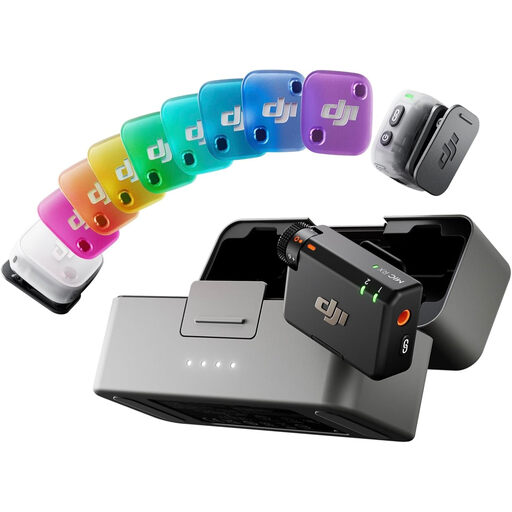
DJI Mic Mini 2 (2 TX + 1 RX + Charging Case)
For a moving guide, confirm how this kit connects to the device that will save the commentary.
The listed bundle has two transmitters, one receiver and a charging case. If you need an independent audio copy, check the exact recording workflow before the session.
View on Joybuy
 No image available
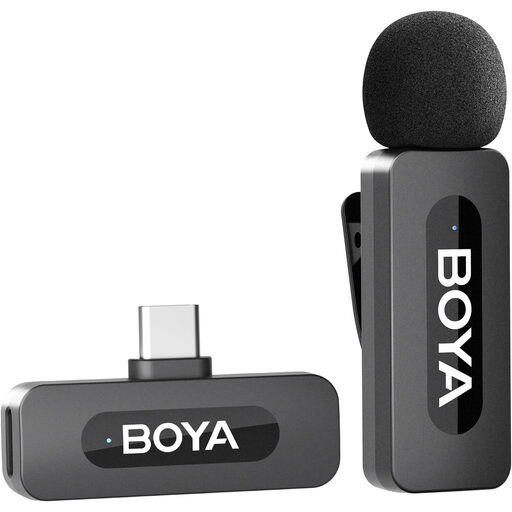
BOYA BY-V10 V2.0 USB-C (1 TX + 1 RX)
For one guide recording with a compatible USB-C device, check the phone connection and recording app you intend to use.
The listing names one transmitter, one receiver and 9-hour battery life. Confirm whether your setup needs a separate recording backup and test the wireless link in the hall.
View on Joybuy
 No image available
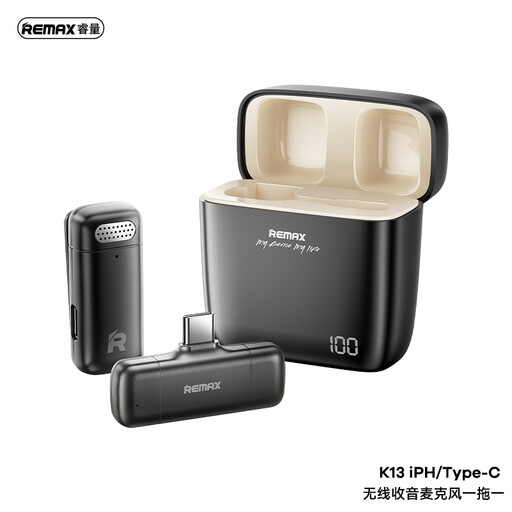
REMAX K13 1-to-1 USB-C Wireless Microphone, Black
For a single moving commentator, check that the USB-C receiver works with the device recording the talk.
Confirm the battery runtime and whether your recording workflow saves a separate copy. Test the wireless system with the hall’s usual equipment running.
View on Joybuy
Frequently asked questions
Will a directional lavalier remove echo and background noise?
No. Shure says its directional MX lavaliers reject some ambient sound, but a microphone can still pick up nearby noises. Place it consistently on the guide and listen to a test recording in the community hall before relying on it.
Does a wireless lavalier need a licence in the UK?
The answer depends on the system’s frequencies and how it is used. Ofcom identifies 173.8–175 MHz, 863–865 MHz and 2400–2483.5 MHz as ranges available for licence-exempt microphone use subject to applicable requirements; those ranges are shared and can experience interference. Check the exact UK frequency version and the applicable Ofcom conditions before using a UHF system.
Can any lavalier connect to any recorder or transmitter?
No. Connector shape alone does not establish wiring, power or system compatibility. Sennheiser specifies its ME 2 for Evolution Wireless SK bodypacks, while Shure specifies 11–52 V DC phantom power for its cited MX wired lavaliers; check both ends of the intended connection.
Do we always need consent to record commentary or visitors?
No: consent is not automatically the appropriate lawful basis for an organisation recording identifiable people in the UK. The Information Commissioner’s Office says organisations should identify an appropriate UK GDPR lawful basis; if they rely on consent, it requires a positive opt-in. Decide what the recording will capture and how it will be used before the event, and seek organisation-specific advice if visitors may be identifiable or the recording will be published.


