
24/7 Customer Support

Free returns

Same-day & Next-day Delivery

Quality Guaranteed

Unlock Your Welcome Offers: FREE Delivery | Up to 80% OFF | Free 30-day JoyPlus trial
Download the APP
Buying among the many lawn mowers available in the UK can seem straightforward until you compare cutting widths, battery systems, collection bags and coverage claims. The wrong choice may leave you making repeated passes, managing an inconvenient cable or struggling with a machine that is too large for narrow spaces.
This guide explains the main buying pitfalls and the practical specifications to check before choosing a robotic lawn mower, cordless lawn mower, petrol model or compact machine.
A larger motor does not automatically make a mower suitable for your garden. A petrol lawn mower may offer useful power for thicker or longer grass, but it also requires fuel storage, engine maintenance and recoil starting. A corded electric lawn mower can be simpler to operate, yet the cable needs careful management around borders, trees and garden furniture.
Instead of focusing only on wattage or engine size, consider the lawn area, terrain, access points and storage space.
A wide deck covers more ground per pass, but it may be awkward in narrow side passages or compact lawns. Conversely, a small lawn mower is easier to manoeuvre but can take longer across a medium-sized garden.
For a lawn mower for small gardens, a cutting width around 25–32cm can be practical. Medium gardens may suit approximately 32–40cm, while larger open lawns can benefit from a wider deck, provided the mower remains easy to move and store.
Battery runtime and robotic mower coverage depend on grass length, slope, cutting height, weather, obstacles and how often the mower operates. Treat figures as product specifications rather than guaranteed results for every garden.
For cordless models, check whether the battery and charger are included, the charging time and whether the battery belongs to a wider garden-tool system. For robotic models, confirm boundary requirements, mapping features, slope limits and whether the charging station has a suitable location.
Always read the supplied safety instructions and check the relevant conformity marking and responsible manufacturer information before use. Keep cables, blades, batteries and fuel away from children, and disconnect the power source before cleaning or maintenance.
A mower with adjustable cutting height gives greater flexibility across changing seasons. A height range such as 25–70mm can accommodate shorter decorative cuts and longer grass. A collection bag of 30–40 litres may reduce emptying interruptions, although a larger bag can add weight when full.
Also check whether the mower offers collection, mulching or side discharge. These functions serve different preferences and should not be treated as interchangeable.
A self-propelled lawn mower can reduce pushing effort on larger or uneven lawns, but it may be unnecessary for a small, flat garden. Look for foldable handlebars, carry handles and vertical-storage guidance if shed space is limited.
For robotic mowers, investigate the stated slope capability and obstacle-detection system. Features such as app control, automatic mapping and multi-zone operation can be useful, but they do not remove the need to prepare the lawn and follow installation instructions.
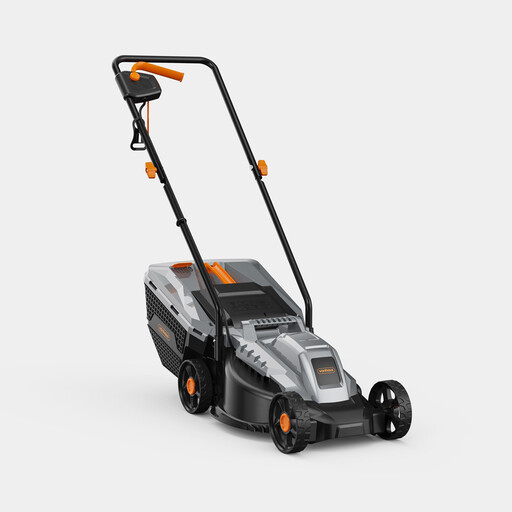
Why This Fits Their Persona: A practical option for homeowners with a nearby outdoor socket who want straightforward electric mowing without charging batteries or storing fuel.
The 10m cable gives useful reach, while three height settings and a 30L collection bag make the specification easy to assess before purchase.
1200W motor, 320mm cutting width, foldable handle and 30L grass collector.
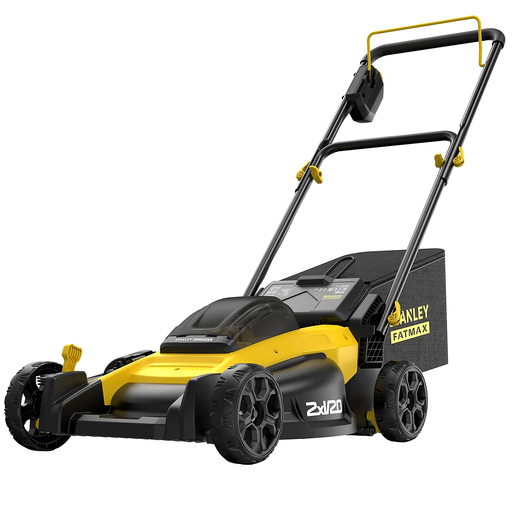
Why This Fits Their Persona: Suits buyers wanting cordless convenience, a broad cutting deck and a battery system with included batteries and charger.
The stated 51cm deck and two 4.0Ah batteries provide clearer context than a vague “long runtime” claim; actual coverage will still vary by conditions.
51cm cutting width, five height positions and collection, mulching or side-discharge functions.
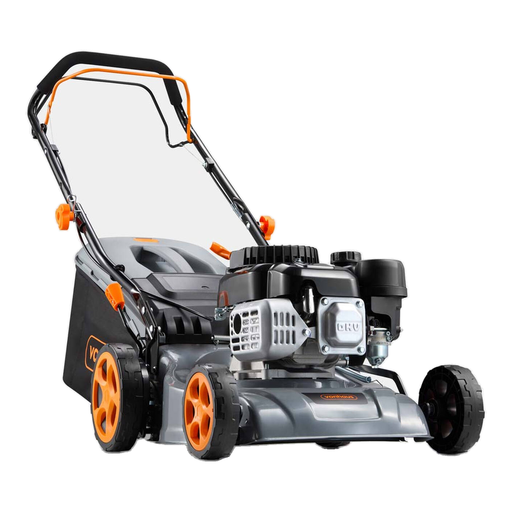
Why This Fits Their Persona: Designed for buyers managing medium-sized lawns who prefer self-propelled movement and do not want a trailing power cable.
The specification identifies the 132cc engine, seven height settings and self-propelled drive, helping buyers match the machine to terrain and effort.
40cm cutting width, 40L grass basket and 25–70mm cutting-height range.
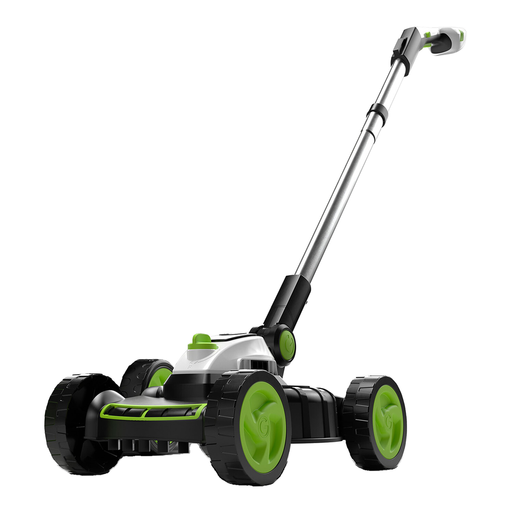
Why This Fits Their Persona: Its compact format is suited to narrow lawns, awkward corners and areas beneath garden furniture where a full-sized mower may be difficult to use.
The 25cm cutting width and stated 100m² coverage make its intended compact-garden use clearer than selecting a larger mower that may be cumbersome.
3.5kg weight, 18V battery, up to 30 minutes’ stated runtime and low-profile handle.
For automated mowing, the Sunseeker V1 Wireless Boundary Robot Lawn Mower is specified for 300m² and includes app control and obstacle avoidance. Larger lawns may suit the Sunseeker S4 Wireless Robot Lawnmower for 1000m² or the MOVA ViAX 500 Robotic Lawnmower with 600m² coverage, LiDAR and AI vision features. Confirm boundary, mapping and installation requirements before ordering.
A grass trimmer or lawn edger can finish areas a mower cannot reach. The Gtech GT50 18V cordless grass trimmer provides a stated 30-minute runtime, while Fiskars Long Handle Grass Shears offer a manual option for precise edges and awkward patches.
We have compiled a complete, real-time list of products that fully satisfy these strict selection criteria and UK safety regulations.
A small cordless lawn mower is convenient where storage and manoeuvrability matter. A compact corded model can also work if a suitable socket is nearby. Check the cutting width, mower weight and access around borders before choosing.
Installation depends on the model. Wireless systems may use mapping and positioning technology, while other products can require boundary arrangements. Check the manufacturer’s setup instructions, charging-station requirements, slope rating and multi-zone capabilities before purchase.
Running cost depends on purchase price, electricity or fuel prices, mowing frequency and replacement parts. Corded electric models avoid fuel purchases but use mains electricity. Battery models require charging and may eventually need a replacement battery. Petrol models require fuel and routine engine care, so compare the complete ownership requirements rather than the initial price alone.