
24/7 Customer Support

Free returns

Same-day & Next-day Delivery

Quality Guaranteed

Unlock Your Welcome Offers: FREE Delivery | Up to 80% OFF | Free 30-day JoyPlus trial
Download the APP
Choosing between cordless, electric, petrol and robot lawn mowers is not simply a question of power. Garden size, access to outdoor sockets, storage space, slopes and the amount of edging required all affect whether a mower will be practical in regular use.
Many buyers are attracted by impressive coverage figures or smart features, then discover that the machine does not suit their lawn. The following guide explains the main buying pitfalls, the specifications worth checking and our top recommendations for different UK gardening needs.
A mower’s advertised coverage is usually based on particular conditions. Robot lawn mowers may require a mostly flat lawn, a stable Wi-Fi or 4G connection and clear boundaries. Slopes, narrow passages, separate lawn sections and damp ground can reduce practical performance.
Before buying, measure the actual grass-cutting area rather than the whole garden. For robotic lawn mower models, also check the permitted slope, surface variations and grass types listed by the manufacturer.
A wide deck can reduce the number of passes across an open lawn, but it may be awkward around trees, borders, sheds and narrow gates. Conversely, small lawn mowers are easier to turn and store but may take longer across a medium-sized garden.
Measure the narrowest access point and consider where the mower will be stored. A folding handle or vertical storage design can be more useful than a larger cutting deck.
Cordless lawn mowers avoid fuel and trailing cables, but batteries need charging and have a finite working time per charge. Check whether batteries and chargers are included, whether replacement batteries are available and whether the battery belongs to a wider garden-tool system.
For electric lawn mowers with a cable, plan the route carefully. A longer cable improves reach but still requires attention around borders, trees and children’s play areas.
Use cutting width as a practical guide:
Coverage claims should be treated alongside mowing frequency. Regularly maintained grass is generally easier to manage than long, wet growth.
Cordless lawn mowers offer freedom of movement and are convenient where there is no nearby socket. Runtime depends on battery capacity, grass length, cutting height and terrain.
Electric lawn mowers with a power cable provide continuous operation, making them suitable for buyers who prefer not to manage battery charging. However, cable handling is part of every mowing session.
Petrol lawn mowers can provide strong cutting performance and avoid battery limitations, but they require fuel, engine maintenance and suitable storage. Check the instruction manual for fuel handling and servicing requirements.
Robot lawn mowers reduce routine mowing effort by operating from a charging station. Wire-free or wireless robot lawn mowers may use cameras, LiDAR, GPS or app-based mapping, but compatibility with your lawn layout and connectivity should come first.
Look for enough cutting-height settings to adapt to seasonal grass growth. A collection bag reduces raking but adds weight when full. Mulching and side-discharge functions can be useful where you do not want to collect every cutting.
For slopes or larger lawns, self-propelled lawn mowers can reduce pushing effort. On a compact, level lawn, a lightweight push mower may be easier to manoeuvre and store.
Always check the supplied manual, safety guard arrangement and required protective practices. Electrical products should be used with suitable outdoor power arrangements, while petrol models need responsible fuel storage and ventilation.
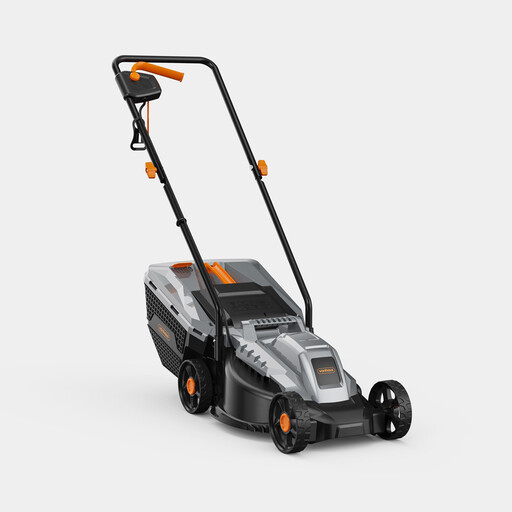
Why This Fits Their Persona: A straightforward option for buyers who have access to an outdoor socket and want continuous electric power for a small or medium-sized lawn.
Its 10m power cable avoids battery-runtime uncertainty, while the 32cm working width remains manageable around typical garden obstacles.
1200W motor, 30L collection basket and three cutting heights of 25mm, 45mm and 65mm.
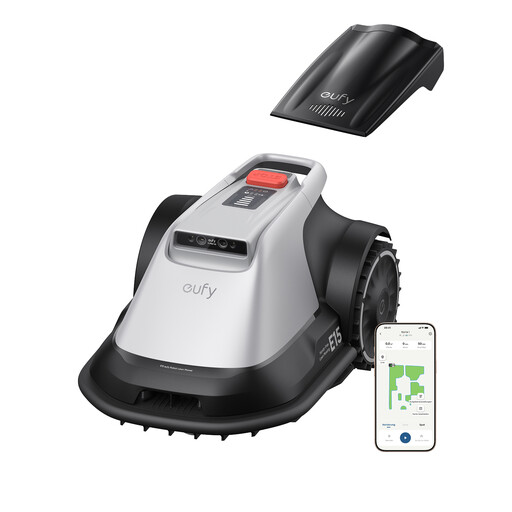
Why This Fits Their Persona: A suitable consideration for households wanting app control and automated mowing across a lawn up to the stated 800m² maximum area.
The specification clearly states limits for lawn area, slopes and surface variation, helping buyers check suitability before ordering.
Wire-free mapping, app control, obstacle detection and a two-in-one mowing and edge-trimming function.
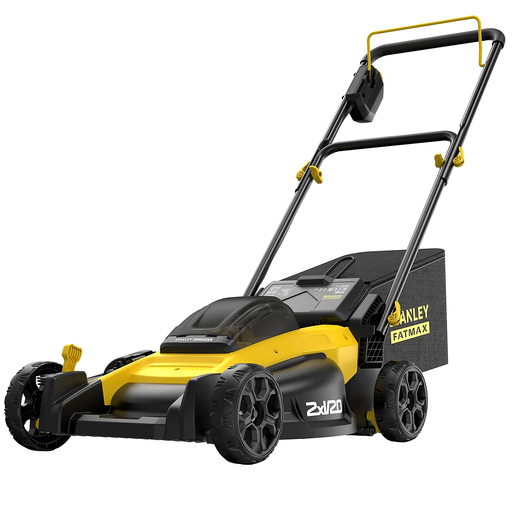
Why This Fits Their Persona: Designed for buyers covering lawns up to the stated 750m² who want cordless movement and several grass-disposal options.
The included battery specification is clear: two 4.0Ah batteries and a charger are supplied, reducing uncertainty at purchase.
51cm cutting deck, 40L collection bag and three-in-one mulching, side-discharge and bagging functions.
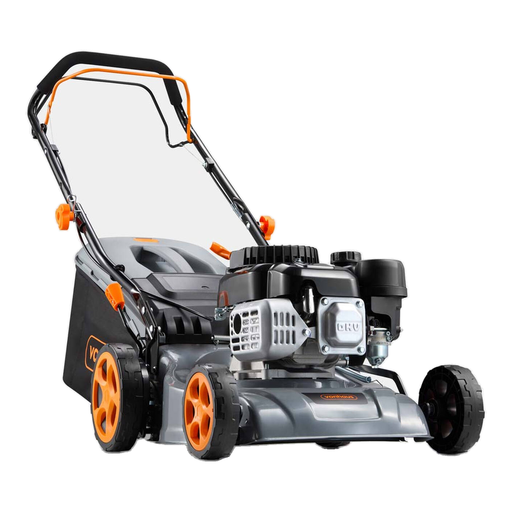
Why This Fits Their Persona: A petrol option for medium-sized gardens where self-propelled movement and a wider cutting path may reduce physical effort.
Its self-propelled drive addresses the strain of pushing on uneven or sloping ground, while seven height settings provide more adjustment than a basic mower.
132cc engine, 40cm cutting width, 40L grass collector and cutting heights from 25mm to 70mm.
A mower may leave a narrow strip beside walls, raised borders or fences. Lawn edgers and grass trimmers are designed for this finishing work rather than broad-area mowing.
For small gardens, a lightweight cordless tool can be easier to control. The Gtech GT50 18v 230mm Cordless Grass Edge Trimmer weighs 1.85kg, offers trimming and edging modes and has an adjustable head. Check the stated battery runtime and charging time before purchase, particularly if you plan to maintain several borders in one session.
We have compiled a complete, real-time list of products that fully satisfy these strict selection criteria and UK safety regulations.
Yes, provided the battery runtime covers the lawn area and the mower can pass through all access points. For very narrow lawns, a compact model may be easier to manoeuvre than a wider cordless mower.
Remove grass from the deck after use and keep blades sharp according to the manual. Cordless models need battery care and safe dry storage. Petrol lawn mowers also require checks such as oil, air filter and spark plug maintenance at the intervals specified by the manufacturer.
Not always. Some wireless robot lawn mowers use vision, LiDAR, GPS or app-based mapping instead of boundary cables. Their suitability depends on lawn shape, connectivity, obstacles, slopes and the manufacturer’s stated operating limits.