
24/7 Customer Support

Free returns

Same-day & Next-day Delivery

Quality Guaranteed

Unlock Your Welcome Offers: FREE Delivery | Up to 80% OFF | Free 30-day JoyPlus trial
Download the APP
A compact light can transform a dim home office, rainy outdoor shoot or evening vlog. However, choosing LED camera lights based only on brightness or colour effects can lead to wasted money. The right option depends on your camera connection, shooting distance, power requirements and whether you need continuous illumination or a brief flash.
Before buying, watch for three common traps:
Colour temperature is measured in Kelvin (K). Lower settings create warmer, amber-toned illumination, while higher settings appear cooler and bluer.
For practical UK indoor use:
A dimmable LED light is more useful than a fixed-output lamp because you can reduce glare on faces, balance the light with a window or avoid overexposing reflective products. For product photography and close-up work, brightness adjustment also helps preserve surface detail.
A portable video light, camera fill light or phone fill light is suitable when you need to see the lighting effect before recording. This makes it practical for YouTube, livestreams, interviews, make-up demonstrations and smartphone content.
A camera flash or mini speedlite flash is designed primarily for still images. Check whether it supports automatic TTL exposure or requires manual adjustment. A single-contact manual flash, such as the Ulanzi SL03 models, requires you to set exposure on the camera yourself. This can be useful for deliberate, repeatable lighting, but it is less convenient for fast-changing scenes.
Some compact units combine a flash with a low-level video light. This gives greater flexibility, although the continuous mode may generate heat during extended operation.
A rechargeable photography light should have a clearly stated battery capacity and a charging method that suits your workflow. Capacities such as 2,000mAh, 3,100mAh and 3,000mAh indicate the battery size, but actual running time varies with brightness, colour mode and temperature.
Also check:
A magnetic camera light is convenient, but magnets should be kept away from pacemakers, bank cards and other magnetically sensitive equipment where relevant. Water-resistance ratings are not permission to submerge a device; for example, IPX4 and IPX5 provide limited protection rather than underwater capability.
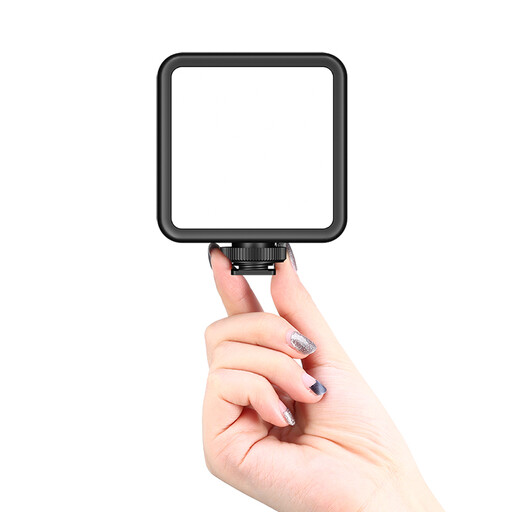
Why This Fits Their Persona: A compact choice for new vloggers, smartphone users and home creators who need adjustable light without carrying a large panel around the house.
Its stated 2,500K–9,500K range and dimmable design provide more control than a fixed-colour lamp, while the magnetic back supports quick positioning.
2,000mAh battery; adjustable colour temperature; magnetic rear mounting.
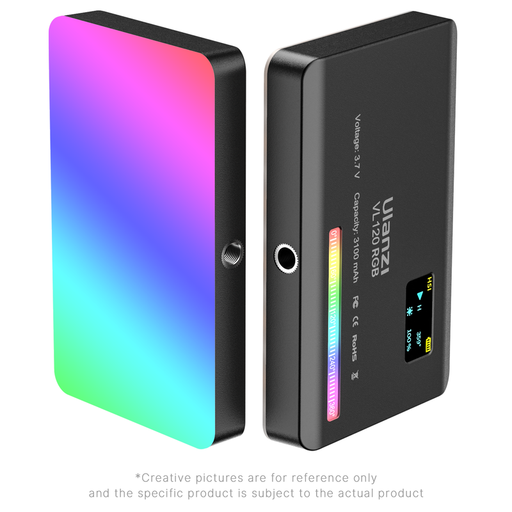
Why This Fits Their Persona: Suitable for creators who want colour control for branded backgrounds, mood-led scenes, photography and more polished video production.
The specification lists 3,100mAh, 2,500K–9,000K adjustment, 360-degree colour control and 20 lighting effects, rather than relying on colour range alone.
CRI ≥95 specification; integrated 3,100mAh battery; RGB effects and adjustable white light.
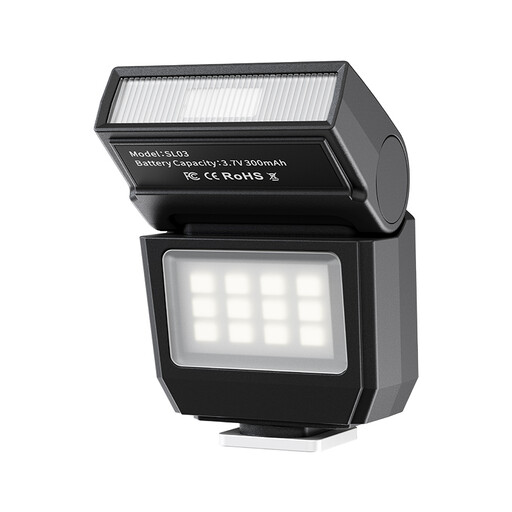
Why This Fits Their Persona: A practical fit for DSLR and mirrorless users photographing people, events or products where a flash burst is more suitable than continuous vlog lighting.
The listing clearly identifies it as a single-contact manual flash with no TTL, so buyers can account for manual exposure before ordering.
GN8 output; 90-degree adjustment; four power levels from 1/8 to 1/1.
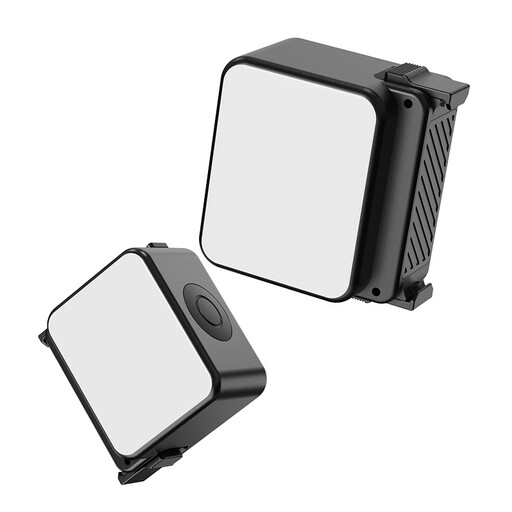
Why This Fits Their Persona: Designed for DJI Osmo Action 3, 4 and 5 Pro cage setups, making it relevant to compact action-camera filming and mobile outdoor content.
Its IPX5 rating is stated clearly, helping users distinguish protection against water jets from full waterproofing or underwater use.
Magnetic action-camera mounting; IPX5 water-jet protection; built-in lithium battery.
We have compiled a complete, real-time list of products that fully satisfy these strict selection criteria and UK safety regulations.
Position the light slightly to one side of the camera rather than directly against the lens. This can add shape to faces and reduce flat-looking footage. For a phone fill light, check that the holder does not obstruct the camera or charging port. For a cold-shoe-mounted unit, tighten the fitting without forcing it.
Do not look directly into a bright LED panel at close range, and never fire a flash towards people or animals’ eyes. Keep non-waterproof lights away from rain and condensation. During lengthy filming, leave ventilation gaps around the housing and stop using the device if it becomes unusually hot, emits smoke or develops a burning smell.
Yes, a small panel or phone fill light can improve illumination for selfies, video calls and short-form content. Check how it attaches: magnetic mounting may require a compatible case or accessory, while a selfie stick with an integrated fill light can combine positioning and illumination.
There is no single lifespan figure that applies to every unit. Battery duration depends on brightness, colour mode, charging habits and storage temperature. To support longer service, use the recommended 5V charger, avoid exposing the battery to excessive heat and store the light partly charged if it will not be used for an extended period.
Choose continuous vlog lighting when you need to preview the scene and record video. Choose a flash for still photography where a short burst is preferable. If you create both photos and video, a hybrid flash with video-light functionality may reduce the number of accessories you carry, provided its manual controls suit your camera workflow.