
24/7 Customer Support

Free returns

Same-day & Next-day Delivery

Quality Guaranteed

Unlock Your Welcome Offers: FREE Delivery | Up to 80% OFF | Free 30-day JoyPlus trial
Download the APP
Upgrading to LED car bulbs seems like a straightforward way to improve night-time visibility and give your vehicle a modern look. The promise of brighter, whiter light is appealing, but the market is filled with options that can lead to disappointment, wasted money and even MOT issues. As the Joybuy Product Recommendation Officer, my role is to help you navigate past the marketing clutter and focus on what truly matters.
Many drivers are caught out by a few common pitfalls. Before you add any bulbs to your basket, be aware of these frequent traps:
To make a smart purchase, focus on these core parameters. Getting them right is the key to a successful and lasting upgrade.
This is the most critical detail. Your vehicle's headlight or fog light housing is designed for a specific bulb type. Using the wrong one simply won't work. Common fitments include:
Your vehicle's owner's manual is the most reliable source for this information. Always confirm your required fitment code before browsing.
The Controller Area Network (CANbus) is the central nervous system of most cars built since the mid-2000s. It monitors functions like bulb status. Since LEDs use far less power than halogens, the CANbus system can mistakenly think a bulb has failed, triggering a warning light. A quality CANbus error free LED has built-in circuitry (resistors or an intelligent driver) to communicate correctly with the vehicle's computer, preventing these annoying errors.
The colour of the light is measured in Kelvin (K). Standard halogens are around 3200K (warm yellow). For that crisp, modern look, most drivers opt for 6000K car bulbs or 6500K bulbs. This temperature produces bright white car bulbs that mimic natural daylight, which can improve the clarity of road signs and markings at night.
Finally, look for plug and play led headlights. These are designed with a 1:1 body size compared to the original halogen bulb, meaning they fit directly into the housing with no need for extra adapters, wiring or modifications.
Based on these practical criteria, here are a few options matched to different driver profiles.
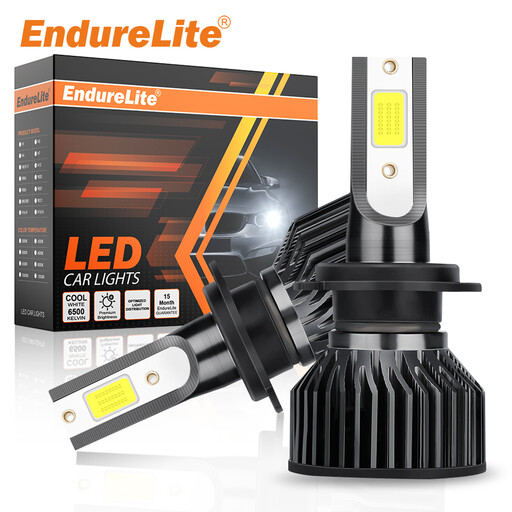
Why This Fits Their Persona: An ideal first upgrade for a daily driver. It offers a noticeable improvement in visibility for night-time commutes on A-roads and motorways, without a complex installation process.
Its design focuses on replicating the original halogen beam pattern, which helps prevent the unfocused glare that plagues many high-lumen bulbs.
Features a simple plug-and-play design and an integrated fan for active cooling, balancing performance with reliability.
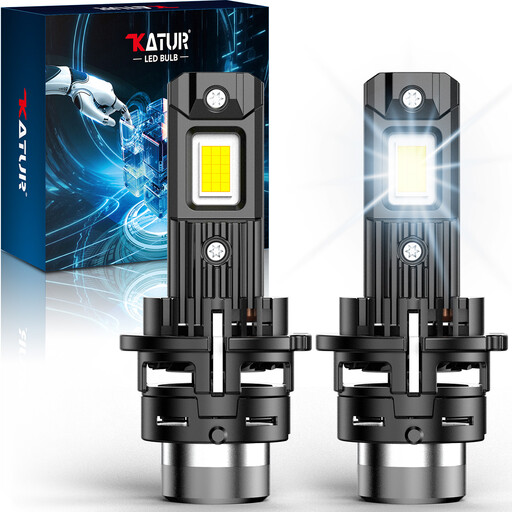
Why This Fits Their Persona: For drivers looking to replace factory-fitted HID bulbs with something that offers a significant jump in light output and instant-on performance, without the warm-up time of HIDs.
It directly counters the overheating trap with a robust cooling system, including dual copper tubes and a 16,000 RPM fan to manage heat and sustain brightness.
Designed as a direct 1:1 replacement for D4S HID bulbs, ensuring a proper fit. The instant start-up provides immediate full illumination.
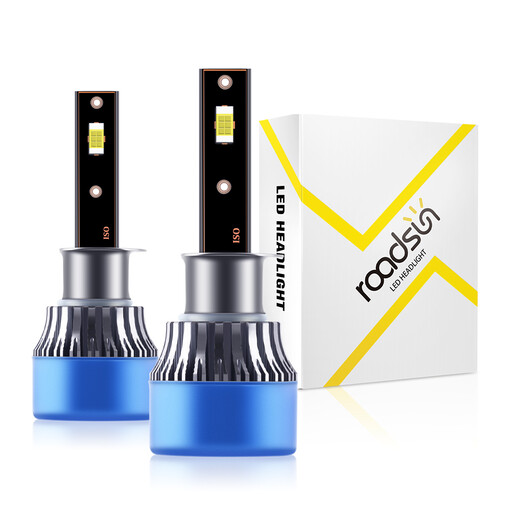
Why This Fits Their Persona: Perfect for those who frequently drive on unlit rural roads or in challenging British weather. This bulb is built to cut through fog, rain and spray with a clear, wide beam.
Its IP68 waterproof and dustproof rating directly addresses the risk of premature failure in the harsh, wet environment of a fog light housing.
The 6000K pure white light provides strong penetration in poor visibility, while the aviation-grade aluminium body ensures durability.
We have compiled a complete, real-time list of products that fully satisfy these strict selection criteria and UK safety regulations.
This is a complex area. As of now, fitting aftermarket LED bulbs into a headlight unit that was originally designed for halogen bulbs is not strictly type-approved and may be considered an MOT failure. The key concern for testers is ensuring the beam pattern is correct, without causing glare to other road users. Many 1:1 design bulbs can achieve this, but legality is not guaranteed. It is advisable to check the latest DVSA guidelines. For guaranteed compliance, they are suitable for off-road use.
For the most part, no. The market has shifted towards plug and play led headlights that feature a 1:1 design, matching the size and connection of the original halogen bulb. This allows for direct installation. However, a small number of vehicles may use a unique retaining clip to hold the bulb in place, which might require a specific adapter. It's always a good idea to check your car's existing setup when you remove the old bulb.
This is almost always a CANbus issue. Flickering, a dashboard error message or a bulb that won't turn on are classic signs that your car's computer thinks the bulb is faulty due to its low power draw. The solution is to ensure you purchase a bulb specifically advertised as canbus error free led, which has the necessary technology built-in to work with your car's system. For some particularly sensitive vehicles, an additional external CANbus decoder or resistor may be required.