
24/7 Customer Support

Free returns

Same-day & Next-day Delivery

Quality Guaranteed

Unlock Your Welcome Offers: FREE Delivery | Up to 80% OFF | Free 30-day JoyPlus trial
Download the APP
Upgrading your car's dim, yellow halogen bulbs to crisp, bright LED car bulbs seems like a simple win for safety and style. The promise of better night-time visibility and a modern look is appealing. However, the market is flooded with options, and many UK drivers find themselves caught out by misleading claims and compatibility issues, leading to wasted money, dashboard warning lights and even MOT failures.
As a Joybuy Product Recommendation Officer, my role is to help you navigate this landscape. We will look past the marketing hype and focus on the practical details that ensure you get a reliable car light bulb upgrade that works for your vehicle.
Before you add any bulbs to your basket, be aware of these common traps that catch out even savvy DIY enthusiasts:
To avoid these pitfalls, focus on three core parameters. Getting these right is the key to a successful upgrade.
Instead of a generic list, we have matched specific products to the needs of different UK drivers.
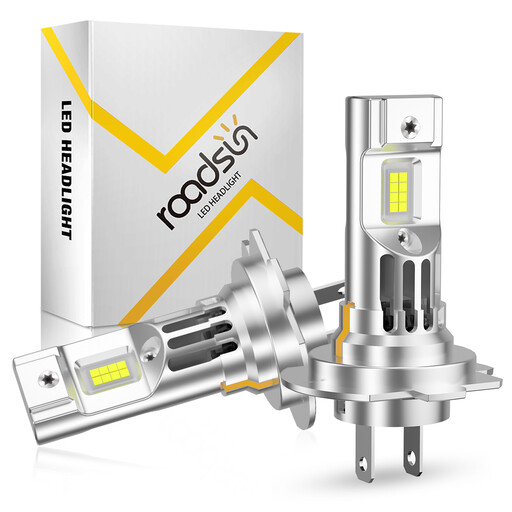
Why This Fits Their Persona: You drive a popular hatchback or saloon and want a straightforward, noticeable improvement for your daily commute without any fuss. This H7 bulb is one of the most common fitments for dipped beams in the UK.
It directly counters the "Plug-and-Play Fib" by being designed as a true 1:1 replacement that requires no extra adapters or modifications to fit into a standard H7 housing.
Features a 6500K cool white colour for a modern look and an integrated high-speed fan to manage heat, ensuring consistent performance and a long operational life.
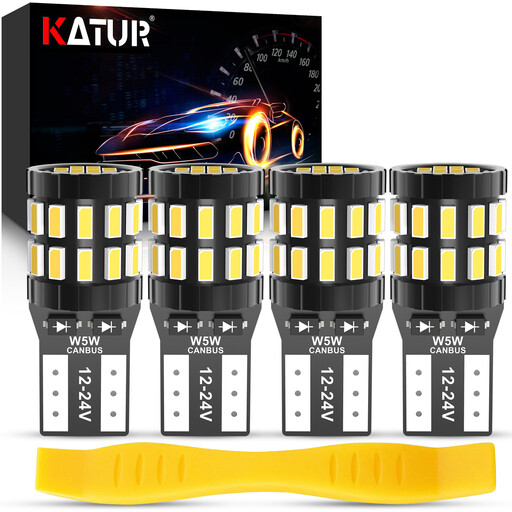
Why This Fits Their Persona: You want to eliminate all the old yellow lights on your car, not just the headlights. These T10 W5W LEDs are perfect for updating interior map lights, door courtesy lights and number plate lights for a consistent, premium look.
It tackles the "CANbus Compatibility Gamble" head-on. These smaller bulbs are often monitored by the car's computer and this model is specifically designed to be Canbus error free, preventing dashboard warnings.
Offers a 360-degree lighting angle to eliminate dark spots inside small light housings. The 6000K Xenon White colour provides a clean, modern light that matches premium LED headlights.
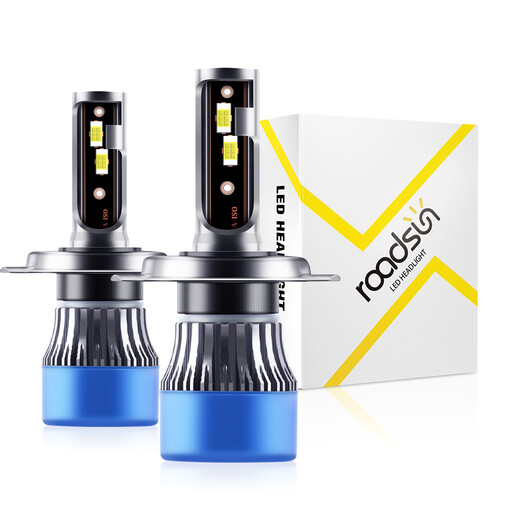
Why This Fits Their Persona: Your vehicle uses a single H4 bulb for both high and low beams. You need a reliable dual-function replacement that provides a clear cut-off on low beam and powerful illumination on high beam.
This bulb avoids the "Brightness Myth" by focusing on function. The integrated high and low beam design with carefully placed LED chips aims to replicate the filament position of a halogen H4, creating a proper beam pattern.
Features a smart decoding chip to work with most vehicle systems without errors. The 360° adjustable base allows you to fine-tune the bulb's rotation for an optimal beam pattern in your specific headlight housing.
We have compiled a complete, real-time list of products that fully satisfy these strict selection criteria and UK safety regulations.
This is a key consideration. According to current DVSA guidelines for MOT testing, retrofitting LED bulbs into a headlight unit originally designed for halogen bulbs is technically a reason for failure. The critical factor is the resulting beam pattern. If the LED bulb produces a clean cut-off, is not excessively bright and does not cause glare for other road users, it may pass an MOT inspection. To increase your chances, choose high-quality bulbs that are designed to mimic the filament position of the original halogen and always have your headlight alignment checked by a professional after installation.
Yes, a cooling system is essential. High-output LED headlight bulbs generate considerable heat at their base. Without effective cooling, the LED chips will degrade quickly, losing brightness and failing prematurely. Bulbs use either a passive heat sink (metal fins) or an active cooling fan. Fan-cooled models are often more compact and can dissipate heat more effectively, while fanless (passive) designs are silent and have no moving parts to fail, but may be bulkier. Both are valid solutions, but a bulb without any dedicated cooling system is a red flag.
It guarantees that the bulb has integrated circuitry (usually a resistor) designed to communicate correctly with your car's computer. This prevents the "bulb out" warning light on your dashboard and stops the flickering that can occur with standard LEDs. However, it is not a 100% guarantee for every single car. Some vehicles, particularly from premium German manufacturers, have exceptionally sensitive monitoring systems that may still require an additional, external CANbus decoder if errors persist. For the vast majority of cars on UK roads, a well-made Canbus error free bulb is sufficient.