
24/7 Customer Support

Free returns

Same-day & Next-day Delivery

Quality Guaranteed

Unlock Your Welcome Offers: FREE Delivery | Up to 80% OFF | Free 30-day JoyPlus trial
Download the APP
Upgrading your vehicle lighting can improve the appearance of your car and, where the beam is correctly formed, make night-time driving more comfortable. However, buying LED car bulbs is not simply a matter of choosing the highest lumen figure on a product page.
The wrong fitting may not lock into the housing, an oversized cooling fan may prevent the dust cap from closing, and a bulb designed for HID systems may be unsuitable for a halogen headlamp. Before ordering, check the bulb code, lighting position, vehicle electronics and road-use requirements.
H7, H11, HB3/9005, H1 and T10 W5W bulbs are different fittings. Some bulbs may share a similar plug but use a different mounting collar, base depth or locating tab. Check the code printed on the original bulb or in the vehicle handbook rather than relying only on a general “universal fit” description.
A large lumen number describes the seller’s stated output, but it does not guarantee a useful beam pattern. Reflectors and projector housings are designed around the position of the original filament or discharge capsule. If the LED chips sit in the wrong place, the result can include dark areas, scattered light or glare for other road users.
LED chips produce heat at the rear of the bulb. A fan, copper heat path or aluminium housing may help manage it, but these components need room inside the lamp housing. Some vehicles also monitor bulb resistance and can display a dashboard warning, flicker or switch the bulb off. Canbus error-free bulbs reduce the likelihood of these issues but do not guarantee compatibility with every vehicle.
Start with the original fitting:
For fog lights, verify whether the car uses H11, H8, H9 or another code. A product described as LED fog light bulbs is not automatically suitable for every fog-light housing.
6000K white LED bulbs generally produce a cool white appearance, while 6500K xenon white bulbs appear slightly cooler. These descriptions refer to colour temperature, not guaranteed brightness or legality.
For headlights, prioritise the chip position and beam control over marketing phrases such as “super bright”. After installation, check the beam against a wall and arrange professional alignment if necessary. A poorly aimed or scattered beam can dazzle oncoming traffic.
Compare the replacement bulb’s overall length and rear clearance with the original. Fan-cooled products may offer active heat removal but can create a small operating noise and require adequate space. Fanless designs have fewer moving parts but still need appropriate heat dissipation.
Look for practical specifications such as:
In the UK, road-use suitability depends on the vehicle, lamp, bulb approval and installation. Check the relevant manufacturer instructions and current requirements under the Road Vehicles Lighting Regulations. Headlamp beam alignment and glare are also important during an MOT. A bulb that physically fits is not automatically approved for every public-road application.
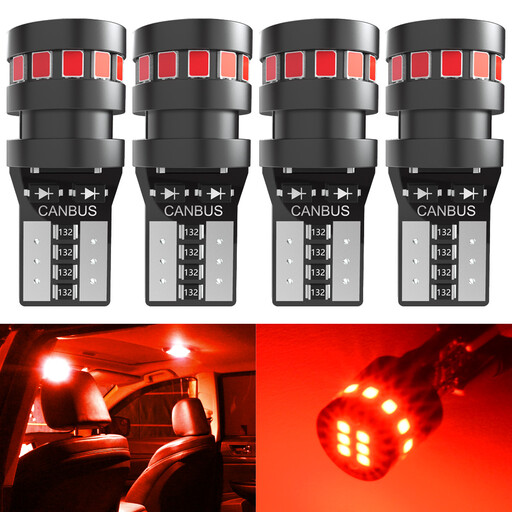
Why This Fits Their Persona: A practical starting point for drivers refreshing interior, courtesy, door or number plate lighting without changing headlamp assemblies.
The T10/W5W/501/194 family is clearly listed, helping buyers compare it with the removed bulb. Canbus design may help reduce dashboard warnings on many vehicles, although checks remain necessary.
12–24V operation, aluminium construction, 300LM per bulb and a four-pack format.
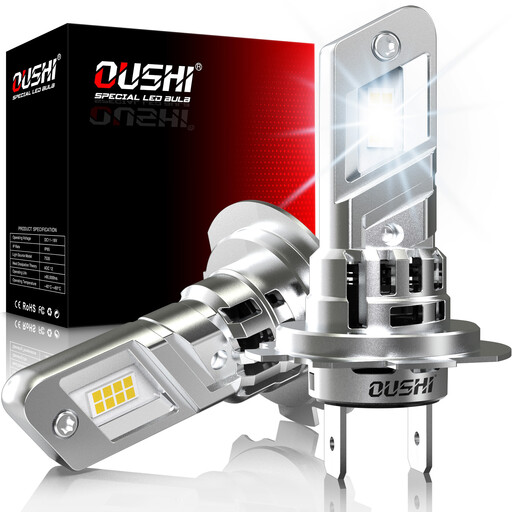
Why This Fits Their Persona: Suits motorists who want a compact H7 replacement with a cool-white appearance and a direct-fitting design.
Its stated 1:1 mini format addresses rear-clearance concerns, while the product information notes that some sensitive vehicles may still need a decoder.
6500K colour temperature, 30,000LM stated pair output, built-in turbo fan and plug-and-play installation.
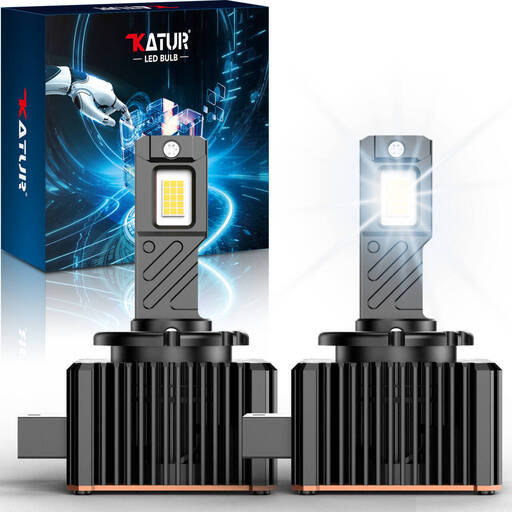
Why This Fits Their Persona: Intended for drivers whose vehicles already use D3S or D3R HID headlamp assemblies and who need a direct replacement for frequent night driving.
The listing explicitly states that it is for HID assemblies only, helping prevent the common mistake of fitting a D-series bulb to a halogen housing.
Built-in 16,000RPM fan, aluminium body, 1:1 design and a stated 60,000-hour service-life figure.
We have compiled a complete, real-time list of products that fully satisfy these strict selection criteria and UK safety regulations.
LEDs commonly use less electrical power for a comparable lighting application, but the actual saving depends on wattage, driving hours and vehicle design. Purchase price, installation and replacement availability should also be included in the calculation.
Not automatically. The socket may accept the bulb while the housing lacks sufficient rear clearance, or the vehicle may report a bulb fault. Check the car’s year, lamp position, housing type and onboard monitoring system before buying.
Listings may state service-life figures such as 50,000 or 60,000 hours, but real service life depends on heat, vibration, voltage, moisture and daily use. Good airflow, a sealed housing and correct installation can help the bulbs operate within their intended conditions.