
24/7 Customer Support

Free returns

Same-day & Next-day Delivery

Quality Guaranteed

Unlock Your Welcome Offers: FREE Delivery | Up to 80% OFF | Free 30-day JoyPlus trial
Download the APP
Upgrading your car’s lighting from dim, yellowing halogens to crisp, bright LED car bulbs can feel like a night-and-day difference. It enhances visibility, improves safety and gives your vehicle a modern aesthetic. However, the market is flooded with options and many drivers find themselves caught in common purchasing traps, leading to wasted money and frustrating installation problems.
As a Joybuy Product Recommendation Officer, my role is to help you navigate this landscape. This guide cuts through the marketing jargon to focus on what truly matters, ensuring your car light bulbs upgrade is a success from the start.
Before you add any bulbs to your basket, be aware of these frequent issues that catch out UK buyers:
To make a smart choice, focus on these three non-negotiable factors.
Before anything else, you must identify the correct fitment code for your vehicle. This code (e.g., H7, H4, H11, W5W T10) defines the shape and size of the bulb's base, ensuring it locks into the headlight or light housing correctly.
You can find the correct code in your vehicle's owner's manual or by inspecting the base of the old bulb you are replacing.
If your car is from the last 15-20 years, selecting a CANbus error free bulb is essential. These bulbs have built-in resistors or circuitry to communicate correctly with your car's computer, preventing false error messages. Be aware that some premium German makes (like BMW, Mercedes-Benz and Volkswagen) have highly sensitive systems and may still require an additional, external CANbus decoder even with "error free" bulbs. Always check the product description for compatibility notes.
Colour temperature is measured in Kelvin (K). Standard halogen bulbs have a warm, yellowish glow around 3200K. For a modern, sharp look, most drivers opt for 6000K white car bulbs, which produce a crisp, daylight-like illumination.
More important than colour, however, is the beam pattern. A good LED bulb should replicate the focused beam of the original halogen, directing light onto the road without scattering it upwards into the eyes of other drivers. A sharp cut-off line on dipped beam is a key indicator of a well-designed bulb and is critical for passing an MOT.
To simplify your choice, we've matched several products to common UK driver profiles, highlighting how they address the pitfalls mentioned above.
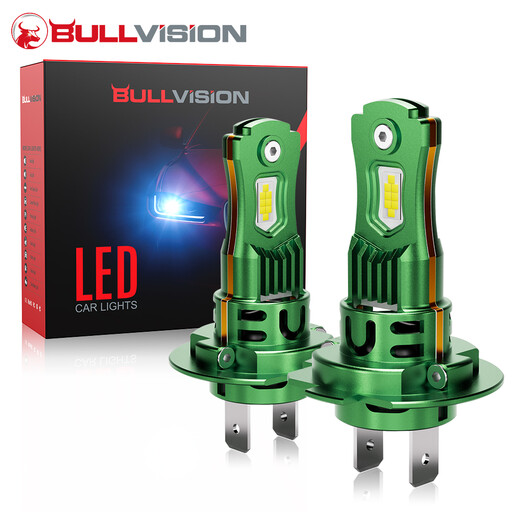
Why This Fits Their Persona: Ideal for the hands-on car owner who wants a straightforward, cost-effective upgrade. The focus on a true plug-and-play design means no complex wiring or modifications are needed for a quick weekend project.
Its 1:1 mini size is designed to directly replicate the dimensions of a standard halogen H7 bulb, addressing the "universal fit" pitfall by ensuring it fits into the original housing without needing adapters or leaving the dust cover off.
Features a built-in CANbus-ready driver to minimise error warnings on most vehicles. The integrated cooling fan helps maintain performance and longevity.
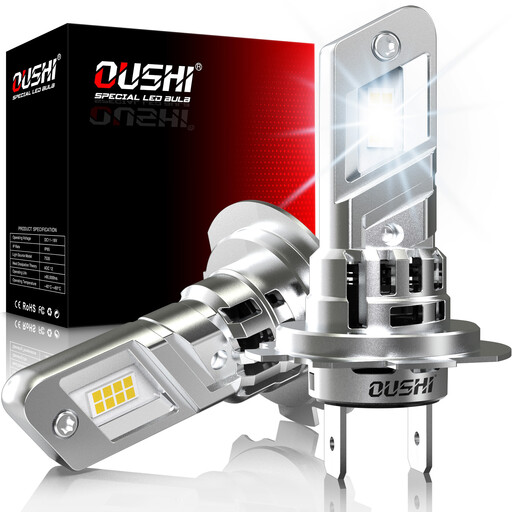
Why This Fits Their Persona: For the driver of a modern, often European, car who prioritises maximum brightness and system compatibility. They want a high-output solution that integrates seamlessly with their vehicle's advanced electronics.
This bulb incorporates an enhanced CANbus system specifically designed for higher compatibility with European vehicles, directly tackling the error code pitfall on sensitive models. The high-speed turbo fan addresses the heat trap, crucial for sustaining its high lumen output.
Offers a significant increase in brightness with a 6500K xenon white colour for superior visibility. Its 1:1 design maintains the plug-and-play promise for a straightforward installation.
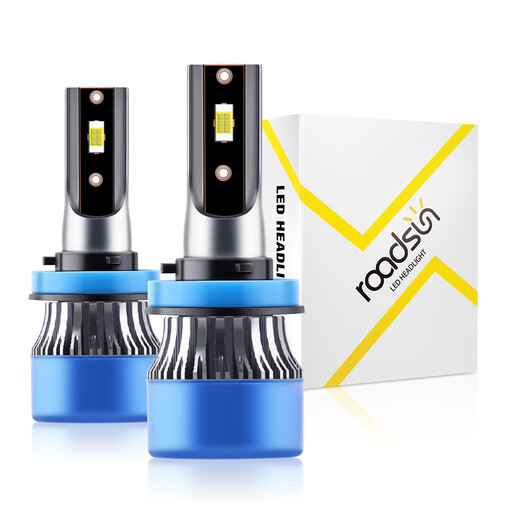
Why This Fits Their Persona: Perfect for drivers who frequently travel on unlit rural roads or face challenging British weather like fog, rain and snow. Their priority is powerful, penetrating light from their fog lamps for maximum forward visibility.
This bulb is marketed specifically as a fog light, designed to provide intense, focused light that cuts through poor conditions, avoiding the trap of a general-purpose bulb with a scattered, ineffective beam pattern for fog.
The high brightness level and 6000K cool white colour improve recognition of road signs and hazards in bad weather. Its durable aluminium construction and wide operating temperature range ensure reliability.
We have compiled a complete, real-time list of products that fully satisfy these strict selection criteria and UK safety regulations.
This is a common and important question. While it is not illegal to sell or fit LED bulbs, they must comply with road vehicle lighting regulations to be road legal. For an MOT test, the key criteria are that the bulb must produce a beam pattern with a clear cut-off (for dipped beams) that doesn't dazzle other road users and the colour must be predominantly white or yellow. After installing new bulbs, it is advisable to check the beam pattern against a garage door or wall to ensure it is correct.
Advertised lifespans of 50,000 hours or more are theoretical maximums achieved in ideal lab conditions. In reality, a bulb's lifespan is determined almost entirely by its heat management. Bulbs with robust cooling systems—either a high-speed fan, a large passive heat sink or both—will prevent the LED chips from overheating and will last significantly longer than those with poor thermal design.
For most modern cars, a bulb with a built-in "CANbus error free" design is sufficient. However, as mentioned, certain models from brands like BMW, Audi, Volkswagen and Mercedes-Benz have particularly sensitive monitoring systems. For these vehicles, you may need to purchase an additional, external CANbus decoder to fully eliminate dashboard warnings or flickering, even if the bulb itself is advertised as compatible. Check the product details for any specific disclaimers about these makes.