
24/7 Customer Support

Free returns

Same-day & Next-day Delivery

Quality Guaranteed

Unlock Your Welcome Offers: FREE Delivery | Up to 80% OFF | Free 30-day JoyPlus trial
Download the APP
Replacing a tired halogen or HID bulb can improve the appearance of your vehicle, but choosing LED car bulbs is not simply a case of selecting the highest lumen figure. Compatibility, beam control, heat management and road-use requirements all affect whether an upgrade is suitable.
Many motorists buy a bulb that fits the socket but does not work correctly inside the headlamp housing. Others choose a very bright product with poor beam alignment, leading to glare, dashboard warnings or an installation that cannot be completed under the original dust cover.
This guide explains what to check before buying LED headlight bulbs, interior bulbs or reversing lights, followed by product recommendations matched to different driving needs.
A bulb code such as H7, H11, H1, H4, 9005/HB3 or HIR2/9012 identifies the fitting, but it does not confirm that the LED replacement is suitable for every vehicle using that code.
The original assembly may be designed for halogen, HID or factory LED lighting. For example, D1S/D1R LED bulbs and D4S LED bulbs are intended for vehicles with HID headlamp assemblies, not halogen housings. Always compare the marking on the old bulb with the vehicle handbook and check the available clearance behind the headlamp.
Listings may quote very high figures such as 20,000 or 30,000 lumens per pair. These numbers can be useful for comparison, but they do not independently confirm how much usable light reaches the road. Beam focus, chip position, reflector design and headlamp alignment matter just as much.
A poorly positioned LED can create dark patches or scatter light towards oncoming traffic. Look for a 1:1 bulb design, narrow chip placement and clear installation instructions rather than relying on brightness claims alone.
Canbus error-free bulbs are designed to reduce warning messages, flickering or bulb-out errors, but vehicle electrical systems vary. Some sensitive cars may still need a decoder, resistor or additional adapter. A resistor can also create heat, so it must be installed safely and away from heat-sensitive components.
Confirm the exact code before ordering. Common options include:
Do not force a similar-looking fitting into the socket. Check the retaining tabs, connector shape, voltage and bulb length.
Many cool-white products are rated at 6000K or 6500K. These give a noticeably whiter appearance than conventional warm halogen lighting, but colour temperature is not the same as brightness. A controlled beam is more important for useful forward illumination and reducing glare.
For headlamps, check that the LED emitter position resembles the original filament or discharge source. After installation, inspect the beam against a wall and have the headlamp aim checked if the pattern appears uneven.
LEDs convert less energy into light than halogen bulbs, but they still produce heat around the LED chips and driver. Products may use an aluminium body, heat sink, copper components, a cooling fan or a fanless design.
Fan-cooled bulbs can offer active heat removal, but the fan needs space and may produce a small operating noise. Fanless bulbs have fewer moving parts and may suit compact housings, provided the heat sink has sufficient clearance. Never refit a dust cover if the bulb or fan is pressing against it.
A brighter-looking bulb is not automatically road legal in every headlamp. Headlamp approval, beam pattern, glare and the vehicle’s original lighting system all matter. Check the product documentation, your vehicle handbook and current UK requirements before fitting LED replacements to exterior lamps. After installation, confirm that the beam remains correctly aimed and that there is no glare to other road users. Inform your insurer where required.
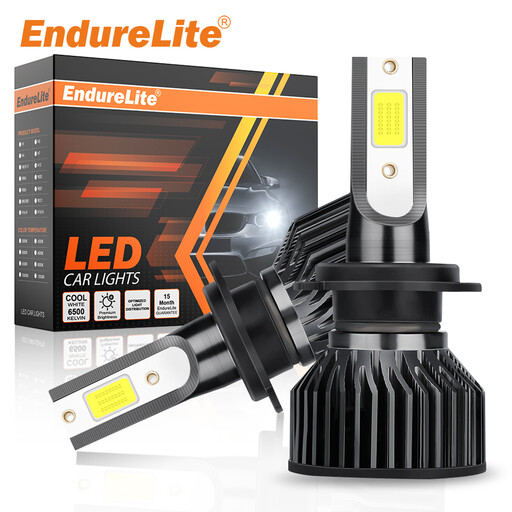
Why This Fits Their Persona: A multi-fit pack suits DIY motorists who have confirmed one of these common socket types and want a straightforward replacement with a 6000K white finish.
The listing specifies a 1:1 beam approach, built-in driver and CANbus-ready design, helping address fitment and warning-light concerns.
Pack of two, IP68 waterproof construction and an integrated cooling fan rated at 10,000 RPM.
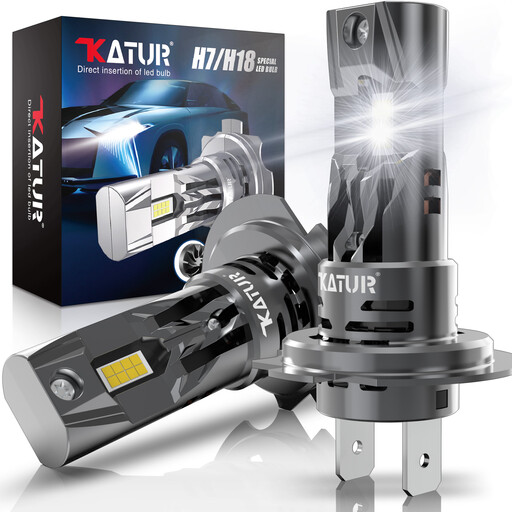
Why This Fits Their Persona: This is suited to drivers seeking a compact H7 upgrade with integrated heat management and a white 6000K appearance.
Its 1:1 mini format is intended to reduce clearance problems, while the listing identifies a CANbus-ready external driver.
Aviation aluminium housing, 16,000 RPM turbo fan and plug-and-play installation.
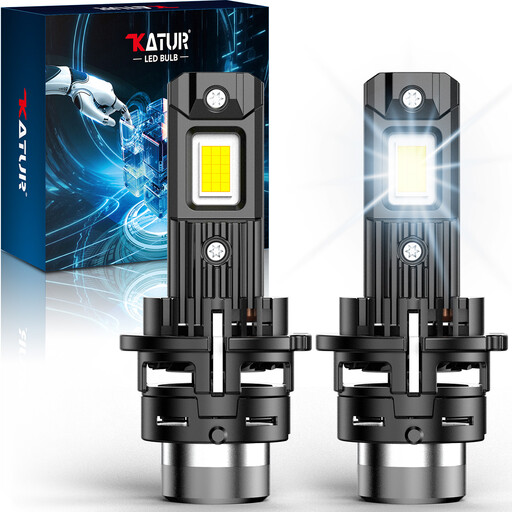
Why This Fits Their Persona: Designed for motorists replacing HID bulbs in a compatible D4S headlamp assembly, particularly those who drive regularly after dark.
The listing clearly states that it is for HID assemblies only, helping prevent an unsuitable halogen-to-HID fitting mismatch.
6500K white output, aluminium construction, built-in 16,000 RPM cooling fan and integrated intelligent driver.
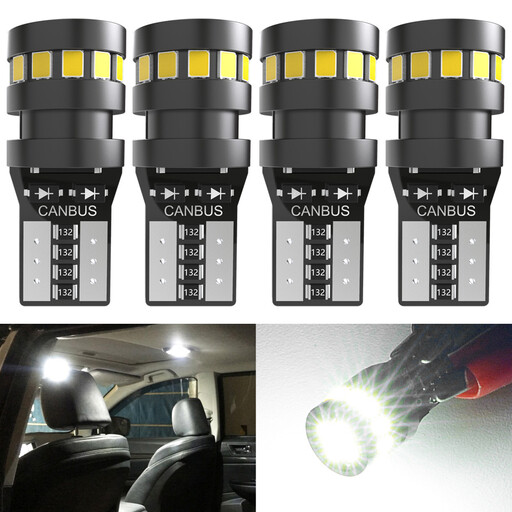
Why This Fits Their Persona: A four-pack is practical for upgrading interior, number plate or parking lights without buying separate bulbs for each position.
The product identifies T10, W5W, 501, 194 and related replacement codes, while its CANbus-ready design targets common bulb-warning issues.
12V operation, 6500K white colour, aluminium heat-dissipating body and 300-lumen-per-bulb specification.
We have compiled a complete, real-time list of products that fully satisfy these strict selection criteria and UK safety regulations.
Legality depends on the bulb, headlamp assembly, vehicle and applicable approval requirements. A bulb that physically fits may still produce an unsuitable beam or fail to meet exterior-lighting requirements. Check the documentation and current UK rules, then verify beam alignment after installation.
Product listings commonly quote operating figures such as 50,000 or 60,000 hours, but actual service life depends on heat, vibration, voltage stability, moisture and usage. A suitable cooling system and correctly sealed headlamp housing are important.
LEDs can provide a different balance of light output and electrical consumption, but wattage varies significantly between products. Check the stated power, vehicle voltage and compatibility rather than assuming every LED replacement draws less current.