
24/7 Customer Support

Free returns

Same-day & Next-day Delivery

Quality Guaranteed

Unlock Your Welcome Offers: FREE Delivery | Up to 80% OFF | Free 30-day JoyPlus trial
Download the APP
Replacing tired halogen or HID lighting can give your car a cleaner white appearance and may improve how clearly road signs, bends and hazards appear at night. However, buying LED car headlight bulbs and assemblies is not simply a matter of choosing the highest lumen number.
The wrong fitting can fail to install, create a poor beam pattern or trigger dashboard warnings. Complete headlight assemblies bring further questions about wiring, coding and beam alignment. This guide explains what to check before ordering and highlights suitable options for different UK motorists.
Large figures such as 20,000 or 30,000 lumens are commonly shown on LED listings. These figures may describe a pair of bulbs, theoretical output or maximum electrical performance rather than the light delivered on the road. A well-positioned LED chip and a controlled beam pattern are more useful than brightness alone.
A bulb that scatters light into the eyes of oncoming drivers can be uncomfortable and may create an MOT concern, even if it appears bright from the driver’s seat.
H1, H4, H7, H8, H9, H11, H15, HB3/9005 and HIR2/9012 are different fittings. They are not interchangeable simply because they look similar. HID systems use types such as D1S, D1R, D3S, D3R and D4S, which require a compatible projector and electrical system.
Check the vehicle handbook, the marking on the old bulb and the manufacturer’s fitment information. For a complete unit, confirm the exact body style, headlight type and generation.
Plug and play usually refers to the physical connection. Some vehicles still need a CANbus decoder, resistor, load adaptor or coding to prevent flickering and error messages. Assemblies may also require bumper removal, wiring changes or module transfer.
After installation, headlights should be correctly aligned. Poorly aimed lamps can reduce your own view and dazzle other road users. A garage or lighting installer can check the beam using suitable equipment.
The replacement must match both the socket and the original lighting function. Some bulbs are designed for high beam, low beam or combined applications. For example:
The LED emitters should sit in a position similar to the original filament or discharge arc. This helps the reflector or projector create a more controlled beam.
LEDs convert some electrical energy into heat. Look for an aluminium body, heat sink, copper heat-transfer components or a fan, but also check whether the rear dust cover has enough clearance.
Fan-cooled products can offer active heat removal but may produce some operating noise and contain a moving component. Fanless designs are quieter and simpler, although the housing still needs adequate airflow. Waterproof ratings such as IP65 or IP68 describe resistance to dust and water under stated test conditions; they do not guarantee suitability for every headlamp housing.
Many motorists prefer 6000K white headlight bulbs for a modern appearance. Some products use 6500K, which can look cooler or slightly bluer. Colour temperature does not by itself indicate beam distance or useful illumination.
For vehicles with bulb monitoring, choose CANbus-compatible LED bulbs where appropriate. “CANbus ready” is not a universal guarantee, so check whether your particular model requires an additional decoder. Look for symptoms such as warning messages, rapid indicator flashing, flickering or lights that switch off after starting.
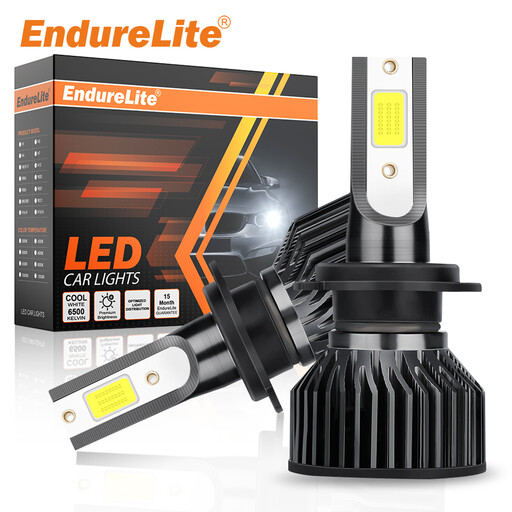
Why This Fits Their Persona: A practical option for motorists who have confirmed one of the listed halogen fittings and want a direct replacement with 6000K white light.
The listing identifies several socket types, while its 1:1 design and beam-pattern information help you assess fit beyond the headline lumen figure. Confirm the exact bulb before ordering.
6000K colour temperature, aluminium construction, built-in fan and IP68 water-resistance rating listed by the seller.
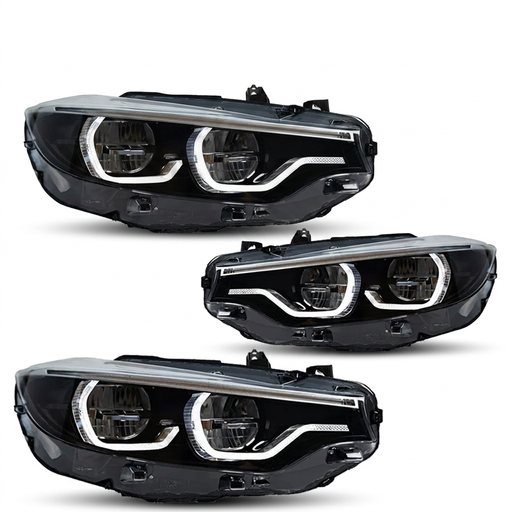
Why This Fits Their Persona: Suitable for an owner seeking a coordinated appearance with integrated projector lighting, DRL and dynamic turn signals rather than a bulb-only change.
It is a vehicle-specific assembly rather than a universal bulb. Check the exact BMW chassis and factory equipment, then confirm connector and coding requirements before purchase.
Full LED projector design, DRL function and dynamic turn signals in a direct-replacement assembly format.
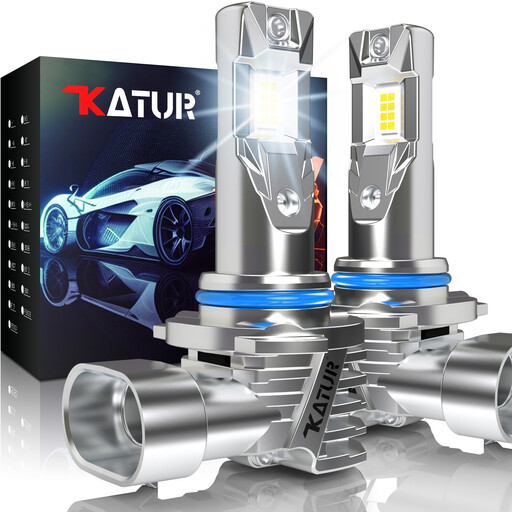
Why This Fits Their Persona: A targeted choice for drivers whose vehicle specifically uses HIR2/9012 bulbs, including selected Chevrolet, Ford, Chrysler and Toyota applications.
The listing states that it is not for H4, H7 or H11 sockets. Its fanless format can also help where rear housing space or noise is a concern, subject to clearance.
Fanless mini-size construction, 6000K white light and an integrated design without an external driver.
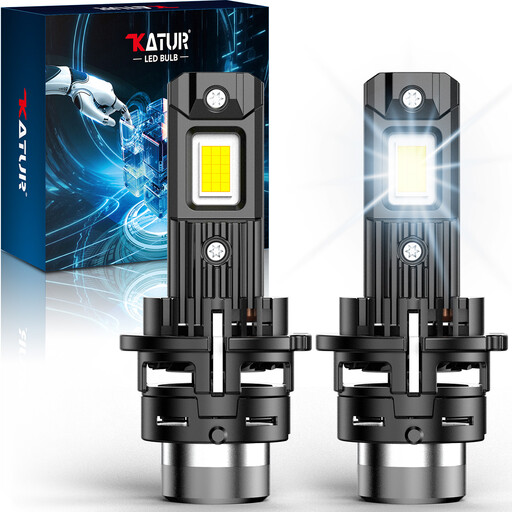
Why This Fits Their Persona: Intended for motorists replacing compatible D4S HID bulbs while retaining the existing xenon headlight assembly.
The product information clearly identifies it as an HID replacement, not a substitute for a halogen or factory LED assembly. Verify the D4S marking and electrical compatibility first.
1:1 plug-and-play design, 6500K white light and built-in fan cooling listed for the D4S fitting.
We have compiled a complete, real-time list of products that fully satisfy these strict selection criteria and UK safety regulations.
Before fitting, switch off the vehicle, allow hot components to cool and follow the product instructions. Inspect the dust cover, connector polarity and heat-sink clearance. Keep wiring away from fans and moving parts.
For a full LED headlight assembly, professional installation is sensible because bumper removal, module transfer and coding may be required. Once fitted:
Approval and legality can depend on the vehicle, lamp unit and conversion type. Keep the original bulbs or assemblies until the replacement has been confirmed as suitable.
LEDs can use less electrical power for a comparable lighting function, but the actual difference depends on the bulb, vehicle and driving time. Purchase price, cooling components and any required CANbus accessories should be included in the total cost.
Listings may state service-life figures such as 50,000 or 60,000 hours. These are product specifications rather than a guarantee of real-world service life. Heat, vibration, moisture, voltage stability and installation quality all affect longevity.
A simple bulb swap may work without coding, but some vehicles monitor bulb load or require configuration changes. Complete projector headlights and matrix-style assemblies are more likely to need coding or module setup. Check the specific vehicle instructions before purchase.