
24/7 Customer Support

Free returns

Same-day & Next-day Delivery

Quality Guaranteed

Unlock Your Welcome Offers: FREE Delivery | Up to 80% OFF | Free 30-day JoyPlus trial
Download the APP
Replacing dim or ageing headlights can improve visibility, but choosing LED car headlight bulbs is not simply a matter of selecting the highest lumen figure. The wrong socket, poor beam alignment or incompatible electronics can leave you with warning messages, scattered light or an installation that does not fit behind the dust cover.
This guide explains the practical checks UK drivers should make before buying, followed by our top recommendations for different vehicle and usage profiles.
Listings may quote figures such as 20,000LM or 30,000LM per pair, but manufacturers do not always describe output in the same way. A higher number does not automatically mean a better beam on the road. Beam focus, chip placement and reflector compatibility are equally important.
Look for a bulb designed to imitate the position of the original filament or HID light source. A poorly positioned LED can create dark areas close to the vehicle or excessive glare for oncoming drivers.
A plug-and-play LED headlight normally means the bulb connects to the factory socket without cutting wires. It does not guarantee that it will fit every housing or work without an error message.
Check:
D1S, D1R, D3S, D3R and D4S LED bulbs are intended for compatible HID assemblies. They are not universal replacements for halogen or factory LED units.
6000K white headlight bulbs and 6500K xenon white bulbs produce a cool white appearance, but colour temperature is not a direct measure of useful road illumination. Very cool light may also appear harsher in rain, mist or dirty conditions.
After installation, check the beam pattern on a level surface and have the lamps aligned if necessary. UK roadworthiness requirements focus on correct operation, alignment and preventing dazzle, not simply on how white the light looks.
The bulb code printed on the old unit, vehicle handbook or fitment database should be your starting point. Common options include:
Do not rely on a similar-looking connector. H7 and H11 bulbs, for example, are not interchangeable simply because both may be used in front lighting.
LED chips produce heat at the rear of the bulb. Fan-cooled units can remove heat quickly but require room behind the housing and may introduce a small operating noise. Fanless models use an aluminium heat sink and need adequate clearance for passive cooling.
Aluminium construction, copper heat-transfer components and waterproof ratings are useful specification details, but a claimed lifespan such as 50,000 or 60,000 hours is a stated product rating rather than a guarantee of service life in every UK driving condition.
Modern vehicles monitor bulb current and may show a dashboard warning when an LED retrofit draws less power than the original bulb. CANbus-ready car bulbs include an integrated driver or decoding system intended to reduce flickering and error messages, although sensitive vehicles may still need an additional decoder.
Before installation, switch off the lights, disconnect power where appropriate and allow old bulbs to cool. Avoid touching the light-emitting area, secure the bulb correctly and refit the dust cover to help protect the housing from moisture.
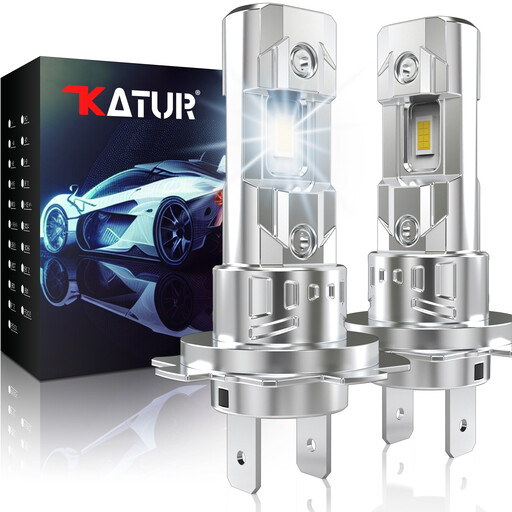
Why This Fits Their Persona: A compact option for drivers replacing compatible H7 halogen bulbs without wanting an external driver or bulky wiring.
Its fanless, mini-size design avoids fan failure and may make dust-cover clearance simpler, subject to the vehicle housing.
6000K white output, 1:1 mini halogen form and no external driver are listed features.
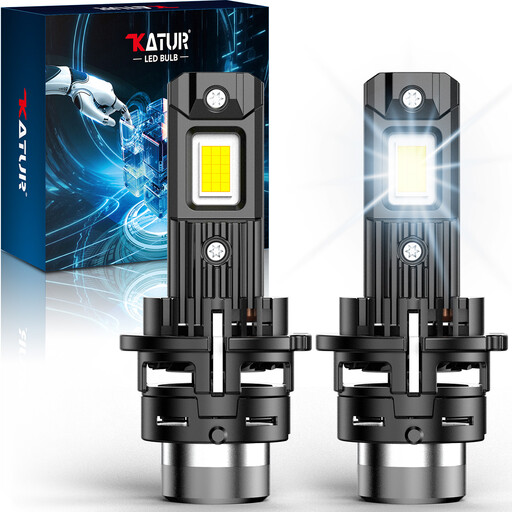
Why This Fits Their Persona: Suitable for owners of compatible HID headlight assemblies seeking a direct replacement with a cool white appearance.
The listing clearly specifies replacement for HID assemblies only, helping avoid the common halogen-to-HID fitment mistake.
The product lists aluminium construction, a cooling fan, 1:1 installation and an intelligent CANbus driver.
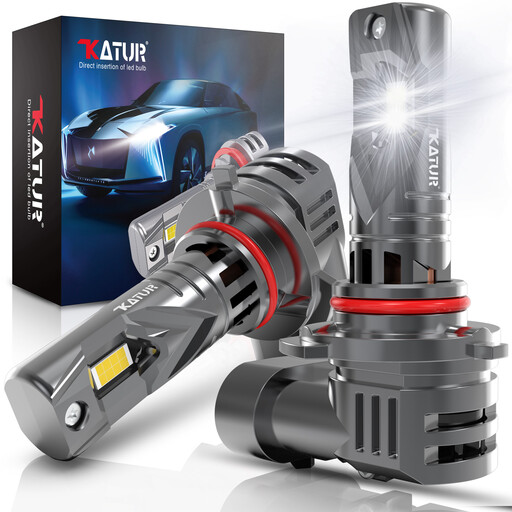
Why This Fits Their Persona: A practical match for drivers who regularly use compatible HB3/9005 lighting and want active heat management for frequent night driving.
The 1:1 mini format and external CANbus driver are specified, making fitment and electronic compatibility easier to check before purchase.
The listing includes a 16,000RPM fan, aviation aluminium body, IP65 design and 6000K output.
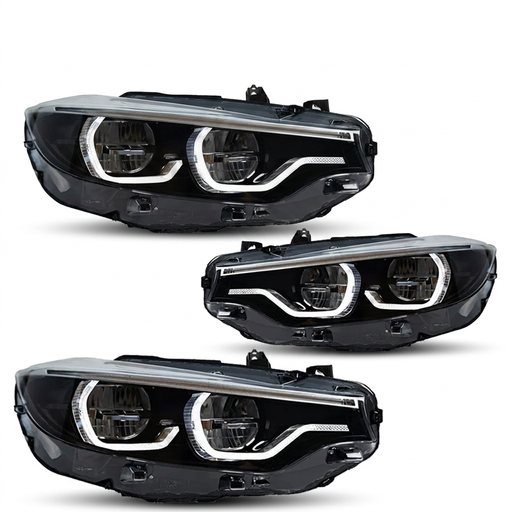
Why This Fits Their Persona: Designed for compatible BMW owners who want a complete lighting change rather than a replacement bulb.
It is listed as a vehicle-specific full assembly, reducing reliance on generic bulb compatibility claims. Confirm the exact trim and connector before ordering.
The assembly includes LED projectors, DRL functions and dynamic turn signals, with direct-replacement installation described.
We have compiled a complete, real-time list of products that fully satisfy these strict selection criteria and UK safety regulations.
Legality depends on the vehicle, lamp approval, bulb type and installation. A retrofit must not create dazzle or an incorrect beam pattern, and the vehicle must continue to meet applicable roadworthiness requirements. Check current UK guidance, the vehicle handbook and the product documentation before fitting.
LEDs can have a lower stated wattage than halogen bulbs, but the saving depends on the specific product and vehicle system. CANbus decoders may draw additional current. Compare the complete installation rather than the bulb label alone.
Listings commonly state service-life figures from 50,000 to 60,000 hours. Actual longevity can be affected by heat, vibration, moisture, voltage stability, driving duration and available ventilation. A suitable cooling design and correctly refitted dust cover are important for dependable use.