
24/7 Customer Support

Free returns

Same-day & Next-day Delivery

Quality Guaranteed

Unlock Your Welcome Offers: FREE Delivery | Up to 80% OFF | Free 30-day JoyPlus trial
Download the APP
Replacing factory-fitted lighting can improve the appearance of a vehicle and may provide a whiter light output, but choosing LED car headlight bulbs is not simply a matter of selecting the highest lumen figure. Socket type, beam pattern, heat management, vehicle electronics and UK road-use requirements all matter.
Many buyers waste money through three common traps:
Start with the vehicle handbook, the existing bulb marking or a reliable parts catalogue. Common halogen replacement options include H1 LED bulbs, H4 LED bulbs, H7 LED bulbs and H11 LED bulbs. Other fitments include HB3 9005 LED bulbs, HB4 9006 LED bulbs and HIR2 9012 LED bulbs.
An H4 bulb combines main and dipped beam in one fitting, whereas H1 and H7 bulbs generally serve a single beam function, depending on the vehicle. An HB4/9006 bulb may be used for dipped beam or fog lights. Do not rely on a general “99% compatibility” statement without checking your exact car, model year, lamp position and headlight assembly.
Vehicles originally fitted with HID may use D1S, D2S, D3S or D4S bulbs. These are different from halogen sockets. A D-series LED replacement should only be considered where the product specifically states that it replaces the original HID bulb and is suitable for that housing.
Manufacturers often advertise very high output figures, but those figures may describe a pair of bulbs or a theoretical maximum. Compare the following instead:
After installation, inspect the beam pattern on a level surface and adjust the lamps if necessary. A poorly aligned bulb can create glare for other road users even when the bulb itself operates correctly.
LED chips create heat at the rear of the bulb. Aluminium housings, copper components and built-in fans can help manage operating temperature, but the fan also needs clearance and may produce a small amount of noise. Confirm that the dust cover can be refitted and that the rear of the bulb will not foul surrounding components.
A CANbus error-free bulb may reduce warning messages or flickering, but no compatibility claim should be treated as universal. Some sensitive European vehicles may require an additional decoder, which may not be included.
For public-road use in the UK, check the product’s approval status and your vehicle’s lighting requirements before fitting. Road Vehicles Lighting Regulations, applicable approval markings and the MOT beam and aim requirements are relevant considerations. A bulb that fits physically is not automatically suitable for every road-use application. LED fog light bulbs should also be selected for the correct socket and lamp function rather than brightness alone.
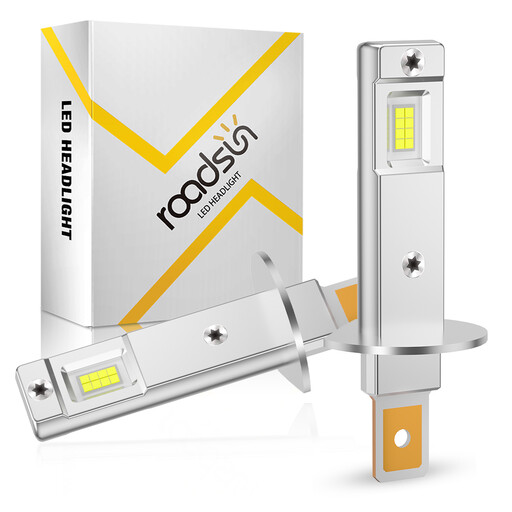
Why This Fits Their Persona: A compact option for drivers replacing halogen H1 bulbs who want a straightforward DIY installation for a car, SUV or motorcycle.
Its 1:1 mini design is listed for direct H1 replacement, while the product information identifies possible CANbus decoder needs for some vehicles.
6500K white output, built-in cooling and a stated 50,000-hour service-life rating.

Why This Fits Their Persona: Suits owners of H7-equipped vehicles looking for a compact replacement with integrated cooling and CANbus-oriented electronics.
The listing specifies a 1:1 mini format and no external driver, but still advises checking sensitive vehicle compatibility.
H7 fitment, 6500K colour temperature, turbo fan cooling and a stated 60,000-hour lifespan.
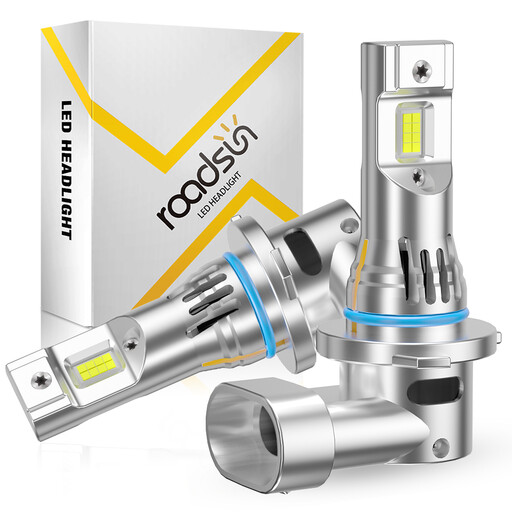
Why This Fits Their Persona: Designed for drivers who specifically need HB4/9006 fog light replacements for frequent wet-weather, rural or low-visibility driving.
The listing identifies the exact HB4/9006 socket and includes a built-in turbo fan, rather than relying on brightness claims alone.
6500K white light, fan-assisted cooling and a stated 50,000-hour lifespan.
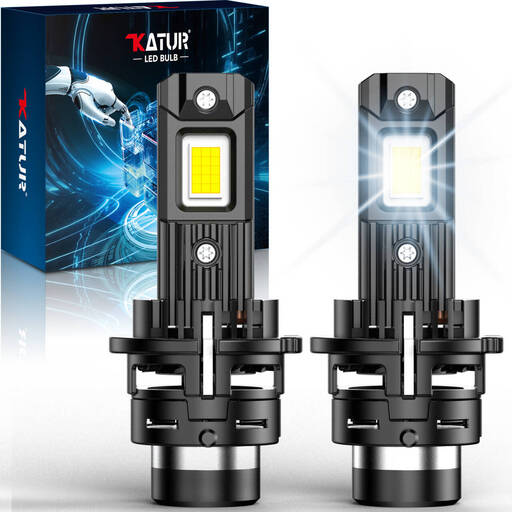
Why This Fits Their Persona: Intended for vehicles already using D2S HID headlight assemblies, rather than owners converting a halogen housing.
The product information clearly states that it is a replacement for HID assemblies only, helping avoid an incorrect halogen-to-D2S purchase.
D2S-specific fitment, 6500K white output, fan cooling and a stated 60,000-hour lifespan.
We have compiled a complete, real-time list of products that fully satisfy these strict selection criteria and UK safety regulations.
Legality depends on the bulb, vehicle, lamp assembly and intended road use. Check approval markings, product documentation and current UK requirements before fitting. A successful installation does not by itself confirm road legality. The beam must also be correctly aimed and must not dazzle other drivers.
Not always. Many plug-and-play LED headlights include an integrated driver designed to work with standard vehicle electronics, but some cars may still report a bulb failure or flicker. If the product listing identifies decoder requirements for sensitive models, treat that as a compatibility check rather than an optional extra.
LEDs can use less power than some halogen alternatives, but actual consumption varies by bulb and vehicle. The main practical advantage is often the advertised service-life rating, which may reduce replacement frequency. Cooling, voltage stability and operating conditions affect how long a bulb performs reliably, so treat lifespan figures as product specifications rather than a guarantee.