
24/7 Customer Support

Free returns

Same-day & Next-day Delivery

Quality Guaranteed

Unlock Your Welcome Offers: FREE Delivery | Up to 80% OFF | Free 30-day JoyPlus trial
Download the APP
Replacing halogen lighting can improve the appearance and perceived brightness of a vehicle, but choosing LED car headlight bulbs is not simply a matter of selecting the highest lumen figure. The wrong fitting, poor beam alignment or incompatible electronics can leave you with flickering lights, dashboard warnings or excessive glare.
This guide explains the specifications worth checking before you buy, common marketing pitfalls and suitable options for different driving needs.
A bulb described as “universal” is not physically universal. H1 LED bulbs, H4 LED bulbs, H7 LED bulbs, H8 H9 H11 LED bulbs, HIR2 9012 LED bulbs, 9005 HB3 LED bulbs and 9006 HB4 LED bulbs all use different bases and connectors.
Check the marking on your existing bulb or consult the vehicle handbook before ordering. The same car model can also use different fittings depending on trim level, headlamp assembly and production specification.
Large lumen figures do not automatically produce a better road pattern. LED chips must sit in a position similar to the original halogen filament. If they are poorly aligned, light can scatter inside the reflector and create dark areas or glare for oncoming drivers.
Look for 1:1 halogen replacement bulbs, adjustable collars and product information referring to beam control. After fitting, inspect the beam against a wall and have the headlamps aligned if necessary.
LEDs produce heat around the chip and require a suitable heat sink, fan or fanless cooling design. A fan-cooled bulb can dissipate heat quickly, but it adds a moving component and may need sufficient space behind the headlamp cover. Fanless designs are quieter and simpler, but the heat sink must fit inside the housing.
Modern vehicles may also detect a lower electrical load and display an error message. CANbus-ready LED bulbs can reduce this risk, but compatibility is not guaranteed for every vehicle. Some sensitive systems may still require a decoder or resistor module.
Confirm whether the bulb is intended for a headlamp, driving light or LED fog light bulbs application. Common examples include:
A plug and play LED headlight bulb only offers straightforward installation when the base, connector, physical dimensions and vehicle electronics are compatible.
Many products use 6000K cool white headlights, while others specify 6500K. This produces a visibly white or slightly blue-white appearance. It may look sharper than warm halogen light, but colour temperature is not the same as brightness or beam quality.
For regular UK driving, prioritise a controlled beam, correct alignment and reliable operation in rain and mist. A very blue appearance may offer limited practical value in poor weather and could be unsuitable for some road-use requirements.
Aluminium housings help transfer heat away from the LED chips. Fan-cooled LED bulbs can use active airflow, while fanless bulbs rely on a passive heat sink. Check the available clearance behind the dust cover and consider whether fan noise or moving parts matter to you.
An IP67 or IP68 rating indicates resistance to dust and water under specified test conditions. It does not mean a bulb can be installed incorrectly or left exposed to prolonged immersion. Also check the stated operating voltage, pack quantity and whether a separate driver or decoder is included.
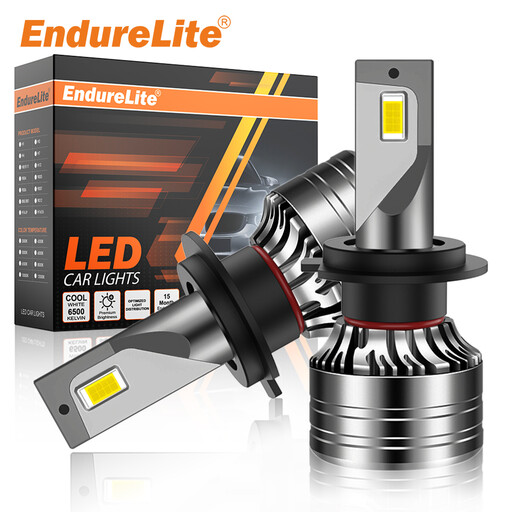
Why This Fits Their Persona: A practical starting point for drivers whose vehicle is confirmed to use H7 bulbs and who want a direct replacement format for everyday commuting.
It specifies an H7 fitting, 1:1 sizing, a built-in driver and CANbus-ready operation rather than relying only on a generic universal-fit description.
6000K cool white output, CSP chips, aluminium construction, IP68 protection and a built-in fan are listed specifications.
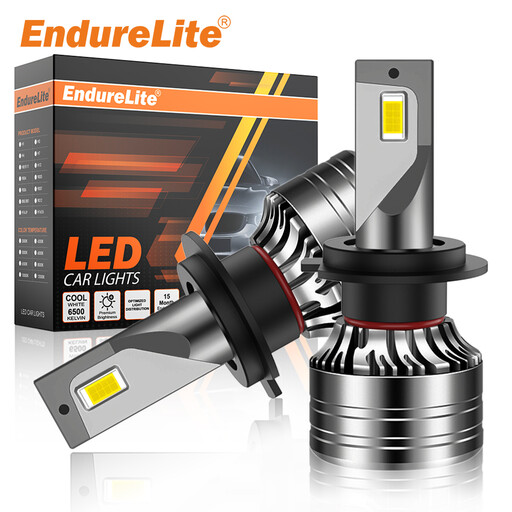
Why This Fits Their Persona: Suited to owners who have confirmed a 9012/HIR2 socket and want a compact replacement with active cooling and a stated beam-pattern focus.
The product information identifies the HIR2/9012 model, 1:1 halogen size, non-polarity design and CANbus-ready driver.
The listing specifies a 10,000 RPM fan, IP68 waterproof construction, 6000K colour and a stated 50,000-hour operating life.
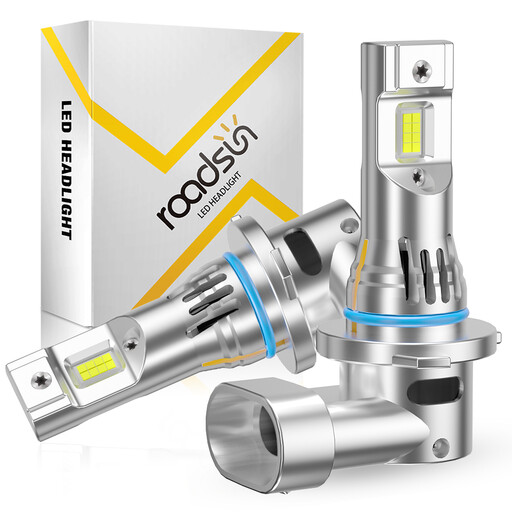
Why This Fits Their Persona: A focused option for drivers, SUV owners and powersport users with 9006/HB4 fog-light sockets who regularly drive in wet or demanding conditions.
It clearly identifies the 9006/HB4 fitting and provides cooling, ingress protection and 1:1 replacement details rather than only quoting brightness.
The listing specifies a turbo fan, CSP chips, 6500K white light, IP68 protection and a stated operating life of up to 50,000 hours.
We have compiled a complete, real-time list of products that fully satisfy these strict selection criteria and UK safety regulations.
Before installation, switch off the ignition and lights, allow the original bulb to cool and wear gloves. Avoid touching the LED chip or optical surface. Confirm that the dust cover can close properly and that the connector is secure.
After fitting, check both sides for flickering, dashboard warnings and correct high- or low-beam operation. Park on level ground and inspect the beam pattern. If the beam scatters or dazzles, refit or realign the bulb and seek professional assistance if needed.
LED retrofits may not be suitable for every headlamp housing or public-road application. Check the vehicle handbook, the product documentation and current UK requirements, including MOT implications, before use.
They may use less electrical power for a comparable lighting application, but actual consumption depends on the bulb’s wattage and vehicle system. Check the stated wattage rather than assuming every LED bulb is economical.
Many listings state operating lives of around 50,000 hours. This is a product specification, not a guarantee of service life in every vehicle. Heat, vibration, moisture, fan wear and installation quality can affect longevity.
Not always. CANbus-ready bulbs are designed to reduce error warnings and flickering, but sensitive vehicles may still need an additional decoder. Confirm compatibility for your exact model before purchase, particularly with some German vehicles.